On the Writing of Novels

I joked about writing a novel a few days ago, but the truth is that I feel as far from writing a novel as ever before.

Seriously, just thinking about it makes me feel like this:

Image

It’s similar to a one-legged man who has always dreamed of climbing mount Everest. He arrives at base camp and gets a taste for the effects of high altitude and the difficulty of, well, climbing the world’s highest peak with half as many legs as is typically needed. In other words, he gains an appreciation for the immensity of the task, and the romantic glow which accompanied the thought in his mind is replaced by a stagnant dread.

Recently I discovered that my brother is into writing electronic music, and being musically inclined myself, I asked him to show me how he does it. I figured I could take a look at the interface and whip up something decent sounding in a few minutes. Well, not so much. He uses an online interactive in-browser set of tools that is as expansive as it is complicated and intricate, from mixing boards to effects pedals to wave synthesizers and loops, each with dozens of settings and adjustments. I didn’t even know how or where you could even start putting notes down, never mind putting together something with any more complexity than The Itsy Bitsy Spider in C major.

Even if I could manage to produce a sound that I liked, and wrote a little hook, to think of building upon that layers and layers of individually tailored sounds and beats and loops, each requiring a mastery of minutiae, is just overwhelming. The effort required to focus all your faculties on tiny details all while holding in your mind a vision of the entire piece so that each created section fits cohesively within the whole is simply staggering. And writing a novel is just like that. In that sense, even the most basic and formulaic novel is an impressive achievement, never mind creating believable characters that draw you in emotionally, scenes that play out in the readers’ minds with 1080p clarity, story arcs that are suspenseful and thrilling, and a depth of humanity and honesty that moves the work from mere entertainment to literature.

Maybe, I hope, I’ll get there someday. But for now I’m sticking with bite-sized pieces that my mind can wrap itself around. I’ll leave the grand weaving to others who feel so inclined, and heartily cheer when they do it. It is no small task. My humble goal this month is to submit a short story I’ve written to the CBC Canada Writes Creative Non-Fiction Competition. All the previous winners seem to be legit published authors with actual credentials so my expectations are low, but that’s not a reason not to try!

So here’s to you, novelists: well done, well done indeed.

*slow clapping*

Powerful Video about Pornography, Sex Trafficking, and the Gospel

This video accomplishes a not-so-easy task: To evaporate the notion that there is no inherent connection between the casual user of porn and the sex-trafficking industry. Most young men don’t want to see this strong tie, but the more we put this kind of truth out there in the cultural marketplace, the harder it will be to justify the kind of porn use which is so thoughtlessly expected, excused, and joked about today.

Some day I will write a post about feminism (as if one will settle the matter!), but suffice it to say here that on a number of issues we have reason to applaud their efforts and cheer them on; likewise I wonder if, despite our many and profound differences, they would nevertheless encourage this kind of project?

Check out this filmmaker’s website and consider making a donation.

Of Interrupted Date Nights and Spiritual Pathologies

We had it all planned out:

A stay-at-home date.

Toddler-Not-Sleeping-Kids-Asleep-Freedom

Put the kids to bed at 8pm sharp, dress up a little bit (as in something you could wear to an upscale mall but which would make you look only slightly overdressed at Wal-Mart), throw some product in the hair, get out the coffee and chocolates and curl up on the couch to watch a mutually favorite show; which, I don’t know about you, but that in itself is nearly a miracle – usually there is some measure of compromise from one party which will be leveraged later when the viewing options are discussed anew. In this case, we were watching the HBO Sports special series 24/7 NHL Road to the Winter Classic, the fourth and final episode. The reason we both love this show is that it happens to feature both our favorite teams: The Toronto Maple Leafs (hers) and the Detroit Red Wings (his).

Things were just lovely for the first while, and then we heard our 3-month old daughter crying continually for a few minutes. Finally Kaitlyn got up to go and get her, but as these things go, the girl quieted down at that very moment and my wife stood listening just outside the door and then we looked at each other and shrugged and she came back to sit down. About 37 seconds later our daughter was screaming again and Kaitlyn went to get her.

Sit. Rep.: Extraction successful, but child #2 still fully awake and witnessed the entire scene. Given the child’s current mental capacity for comprehension, logical inference, and imitation, we have only a few minutes before child #2 attempts a re-negotiation of bedtime terms.

We resumed watching the show and then about ten minutes later we heard the kids’ bedroom door open. I got up quickly to intercept child #2 before he could come out and decide for sure that he was going to join us, but as I thought about how ridiculous this date was already, I decided to throw in the towel and bring him out with us too, to watch the last few minutes of the show.

d6246b414629f0e32275455b582fd99b08bb1392a82217db8239de06ca7907c1

We all had a good laugh and then after a while we chucked those kids back into bed. That’s when we shut off the TV and really started talking. What a thing. It really is remarkable how long the substance of life and relationships can be kept beneath the surface by the tag-team of responsibilities and distractions. Run around for most of the day caring for two kids with runny noses and dirty diapers and empty stomachs and then when the few spare moments come you turn to a book or a computer or a TV show to relax and before you know it it’s 11:30pm and the whole thing is slated to start again in less time than it takes to be rested enough to face it all. It’s enough to leave you out of breath and begging for more punctuation.

So that’s why it was remarkable to have long uninterrupted conversation with my wife on the couch. We talked about life, our goals for this coming year, and our feelings about where we’re at as a couple and as a family. We talked about faith and our relationships with God, the striking difference between the palpable intimacy we felt after our conversions and now. It was good, very good.

And then Kaitlyn said that she had read something yesterday on facebook that had been oppressing her ever since, and as she said this, tears came to her eyes. It was a quote from that venerable 19th century theologian, J.C. Ryle, that I had also read. It is basically a clarion call to fight against any spiritual apathy. It is an excellent quote from an excellent teacher and preacher of the Bible, but – and this is where I’ve been going with all of this – in my wife’s case it was being used to beat her down and condemn her. Here’s a woman who sacrificially loves and serves her children and husband from dawn til dusk and has a profound love for God and the Bible, but who is also seriously sleep-deprived, prone to processing things emotionally, has a tender conscience, and is still recovering from a severe burnout in ministry. All that to say, she is ripe for discouragement.

She shared with me that she had recently been enjoying a measure of peace, learning to rest in God’s grace, and that through this quote she felt she was being told that all that peace and grace she was enjoying was not rightfully hers because she wasn’t fighting enough. But as she told me this, she also realized that the voice was one of condemnation, not loving conviction. It was life-robbing accusation, not life-giving correction. And with that distinction clearly made, the source of it all was evident.

When I first became a believer, I devoured books, articles, and sermons like a Grizzly bear with a glandular problem devours salmon; or, apparently, like I devour White Cheddar Quaker Crispy Rice Cakes when I’m writing a blog post at midnight. I just could not get enough, and the more intense the better. My kindred spirit during this time was my cousin Joel, and we were always on the hunt for the next hammer-dropping, pride-shattering sermon to rock our worlds. After a while we came to see that there was an imbalance in our pursuit. He put a name to it and called it an addiction to conviction.

It was a pathology born out of a personal zeal for growth and a love for good teaching, especially reformed teaching which places a heavy emphasis on the holiness of God and conviction of sin (and rightly so, I might add, for these are the necessary preconditions for spiritual renewal). At that point in my life, one of the main ways that I felt assured of God’s working in me was when I felt convicted, guilty, and humbled. The problem was that I was exposing myself to so much conviction-inducing teaching that it was really impossible to even begin to process all of that truth, internalize it, and make the necessary course corrections in my heart and life. Make no mistake, that is hard work.

I can imagine that to many people this would seem like a strange problem to have, but from what I’ve seen it’s not as uncommon as we might think, especially among younger people.

There is something in the desire to have a teachable heart that can make us vulnerable to the evil one’s ministry of accusation and condemnation, especially if we have a lingering insecurity about God’s unconditional love for us.

Many a Christian has been brought low to a state of weakness and defeatedness that was neither born of the Spirit nor led to growth in grace because the whole thing wasn’t rooted in the gospel. If feeling convicted and guilty is a way to ingratiate ourselves to God, then there can be no fruit in it because in its essence it is works, it is meritorious, it is anti-gospel, and it calls for that searing insight from the apostle Paul: “if righteousness could be gained through the law, Christ died for nothing!”

Let the seeds of conviction and zeal and sanctification be planted not in a dry bed of insecurity and doubt but in that fertile soil of a heart fully resting in the irrevocable forgiveness we have for all our sin and the unimpeachable righteousness which is counted as ours. 

Announcing My New Upcoming Debut Novel Pioneering An Entirely New Sub-Sub-Genre

300px-Lancaster_County_Amish_03

Do you love horse-drawn carriages and the sweet smell of manure wafting across the endless prairies? Do you long for the thrill of international espionage and counter-terrorism? Well thanks to me you won’t have to spend one single more candle-lit evening sitting at home and wondering how you’ll ever be able to reconcile these two passions…

Well that’s it, I’ve decided to throw my lot in with all those countless aspiring authors. The problem is: how to get noticed? How can one stand out of the crowd? Or conversely, how can one find a niche so nichey that one becomes a big fish in a very, very small pond? Well, as I was driving to Wal-Mart today to buy more Hot Wheels cars for mysel– I mean my son — I had the idea of a lifetime. Well actually I shouldn’t be quite so modest; it was the idea of a generation, an era, an eon. What if I could take a niche and niche it a little further? And then what if that new niche was actually a hybrid super-genre with massive public appeal? Well shoot if I haven’t gone and done it.

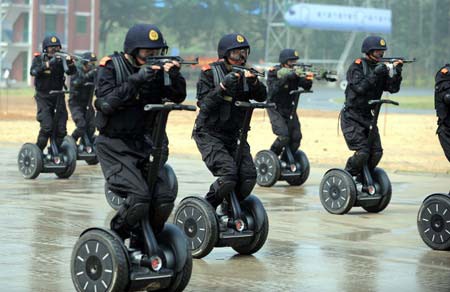
segwaycommandosIn fact it wasn’t terribly complicated – I simply combined the one genre that all Christians who are female and between the ages of 12 and 82 can’t resist: Amish Romance, with one of the hottest selling genres of all time. No, not vampires – someone beat me to the punch – I’m talking about the very first Amish Romance Geopolitical Terrorist Plot Thriller.

The title will be:

A Bomb in Her Bonnet

Synopsis: The incredible based-on-a-true-story story of a young Amish woman who rebels, heads to a massive city of twelve thousand people, and falls in love with a rebellious occasional drinker of alcoholic beverages who turns out to be a CIA spy who actually turns out to be a Middle-Eastern terrorist mastermind who forces this poor damsel to become the world’s first Amish Suicide Bomber by threatening her fourteen younger siblings with iPhones and Netflix accounts and similar forms of torture. She pretends to go along with the plot but secretly informs the police by way of carrier pigeon that she is indeed carrying a bomb in her bonnet. With the help of an extremely handsome, pious, and conservative police officer, she thwarts the threat and returns home on horseback and he proposes to her in the rain and they marry and have lots of children.

Scheduled for release in late March 2014, with sequels every six months afterwards, you may want to pre-order these puppies because they will sell faster than Twilight at a Justin Bieber concert.

My Top Ten Books from 2013

Caveat: These books were not necessarily published in 2013. In fact none of them were except for the last one.

Phil’s Top Ten Books of 2013 (in no particular order):

19063The Book Thief by Markus Zusak

My wife got this book at a family gift exchange at the end of 2012, and it was the first book I read in 2013. I’ll say three things about this book, and then you should go read it. First, the narrator is Death himself, and so you can be sure that the writing is incredibly imaginative. Second, the main character is a little girl, orphaned, in Germany, during the second world war. Third, the story is sweeping and beautiful, and I couldn’t wait to finish it. It’s also been made into a movie, which I haven’t seen yet, but certainly will.

matterhornMatterhorn by Karl Marlantes

A novel of the Vietnam War by a marine veteran. Marlantes captures the horror of war along with the power of brotherhood and friendship. Not an easy read, but a moving and rewarding one.

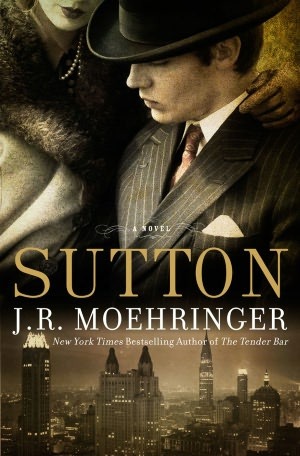
13624683Sutton by J.P. Moehringer

Willie ‘The Actor’ Sutton was America’s most prolific (and endearing) bank robber from the late 1920’s to the 1950’s. Witty, a gentleman, a master of disguise, non-violent, he became a folk hero during a time in America when the banks continued to get richer while the public suffered in economic distress. Not much is known about Willie Sutton, so this book is technically fiction. The author, J.P. Moehringer, has collected the available facts and imagined the rest, and the result is quite an enjoyable story! It’s an interesting twist on the genre of historical fiction. In any case, I like stories of criminals with ideals (The Great Train Robbery is one of my all time favorites), and this fits nicely in that category. Sutton is the man who answered, when asked why he robbed banks, “because that’s where the money is.”

10058Flags of Our Fathers by James Bradley

A book by the son of a World War 2 veteran who happened to be in the iconic picture of the raising of the flag on Iwo Jima. The book traces the lives of all six soldiers who were in the picture, and it makes for fascinating and harrowing reading. You really come to know each one individually and root for them. If you have seen the movie, don’t be dissuaded – the two have very little in common and the book is better!

1845403Exit Music by Ian Rankin

This is the 2007 finale of the Inspector Rebus series set in Edinburgh, Scotland (Rankin resurrected the series in 2012). I read the first book and then the last 4 books of the series and I find them a very enjoyable light-hearted read; witty dialogue, imaginary Scottish accents, believable characters, lovable characters, loathable characters, lots of whisky and classic rock. Not everyone’s cup of tea, I’m sure, but if you like witty humor and mystery fiction, you may find yourself picking up the next one and the next one and looking up maps of Edinburgh on Google.

2924318Home by Marilynne Robinson

The polar opposite of light-hearted. Marilynne Robinson writes the way I wish I could. Really, it’s difficult even to describe her writing with any adequacy. What I admire the most is the seamless way she weaves profound spiritual realities into a grounded and earthy narrative. Book reviews tend to overuse superlatives, so forgive my indulgence here: sublime, perceptive, cutting, haunting, beguiling, utterly brilliant — hold on while I get my thesaurus — oh nevermind. I really enjoy her novels, if you can’t tell yet, so pick up her previous (and related) book Gilead as well.

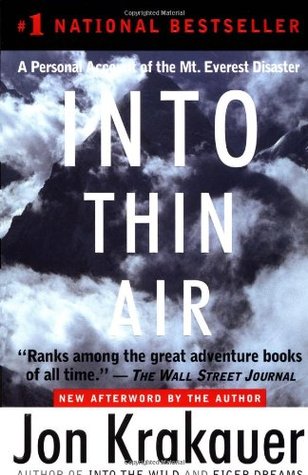
1898Into Thin Air by Jon Krakauer

I think about this book every time my hands or feet get cold outside. It is the incredible story of the 1996 climbing disaster on mount Everest where a number of people lost their lives, told from the perspective of one of the survivors. I found it nearly impossible to put down, and yet difficult to read at the same time – these are real people, real lives, and terrible deaths. I have never been into thin air at above 20000 feet, but I have been to Nepal, have seen Everest and the Himalayas on the horizon, and can just begin to imagine what would drive people to put themselves through unspeakable pain, discomfort, and peril, to simply climb to the top. The classic answer of course comes from George Mallory, the first man known to attempt to climb it: “Because it’s there.”

13697023In Cold Blood by Truman Capote

Reading Sutton got me thinking about the whole idea of mixing non-fiction with fiction. I did a bit of research and discovered that in 1966 a book was written by Truman Capote that is considered to be the first ‘non-fiction novel.’ It is the story of the 1959 murders of the Clutter family in rural Kansas by two criminals who didn’t even know them. It was very well written and certainly interesting, but with little to offer in terms of redemptive value.

17159989Orr: My Story by Bobby Orr

After decades of silence regarding his unparalleled career, Bobby Orr finally wrote his story down. This book had loads of priceless moments, both funny and moving, but Bobby Orr is gracious and polite to a fault. I would have loved to hear him share what he really thinks a bit more often and bit a less sugarcoated. Nevertheless, it familiarized me with an era of hockey that I never got to watch, and I gained a lot of appreciation for those athletes. Orr had lots of good things to say about youth hockey and the NHL, and frankly if you love hockey you should read this.

16240761The Son by Philipp Meyer

My wife got this book out of the library for me, and once again she proved that she has great intuition. Meyer was highlighted in 2010 in the New Yorker’s list of top 20 authors under the age of 40. This book is breathtaking in its scope, spanning five troubled generations of a Texan family, from the settling of an untamed land to the building and collapse of a cattle and oil empire, from cold and empty mansions to eating raw Buffalo liver with Comanche Indians. It’s won a whole slew of awards and with good reason; it paints a powerful critique of the American dream, the pursuit of money and power, and human nature in general. As a follower of Jesus I only wish that the bleakness of the picture could have been set beside the brilliance of the One who showed humanity a better way.

Honorable Mentions:

13131149Evangellyfish by Douglas Wilson

A grim satire about the Evangelical world from a gifted writer. A fun and incisive read for anyone in ministry who has a sense of humor.

2964456Playing the Enemy by John Carlin

The book behind the movie Invictus, which tells the story of Nelson Mandela and the 1995 Rugby World Cup. It was well written, flowed seamlessly from start to finish, and captured a truly remarkable moment in history.

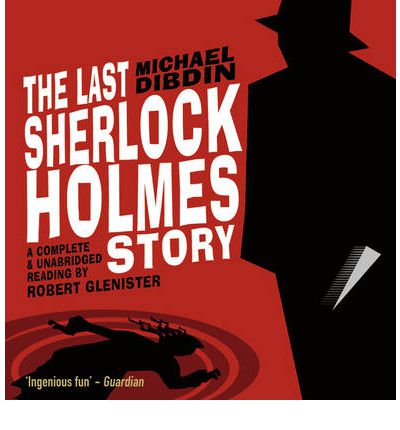
9781408468241The Last Sherlock Holmes Story by Michael Dibdin

I haven’t read the Sherlock Holmes books yet (I just got them for Christmas: Thanks Dad!) but I picked this one up as an audiobook and really got into it. It’s an imaginative take on Watson and Holmes’ final years, with a twist. I didn’t actually care for the twist all that much, but loved the ride. I’m sure hearing it in ge-nu-ine British accents helped the experience as well.

If you are still reading this lengthy post, you are surely a fellow reader! So thanks for reading, first of all, and please leave a comment sharing your favorite reads this year – I’m always looking for a good book to add to the reading pile.

3 Things I Have Learned Since Graduating From Bible College


Image

1. It turns out the professors were right.

There is really something unique about setting aside a time in your life, and I mean a time measured in years instead of hours, to focus almost entirely on studying the Word of God and developing a solid worldview. We heard this over and over from the professors (and also from visiting pastors and alumni) who said that we would likely never get another season like this in our lives. It’s been true for me that since graduating, life has kept me very busy. Marriage, children, and other responsibilities make it difficult to make anything the singular focus of my life the way I was able to at Bible College. On top of that, for young people in their late teens and early twenties, there is still a malleability in one’s character and convictions and a still-forming personality that tends to harden and petrify with age.

Having said that, I want to stress that it is never too late (or too early) to have profoundly shaping encounters with the Word of God and good teaching. For me, there was a period of time between my spiritual new birth at the age of nineteen and stepping onto the campus of a Bible College at the age of twenty-one that was, in hindsight, a time of dynamic personal revival. A time when the Bible spoke with a kind of irrevocable power into my life, when good teaching not only blessed me, it changed me. I look back now and realize that this was extraordinary, and sadly, not the norm. Bible College is an environment that fosters these kinds of experiences, but God is more than happy to turn a life upside down, soften a hard heart, and pour out his Spirit on people of any age, at any time.

That is why it is so worthwhile to pray for this to happen, to set aside time and make the effort to read good books and to expose yourself to good teaching in a setting where the distractions of normal life are not competing for your attention.


2. Life is not meant to be a never-ending summer camp

One of the ironies of Bible College is that one of its greatest strengths can turn into one of its most pernicious dangers. Anyone who has been to a Christian summer camp, especially as a youth, knows about the summer camp high. It is the cumulative effect of a number of factors: a setting removed from normal life, excited leaders, lack of parental oversight, close proximity with people of the same age and interests and beliefs, enthusiastic singing many times a day, lots of sugar, and frequent dynamic teaching aimed directly at young people. Add a campfire to the mix and the result is an experience that is unforgettable for most and life-changing for some.

Bible College is similar in a lot of ways, especially if you live on campus. But the difference is that it doesn’t stop after one week or two, or even a whole summer. It lasts all year and for those taking full degree programs, it goes on for many years. At the start, the intensity of this environment is really wonderful. Not only are you being stretched intellectually, academically, and spiritually, but there is also a depth of fellowship and friendship that is new and exciting. But as time goes on, it’s not uncommon for people to start to feel like they need to get away for a bit, especially those who are more introverted. This phenomenon hints at the fact that, while wonderful, these so-called mountaintop experiences are not sustainable.

After three years on campus, the sheen had worn off completely. The constant exposure to the Bible and theology and the blaring impossibility to personally apply or internalize the majority of what I was learning had the effect of dulling my receptivity to those things. Where once I had been thirsty ground happily soaking up any drop of rain, I was now a flooded garden unable to absorb anything, and tragically I somewhat lost the taste for it. Not only did I feel this sense of spiritual disillusionment, but I felt a lot of guilt for feeling that way. After all, how many pastors in less fortunate parts of the world would love to have this kind of opportunity to study the Bible and theology? I know that my experience was more severe than most, but it was different in degree, not in kind; it is extremely common for people in Bible College and Seminary to feel like the Bible has become dry and academic, and for them to go through a period of disillusionment.

But what I have learned is that these seasons are not meant to last forever, and I think I stayed longer than was beneficial for me (all told, I was there for about 6 years!). Real life is full of gloriously gritty, imperfect, confusing situations for which there are no easy answers. Time at Bible College is most valuable if you eventually pack up your theology books and move back into the mess of the real world.


3. Childlike faith is a rare and beautiful treasure

Knowledge puffs up. It really does. It takes a special dose of the Spirit to keep a young theologian humble. I saw this over and over during my time at the school. Young men full with equal measures of knowledge and pride, and sometimes not that much knowledge. Conversations and debates teeming with bravado; a stench in God’s nostrils surely. The only thing more depressing than seeing some of these young men, these supposed future leaders, full of arrogance and pride was realizing that I was no better at all, for I was not only guilty of the same things as they but I also had the gall to look down on them too. God help us.

What I’ve learned since then is how beautiful it is to see simple trust and love for God. I don’t believe at all that theological and Biblical knowledge and childlike faith are mutually exclusive, but I do believe that my heart and yours will grab onto anything to feel superior to others. It does my heart so much good to see what I affectionally call ‘normal church folk’ sharing what God has been doing in their lives, overflowing with simple thanks and praise. It helps chip away at the layer of cynicism that has encrusted itself over my heart. It gives me hope that I can cultivate that in myself.

Guest Blog Post: The Uncommon Blessing of Common Grace

My friend The Grace Guy invited me to write a blog post about grace, and I decided to reflect on some aspects of common grace. Here are a couple of snippets.

Ah, grace. At once a solid cornerstone and as slippery as an eel. Just when you think you have a handle on it, it slips through your hands and hits you in the back of the head all at once.

Some time ago I was reading a well-known Christian leader’s blog, and once a week he would put up some funny or interesting video that was largely unrelated to the usual fare of heavy topics such as sin and salvation. In this case it was a video of Eric Clapton performing some mind-blowing guitar solo during a concert.

I enjoyed the video but then scrolled down and started reading some of the comments. Now, in case you don’t know, there are few places in the vast interweb as un-grace-full as the comments sections of Christian blogs. I should have known better, but there I was reading the comments.

One person commented something along the lines of “Why would you put up a video of this unbeliever performing this song that almost certainly glorifies sin? How can watching this video glorify God in any way?” Clearly the commenter was disappointed by what he or she perceived to be a compromise, a slipping of standards; and, I suppose, he might have a point. Many Christians struggle with similar feelings of unease when dealing with a wider culture that is so comfortable with sin; and for those in the more conservative circles of Christianity, that unease extends to Christian groups that are any less conservative than themselves.

It is a fearsome reality that grace can rattle around in our songs, creeds, and conversations without the actual substance and essence of grace truly seeping down deep into the nooks and crannies of our hearts – our innermost thoughts and affections.

Click here for the whole shabangand check out the rest of the site. A unique and fascinating site to be sure.

The Straight Truth about Christmas for Two-Year Olds

Image

*not an actual picture of my child.

It’s getting to be about that time when I need to have a teaching moment with my son Jackson, who is two and a half. I call him over, and he puts down his tractor and comes running.

“Hey Jackson, what’s Christmas about?” I ask.

Jackson looks at me wide-eyed and stammers for a few seconds before blurting out, “Christmas about… Jesus!”

“That’s right,” I say, patting Jackson on the head and giving my wife a smug nodding smile that says we’re rocking this parenting thing, which she does not reciprocate, because she is not a nitwit. Then I remember the original point of this conversation and I get serious again.

“Hey Jackson, I want to talk to you about Santa Claus.”

Jackson says, “Jesus came as a baby!”

“Yes – that’s right,” I concede, and then redirect: “Remember when we saw Santa Claus? At the parade?”

“With FIRE TRUCKS! And HORSES!” he yells.

“Yes – there were fire trucks and horses too,” I nod, “Okay well everyone talks about Santa at Christmas but I want you to know that Santa is actually only pretend, but that Jesus is real.” I say this slowly, making sure he’s following my words.

Jackson gives me a blank look.

Now it’s me who is stammering. “What I mean is, people dress up as Santa and we all have fun with it but it’s all pretend – Santa is not really real.”

“He’s not real?” he says, looking a bit disappointed.

“Nooo… he’s not,” I say glumly, and then looking excited: “but Jesus is! – I want you to remember that. He really did come, as a baby, on Christmas day.”

Jackson seems satisfied with this state of affairs. I’m just about to congratulate myself on a nice recovery when I realize that I’ve led him astray.

“Actually he didn’t come right at Christmas, but Christmas is when we celebrate the fact that he did come, for real, at some point. But we’re not sure when. It was a long time ago.”

Jackson stares at me, looking more confused.

I say “Uh, yeah, so Jesus is real and Santa is pretend,” as an attempted conclusion. But then I stop and think for a second and realize that’s not quite true either. “Actually, even though Santa Claus is only pretend, there really was a saint Nicholas who lived a long time ago and gave gifts to children, but he didn’t live in the north pole or have reindeer. He probably did have a beard though. Do you understand?”

“Uh huh.”

Jackson takes a moment to think, then says,

“Santa’s a bit scary. But only pretend scary.”

And with that settled he plods over to play with his dump truck.

Our Trip to Target

Image

We decided to go to Target. We had a two year old toddler and a three-week old baby, and we decided to go to Target. And not just to pick up a couple of things. No, we were going to “do a bit of shopping,” and “look around.”

Now before you come to any premature conclusions, let me stress one simple but important fact: it seemed like a good idea at the time – which I think is the single best catch-all excuse mankind has ever devised. To me, it provides a satisfying answer to two of the most perplexing questions that all people eventually ask themselves; namely why we started World War 1, and why Cheez Whiz was invented. Nevertheless, there we were, climbing out of the car, unbuckling a myriad of buckles, snaps, zippers, and locks, and walking towards the glowing red store.

Before this all began, I had imagined a leisurely stroll through the store, coffee in hand, casually picking out some fantastic deals and putting them in the bright red cart that held a sleeping baby in the car seat and a smiling, obedient toddler. In this fantasy, my two-year old, Jackson, is humming Mozart’s 40th symphony and thinking about how content he is with all of his current toys, periodically tapping me on the forearm to let me know that he loves me and that I am a great father; my wife is happily shopping for clothes, those unicorn clothes that all womenfolk chase after, the ones that fit perfectly and always look amazing – she finds two of everything and they’re all half price.

This is roughly what I was picturing:

Image

In and out in 35 minutes, under a hundred dollars, and we’re laughing all the way home before the bleary-eyed herd of 9-to-5’ers kick off a couple hours of bumper-to-bumper traffic.

As you can tell, I have a rather loose grip on reality.

We had been in the store only five minutes and already the warning signs were everywhere. For one, our daughter Addilyn was wideawake. It’s been cold outside so she wears this fuzzy bear suit that leaves only about three square inches of exposed skin – you know, so that she can breathe – and wraps the rest of her little body tight like a hug. From behind, she looks just like a teddy bear, and whenever she is in it she sleeps like a rock. Or like a rock would sleep if rocks were alive and were heavy sleepers. The fact that she was awake did not bode well.

But as an eternal optimist, I held out hope that my fantasy shopping trip would come at least partially true. The breaking point, that moment when all pretense is finally and completely abandoned, happened about thirty-five minutes in, right around the time I had imagined we would be leaving. I was holding my screaming daughter with one hand while I pushed the cart with the other. My son had been helping me push the cart, but then he tripped and fell on his elbow, which set him off crying in a kind of call and response gospel moment with his sister. I wasn’t able to pick him up what with my arms full of screaming baby, so we set off down the interminably long and obnoxiously shiny aisle towards the women’s clothes section, towards our only hope: Mommy.

On that long walk, with shoppers and store clerks giving me a wide berth as if I was holding a couple of lit Molotov cocktails, I realized that it had been a bad idea to come here, and a very bad idea to think we could do anything more than run in and grab the bare essentials we needed to survive another week. Kind of like they do in those apocalyptic movies when the zombie infestation or tidal wave is coming; which, aside from the pushing of old ladies and the fear of imminent death, is my ideal way to shop.

Image

Devastation was everywhere. The coffee we had brought in was lost long ago, set down on some shelf somewhere while we wiped a nose or patted a bum, and instantly forgotten like an important paper from the government about your taxes. The cart was literally full, what with the massive car seat in the main section, laden with all of our coats, mittens and hats, and our few purchases crammed into the nooks and crannies and the top section.

Kailtyn had apparently heard the wailing duo (I hadn’t yet joined in to make it a trio but I was tempted) while trying on clothes in the change room. She came out and administered the love and pity I had been unable to provide for Jackson. Unfortunately, she hadn’t been faring much better, finding no clothes that fit well and feeling worse about herself for the effort. I pleaded for us to surrender and go home.

We needed an exfiltration plan, to cut our losses and live to fight another day. We decided on a course of action. Kaitlyn took Addie to the family washroom to change her diaper while I took Jackson with me to go pay for our stuff. Well over a hundred dollars later, with no clothes to show for it aside from six pairs of baby socks, Jackson and I went to the family washroom to check on the girls.

I heard a familiar shrill scream as I walked towards the washrooms, and realized that Addilyn was making her displeasure known in the loudest possible manner. Then the screaming stopped. I tried the door but it was locked. Kaitlyn opened it with her one free hand and pulled me in while she held Addie up with the other. She was feeding Addie milk, and I’m not talking about the kind that comes from cows. This was a clear departure from our plan; an unexpected delay. I couldn’t cope – I panicked. Kaitlyn was stressed, and in the chaos and confusion, we decided, for some reason – probably because it seemed like a good idea at the time – that I should run to the car to drop off our bags, leaving Jackson with Kait and baby Addie in the cramped, overly bright, and not overly clean bathroom.

I ran to the car, dumped the bags of stuff I wished I had never heard about in the first place, and ran back to the family washroom. As I rounded the corner towards the bathrooms, I heard crying again. But this time it was Jackson’s voice.

I knocked and Kaitlyn opened the door again. This time she looked quite exasperated, like someone forced to stay in a tiny room the size of a Dilbert cubicle with two children under the age of three. She explained to me how Jackson had been walking around touching everything, the way toddlers do, and accidentally set off the motion-activated high-velocity hand-dryer, which sounds not unlike a Boeing 747 during takeoff. The poor kid had been startled half to death and started crying. I entered the fray and distracted Jackson from his recent trauma by getting him to put on his coat, hat, and mittens.

Kaitlyn, realizing that her own coat was still in the cart immediately outside the bathroom door and therefore perilously exposed to theft and, even worse, uninvited alterations, said accusingly, “You left my coat out there?!” I was completely overwhelmed by this point, and my reply was heavy on bite and light on grace. We had a frank exchange of views on the subject at hand, as married couples do from time to time, and in order to spare the reader the uninteresting details of our conflict, and to leave room for some doubt as to who acted more childishly (I will give you a hint: it wasn’t Kaitlyn), I will close this scene and move on to the brief finale.

There was a silence, a heavy silence, which enveloped the car as we started home. In these kinds of situations, it always takes a bit of time for things to cool down and for wisdom and perspective to take their place. Lucky for me I had plenty of time to come around to such a place because we were stuck in the stinking armpit of rush hour traffic for over an hour, but at least the kids were asleep.


Remembrance Day and Three Good Books

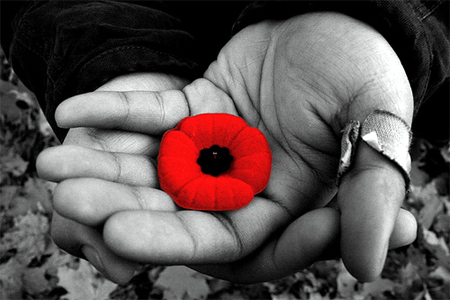
remembrance-day

It’s Remembrance Day.

Which is both good and bad. Good because in and of itself, Remembrance Day is a good thing. Bad because some people just have a knack for taking a good thing and kind of ruining it.

While there will always be some who use it as a platform to further some political agenda, and others who wear a poppy out of nothing more than peer pressure, one thing is clear: Remembrance Day as experienced by many is often pretty far removed from the original intent of the whole thing.

But before I say another word, I do need to stop and realize that I am free to sit here and wax eloquent about this or that because a lot of people have made incredible sacrifices over the years, men and women to whom we all should be profoundly grateful. And I am.

I’ve always been fascinated by combat and war. Over the years, this fascination has matured from a kind of juvenile interest in guns and military hardware to a sombre and heavy-hearted appreciation for the incredible reality which is war. It is a place where the best and worst of humanity is seen in stark relief; and I don’t mean that one side is good and one side is bad.

The truth is that on the ground, despite the noble or evil actions and intentions of those far-removed leaders, courage and atrocity are not relegated to one side or the other. Moral and ethical ambiguity seems to overwhelm the idealistic black-and-white notions of many who enter these conflicts. And I don’t really know what to do with that.

At the end of the day, Hitler was still a tyrant and Churchill still did the right thing sending in the boys, even if that kind of moral clarity seems to be the exception rather than the rule.

Nevertheless, one of the ways to really cut through the fluff and empty sentimentality that surrounds Remembrance Day is to take the time to read good books about war and combat. Allow me to recommend three books that I’ve read this year which deal with war and conflict in a deeply human and thought-provoking way.

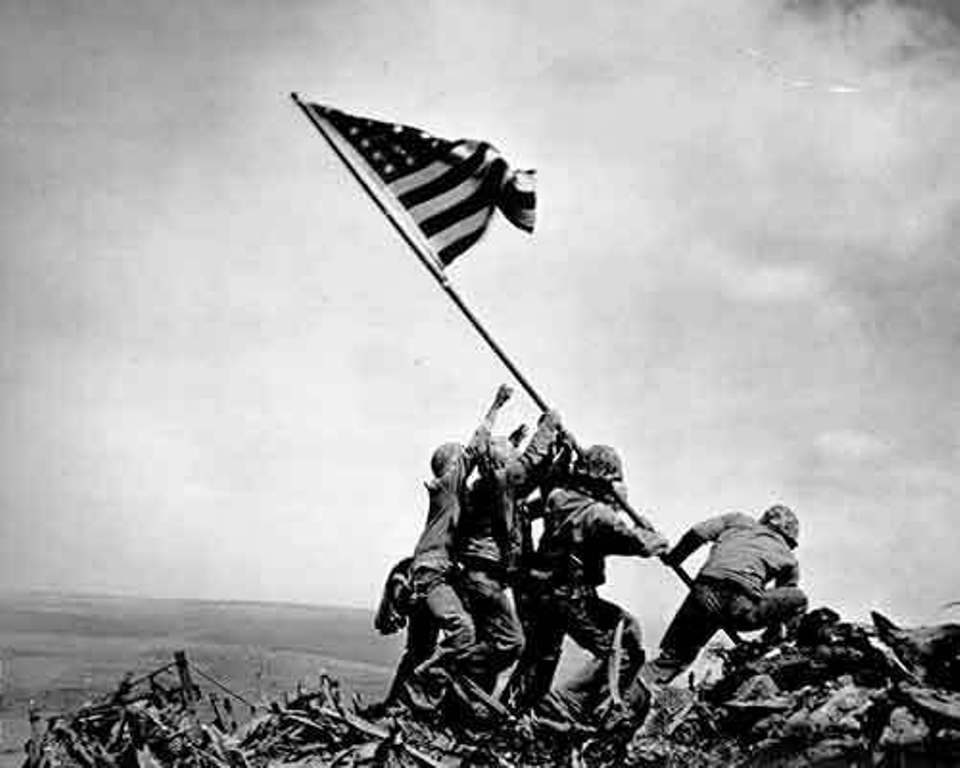
1. Flags of Our Fathers, by James Bradley and Ron Powers

flags-of-our-fathers-31000

I picked up a used copy of this classic for a dollar in a sleepy little town called Winter Harbour, Maine, while vacationing there this summer. It is the story of the six men who raised the American flag in the iconic picture seen here. It is written by the son of one of these men. It was engrossing, horrifying (literally nauseating at times), and a catalyst causing me to reflect on mortality and the brevity of life, on the nature of courage and bravery, and many other things. I highly recommend it.

2. Matterhorn, by Karl Marlantes

matterhornThis is a novel of the Vietnam war. It is written by Karl Marlantes, who is a Marine veteran. It really is a masterpiece as far as war fiction is concerned. It is about as different from a Tom Clancy-type thriller as you can imagine. It is gritty, real, and deeply human. Widely touted as a modern classic, I couldn’t agree more.


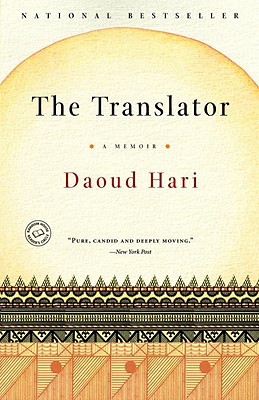
3. The Translator, by Daoud Hari

The-Translator-Hari-Daoud-9780812979176

It’s a bit of a stretch to include this book on Remembrance Day, since as far as I know neither Canada nor the US is actively involved in the Darfur region, but one of the dangers when considering the wars of the past is to forget how many wars are going on right now. This gripping book is the incredible personal story of Daoud Hari, a young man from Darfur who became a translator and guide for various foreigners during the genocide in Darfur. While emotionally devastating at times, this sombre tale is peppered with humour and glimpses of the beauty of the human spirit – that outpouring of common grace.


What about you? What are some books that have changed the way you see war and conflict?