A Brilliant (Largely Unknown) Passage by C.S. Lewis

When someone asks me, as a friend did not long ago, who my favorite authors are, C.S. Lewis ranks near the very top. I know that really makes me stand out from the crowd. (I didn’t plan to be so boringly typical, okay?). Aside from his best-known works, I have really enjoyed reading the collections of essays, articles, and public addresses that one can find in various formats here and there.

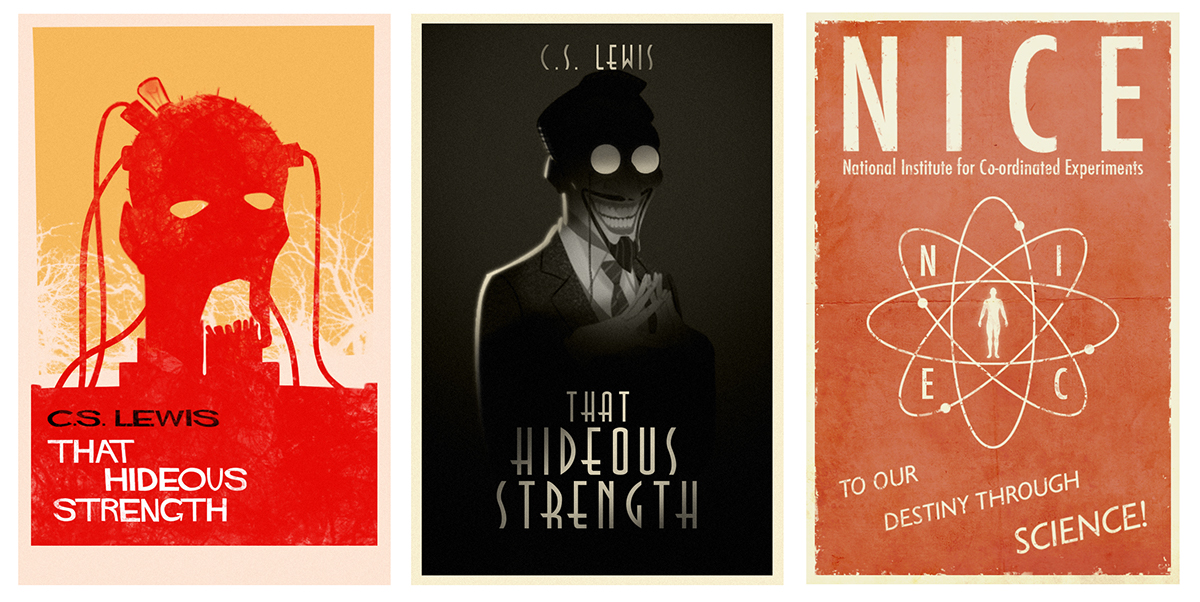
Two of the most profound and prescient of Lewis’ books are The Abolition of Man and That Hideous Strength. It has often been pointed out that what Lewis argues in the former he demonstrates with fiction in the latter. But I am a little thick, and I have often wished that Lewis had fleshed out his argument a little more in The Abolition of Man.

The Abolition of Man by C. S. Lewis

How happy I was then when I stumbled across the chapter in a little-known collection of Lewis essays called ‘Of Other Worlds,’ from which the following selection is taken, for in it Lewis explores those very themes in very clear terms, and in a way that seems to me very applicable for our own day. The selection is part of an unpublished reply to a certain Professor J. B. S. Haldane who had written a criticism of That Hideous Strength. Haldane is described by Walter Hooper in the preface as “a theoretical biologist,” a “disillusioned Marxist,” and “violently anti-Christian.” Sounds like a great guy! I tracked down his criticism of Lewis on the interwebs, and for those interested, the ‘online Yoda of Lewis’ Brenton Dickieson (A Pilgrim in Narnia) has a helpful post on it as well.

Here is the nub of Haldane’s critique:

As a scientist I am particularly interested in his attitude to my profession. There is one decent scientist in the three books, a physicist who is murdered by the devil-worshippers before we have got to know him. The others have an ideology which ranges from a Kiplingesque contempt for “natives” to pure “national socialism,” with the devil substituted for the God whose purposes Hitler claimed to carry out. As a matter of fact, very few scientists of any note outside Germany and Italy have become Fascists. In France only one, the engineer Claude, did so, though the Catholic biologist Carrel came back from the U.S.A. to support the Vichy government. A very much larger fraction of the clerical, legal, and literary professions bowed the knee to Baal.

Weston is recognisable as a scientist; Frost and Wither, the devil-worshippers, are not. They talk like some of the less efficient of the Public Relations Officers who defend Big Business, and even Mr. Lewis did not dare to assign them to any particular branch of science. At a guess I should put them as psychologists who had early deserted the scientific aspect of psychology for its mythological developments.

Mr. Lewis’s idea is clear enough. The application of science to human affairs can only lead to hell. This world is largely run by the Devil. “The shadow of the dark wing is over all Tellus,” and the best we can do is to work out our own salvation in fear and trembling. Revealed religion tells us how to do this. Any human attempts at a planned world are merely playing into the hands of the Devil.

So with that in mind, here is the passage by Lewis.

But if you must reduce the romance to a proposition, the proposition would be almost the converse of that which the Professor supposes: not ‘scientific planning will certainly lead to Hell’, but ‘Under modern conditions any effective invitation to Hell will certainly appear in the guise of scientific planning’ – as Hitler’s regime in fact did. Every tyrant must begin by claiming to have what his victims respect and to give what they want. The majority in most modern countries respect science and want to be planned. And, therefore, almost by definition, if any man or group wishes to enslave us it will of course describe itself as ‘scientific planned democracy’. It may be true that any real salvation must equally, though by hypothesis truthfully, describe itself as ‘scientific planned democracy’. All the more reason to look very carefully at anything which bears that label.

My fears of such a tyranny will seem to the Professor either insincere or pusillanimous. For him the danger is all in the opposite direction, in the chaotic selfishness of individualism. I must try to explain why I fear more the disciplined cruelty of some ideological oligarchy. The Professor has his own explanation of this; he thinks I am unconsciously motivated by the fact that I ‘stand to lose by social change’. And indeed it would be hard for me to welcome a change which might well consign me to a concentration camp. I might add that it would be likewise easy for the Professor to welcome a change which might place him in the highest rank of an omnicompetent oligarchy. That is why the motive game is so uninteresting. Each side can go on playing ad nauseam, but when all the mud has been flung every man’s views still remain to be considered on their merits. I decline the motive game and resume the discussion. I do not hope to make Professor Haldane agree with me. But I should like him at least understand why I think devil worship a real possibility.

[…]

I am a democrat because I believe that no man or group of men is good enough to be trusted with uncontrolled power over others. And the higher the pretensions of such power, the more dangerous I think it both to the rulers and to the subjects. Hence Theocracy is the worst of all governments. If we must have a tyrant a robber baron is far better than an inquisitor. The baron’s cruelty may sometimes sleep, his cupidity at some point be sated; and since he dimly knows he is doing wrong he may possibly repent. But the inquisitor who mistakes his own cruelty and lust of power and fear for the voice of Heaven will torment us infinitely because he torments us with the approval of his own conscience and his better impulses appear to him as temptations. And since Theocracy is the worst, the nearer any government approaches to Theocracy the worse it will be. A metaphysic, held by the rulers with the force of a religion, is a bad sign. It forbids them, like the inquisitor, to admit any grain of truth or good in their opponents, it abrogates the ordinary rules of morality, and it gives a seemingly high, super-personal sanction to all the very ordinary human passions by which, like other men, the rulers will frequently be actuated. In a word, it forbids wholesome doubt. A political programme can never in reality be more than probably right. We never know all the facts about the present and we can only guess the future. To attach to any party program – whose highest real claim is to reasonable prudence – the sort of assent which we should reserve for demonstrable theorems, is a kind of intoxication.

[…]

Being a democrat, I am opposed to all very drastic and sudden changes of society (in whatever direction) because they never in fact take place except by a particular technique. That technique involves the seizure of power by a small, highly disciplined group of people; the terror and the secret police follow, it would seem, automatically. I do not think any group good enough to have such power. They are men of like passions with ourselves. The secrecy and discipline of their organization will have already inflamed in them that passion for the inner ring which I think at least as corrupting as avarice; and their ideological pretensions will have lent all their passions the dangerous prestige of the Cause. Hence, in whatever direction the change is made, it is for me down by its modus operandi. The worst of all public dangers is the committee of public safety. The character in That Hideous Strength whom the Professor never mentions is Miss Hardcastle, the chief of the secret police. She is the common factor in all revolutions; and, as she says, you won’t get anyone to do her job well unless they get some kick out of it.

I must, of course, admit that the actual state of affairs may sometimes be so bad that a man is tempted to risk change even by revolutionary methods; to say that desperate diseases require desperate remedies and that necessity knows no law. But to yield to this temptation is, I think, fatal. It is under that pretext that every abomination enters. Hitler, the Machiavellian Prince, the Inquisition, the Witch Doctor, all claimed to be necessary. 

From this point of view is it possible that the professor could come to understand what I mean by devil worship, as a symbol? For me it is not merely a symbol. Its relation to the reality is more complicated, and it would not interest Professor Haldane. But it is at least partly symbolical and I will try to give the Professor such an account of my meaning as can be grasped without introducing the supernatural. I have to begin by correcting a rather curious misunderstanding. When we accuse people of devil worship we do not usually mean that they knowingly worship the devil. That, I agree, is a rare perversion. When a rationalist accuses certain Christians, say, the seventeenth-century Calvinists, of devil worship, he does not mean that they worshipped a being whom they regarded as the devil; he means that they worshipped as God a being whose character the rationalist thinks diabolical. It is clearly in that sense, and that sense only, that my Frost worship devils. He adores the ‘macrobes’ because they are beings stronger, and therefore to him ‘higher’, than men: worships them, in fact, on the same grounds on which my communist friend would have me favour the revolution. No man at present is (probably) doing what I represent Frost as doing: but he is the ideal point at which certain lines of tendency already observable will meet if produced.

The first of these tendencies is the growing exaltation of the collective and the growing indifference to persons. The philosophical sources are probably in Rousseau and Hegel, but the general character of modern life with its huge impersonal organisations may be more potent than any philosophy. 

[…]

Secondly, we have the emergence of ‘the Party’ in the modern sense – the Fascists, Nazis, or Communists. What distinguishes this from the political parties of the nineteenth century is the belief of its members that they are not merely trying to carry out a programme, but are obeying an impersonal force: that Nature, or Evolution, or the Dialectic, or the Race, is carrying them on. This tends to be accompanied by two beliefs which cannot, so far as I can see, be reconciled in logic but which blend very easily on the emotional level: the belief that the process which the Party embodies is inevitable, and the belief that the forwarding of this process is the supreme duty and abrogates all ordinary moral laws. In this state of mind men can become devil-worshippers in the sense that they can now honour, as well as obey, their own vices. All men at times obey their vices: but it is when cruelty, envy, and lust of power appear as commands of a great super-personal force that they can be exercised with self-approval. The first symptom is in language. When to ‘kill’ becomes to ‘liquidate’ the process has begun. The pseudo-scientific word disinfects the thing of blood and tears, or pity and shame, and mercy itself can be regarded as a sort of untidiness.

[Here the essay goes on for a sentence or two and then is missing at least a page.]

C.S. Lewis, “A Reply to Professor Haldane,” Of This and Other Worlds (London: William Collins & Sons, 1982), 104-109.
There’s a lot in those few paragraphs, but I will let you, the reader, take from it what you will.

The most striking quotes to me, here at the end (it’s the end, right?) of our Covid moment, are these:

The majority in most modern countries respect science and want to be planned.

The worst of all public dangers is the committee of public safety.

I would not have agreed with that first quote until this my experience of this pandemic. Regarding the second quote, notice that he does not say such a committee is illegitimate or has no reason to exist. Rather he is pointing out the possibility that public safety can be used as a vehicle for illegitimate goals. To deny that is to be stupendously naïve.

Whether and to what degree that has been the case with all this, I think time will tell.

As an Amazon Affiliate I earn a small commission from qualifying purchases of books purchased through links on my website, while customers do not pay anything extra.


A lil’ Ellul on Technology

We carry in our pockets little devices with incredible power. We do not really understand how they are made, how they connect to other devices, or how they affect us. And yet increasingly our lives are enmeshed with them. Like so many others, I struggle in my relationship with technology. I find impulses and compulsions at work in me in relation to social media, emails, and other aspects of connectedness that indicate, if nothing else, that this symbiotic relationship is tapping into aspects of my mind and heart that I do not fully control or understand.

While it is true that there is nothing new under the sun, we must nevertheless make the observation that our society is integrated with technology like none before. The fundamental nature of technology has not changed so much – a tool, device, or technique that allows you to exert influence and control over some aspect of the natural world – but the interconnectedness of those technologies and devices certainly has. And the reach they have into our lives has also deepened significantly. All of this begs for wisdom. We need wisdom and understanding if we are to think and act rightly. Thankfully we have a promise that such a request made of God is gladly met: “If any of you lacks wisdom, let him ask God, who gives generously to all without reproach, and it will be given him” (James 1:5).

We also have wise teachers to guide us in the particulars of this challenge, gifted men and women who have pondered these questions and written prophetically and insightfully. Among those often cited as authorities on the subject of technology is Jacques Ellul (1912-1994). In the rest of this post, I will share some thoughts on his book Perspectives on our Age, the only English book of his I could track down at the main Montreal public library. It is not one of his major works, but rather an adaptation of interviews he did on his life and work for a radio broadcast of the CBC program Ideas. Which is probably why so much of the book was biographical.

This was my first attempt to read this author that I have heard so much about. It was not quite what I expected. Nevertheless, it was thought-provoking and displayed that originality of thought for which he is famous. The first section was largely autobiographical.

I was surprised to find that Marx was a major influence on Ellul throughout his life. He eventually rejected the Communist cause due to his interactions with their groups, and what he saw as their departure from Marx’s thought. He speaks of “a revolutionary tendency in me.” He said it was Marx who “convinced me that people in the various historical situations they find themselves, have a revolutionary function in regard to their society.”

My jaw dropped however when I read his claim that “Marx was not opposed to the family. He himself started a family and was a good father who married off his daughters and so on.” This is patently false, and certainly hinders my ability to take at face value his evaluation of Marx. See Paul Johnson’s book Intellectuals (which is valuable despite some lamentable shortcomings) for a rather more sombre view of Marx’s family life. It was not pretty. Ellul’s takeaway from all this however is a decision to side with those who are poor (in the sense of alienation), the ‘excluded’ such as the aged, the unfit, those at the fringes.

Ellul eventually rejected Marx’s atheism. He was disappointed however by the religious authorities that he turned to for answers to his questions, such as the local pastor. He embraced an intellectual attitude where he did not look to anyone to explain things to him but sought out solutions to problems and questions that he had. This would certainly encourage originality of thought.

Turning to his conversion to Christianity, Ellul says that the Bible offered answers to his existential questions, such as the meaning of life, death, and love. The Bible gave answers on a different level than Marx had:

“I was converted – not by someone, nor can I say I converted myself. It is a very personal story, but I will say that it was a very brutal and very sudden conversion. I became a Christian and I was obliged to profess myself a Christian in 1932. From that moment on, I lived through the conflict and the contradiction between what became the center of my life – this faith, this reference to the Bible, which I henceforth read from a different perspective – and what I knew of Marx and did not wish to abandon. For I did not see why I should have to give up the things that Marx said about society and explained about economy and injustice in the world. I saw no reason to reject them just because I was now a Christian.”

It seems that he lived the rest of his intellectual life with these two sources of authority, Marx and the Bible, refusing to let go of either one, nor to create two domains, one material and one spiritual, but forged on in some kind of dialectic holding the two together in a kind of “permanent contradiction.” Fascinating.

He joined the reformed Church in France, which was only faintly Calvinist at that time. But it led him to read Calvin, who he found very interesting for his “rigour, intransigence, and total use of the Scriptures.” He went through a Calvin phase but then moved on to Barth. Indeed, Calvin was completely eclipsed by Karl Barth.

When World War 2 arrived, he was dismissed from his teaching role, his father was arrested, and his wife was in danger of being arrested. So he joined the Resistance. After the war, he tried to influence change in the French reformed Church for 15 years, but failed due to the “traditionalism of Christians,” and the “indifference toward change.” His verdict: “Once a movement becomes an institution, it is lost.” I can only say that, given the nature of the far-reaching changes he had in mind, it seems to me that the mechanism of that institution protected it from being radically redefined. But I don’t know enough about the details of it all to say whether that was for the good or not.

Ellul then tried to change the study of theology: “I kept trying to find what would be possible for a Christian who analyzes society with the apparatus of Marx’s thinking.” What strange echoes this has today as evangelicalism, these forty years later, wrestles with the role of Marxist modes of criticism like Critical Race Theory and intersectionality.

As I said, I was surprised to find so much Marx in Ellul’s intellectual biography. Given the way Marxist categories have so profoundly infected and poisoned so much of Western (especially North-American) intellectual life, and the allergic reaction that the name Marx now triggers in many, it certainly seems to me that Ellul will not gain many friends or eager ears in my circles.

But now we move on to his seminal insights into technology and ‘technique’. In studying the modern world he came to see that technique, as defined by him, had a similar or greater explanatory power than did capital in the works of Marx for the 19th century.

Distinguishing technique from technology, or from machinery, Ellul points out the common theme of efficiency, what we now sometimes refer to as ‘hacks,’ or the relentless pursuit of ever greater efficiency in every sphere and domain of our lives, including our minds, our sleep, our bodies, our meetings, our organizations, our transportation, our schedules, our athletics, our psychology, et cetera ad infinitum (and other Latin phrases). “This expansion of technique to human groups, to human life, is one of the essential characteristics of our world.”

This seems to me to be precisely right. Ellul is helpful in exposing how technology and ‘technique’ have a kind of internal logic and telos which override whatever human aims we claim for the technology we invent. It remains the case that someone comes along, builds on what has been done before, and finds ever better ways of applying technology to more of life, revolutionizing sphere after sphere of human life to conform to this overriding principle of efficiency and inter-connectivity.

The history of technological development since the Industrial Revolution seems to bear this out. It is easy to think that the individual or small group developing some technology is acting in isolation and that the effects of their work is limited to the applications they themselves have in mind. But a broader view suggests that all such efforts are part of an unstoppable wave of technological advancement and expansion.

It is important to be clear-eyed about this reality and to take stock of our relationship with technology. We must never believe the lie that we merely use technology like a tool. Instead, technology shapes us more deeply than we usually like to recognize. And this process shows no sign of slowing down – indeed the rate of acceleration is increasing. Instead of being carried along in the powerful current, we must ask hard questions about how much technology we should really embrace in our lives, and ask how much of that technology is actually leading to human flourishing.

But to answer that question, one needs to have a definition of humanity, of the good, and therefore of what the ‘good life’ is. That is perhaps one of the most important things we need to recover – a vision of human nature. Are we merely biological machines, like the materialists insist? Are we free to define and redefine ourselves by our own authority, as the gender revolutionaries assume? Are we subject so some universal moral law that we ignore and defy to our own detriment, as the classical and Christian traditions teach?

I’ll admit I did not find as much applicable insight in this book as I was hoping. Perhaps other thinkers have gone further and have spoken more directly to the modern challenges facing us today and into the future. If you have one to recommend, please let me know in the comments!

A Book Fit for Any Time

Some works translate well across time, while others don’t. It’s interesting to me that intellectual and polemical works tend to be more temporally bound than spiritual literature. For example, in Augustine’s Confessions, the portions that deal with the workings of the human heart can be read profitably by any Christian, while the portions dealing with the Manichean heresies are less accessible.

Some works are simply ageless; perennially helpful. I consider this book, Backslider, by Andrew Fuller, to be such a work. This short book is wholesome spiritual food for any Christian in any age.

I believe that the editing and reprinting of classic spiritual works from centuries past is one of the most beneficial things modern publishers can do. Ressourcement is one of the great needs of the church; to feed upon nutritious truth that has stood the test of time. This short handsome volume put out by H&E Publishing (Hesed & Emet) is a great example of that. The formatting and editing helps the book to look and feel comfortably accessible for modern readers.

Oh that it and works like it would be plastered on the front page of the ChristianBook.com catalogs that I receive rather than the thin modern drivel that is usually there.

But enough slightly self-righteous moaning about the shortcomings of modern evangelical publishing and on to the content of the book. Backslider is a short book, or lengthy tract, written to counsel believers who have backslidden to some degree in their walk with God. And this means it is applicable to every believer at least once in a while. Fuller’s pastoral sensitivity is on display as he nimbly diagnoses the various causes and sources of backsliding, warns the wanderer not to presume upon any later opportunity for repentance, and sets forth the ever-merciful heart of God which welcomes any and all who repent and turn to Him by faith in Christ.

Fuller identifies five categories of backsliding: 1. Relinquishing Evangelical Doctrine (abandoning orthodox beliefs); 2. Falling into Gross Immorality (moral failure); 3. The Love of the World; 4. Conformity to the World; and 5. Political Disputes.

I’ll admit I didn’t expect #5 (Political Disputes), but it contained many a timely word for us today. Listen to this insightful comment on how revolutionary movements lead Christians astray:

The flattering objects held out by revolutionists were so congenial with the wishes of humanity, and their pretenses to disinterested philanthropy so fair, that many religious people for a time, forgot their own principles. While gazing on the splendid spectacle, it did not occur to them that the wicked, whatever name they assumed, would do wickedly.

Backslider, page 19.

He concludes in this way concerning inordinate interest in politics: “It is not only contrary to the whole tenor of the New Testament, but tends in its own nature to eat up true religion.” That is a very good and timely word for us today.

To highlight just one example of Fuller’s characteristic careful thinking and balance, consider this comment, still on the topic of politics: “Nor does the danger belong exclusively to one side. We may sin by an adherence to the measures of a government, as well as by an opposition to them.”

I promise I am trying to get to the rest of the book, but, perhaps because of the particularly tumultuous politics of the last few years, or because I stand in need of it, this last paragraph on the danger of politics seems too good to pass by:

By standing aloof from all parties and approving themselves the friends of government and good order, by whom so ever administered, Christians would acquire a dignity of character worthy of their profession. They would be respected by all, and possess greater opportunities for doing good. By a contrary conduct, they render one part of the community their enemies and the other, I fear, would derive but little spiritual advantage from being their friends.

Backslider, page 25.

Fuller goes on to examine the various symptoms that accompany backsliding, such as a departure from our first love, and a self-justifying spirit. The next chapter explores the effects of such a state. How the ‘symptoms’ differ precisely from the ‘effects’, I am not entirely sure, but folks in those days sure did love to draw tiny distinctions and make lists, so we must not be too bothered by it. On page 48 I came across a gem of a quote which captures pithily what has been a pillar in my understanding of human sin since early in my Christian life: “There is no sin committed by the most ungodly man of which the godliest is not in danger.”

That is worth reading again.

There is no sin committed by the most ungodly man of which the godliest is not in danger.

The last chapter discusses the ‘Means of Recovery’. I conclude this review with a quote from that chapter which jumped out at me for its resonance with the singular theme of John Piper’s ministry, and more importantly, with the teaching of Scripture.

Sin is not to be opposed so much directly as indirectly; not by mere resistance, but by opposing other principles to it which shall overcome it. It is not by contending with the fire, especially with combustible materials about us, that we should be able to quench it, but by dealing plentifully with the opposite element. The pleasures of sense will not be effectually subdued by foregoing all enjoyment but by drinking deeply of other pleasures, the relish of which will deaden the heart to what is opposite.

Backslider, page 80.

In other words, fight the pleasures of sin with the pleasures of God. By delighting in God, our hearts lose their taste for the small paltry pleasures that sin promises but never delivers.

I trust that by now you can see this book is worthy of reading and re-reading. I hope it finds its way into many more hands and blesses, challenges, and encourages many more hearts like it did mine.

Thoughts on Devoted to the Service of the Temple: Piety, Persecution, and Ministry in the Writings of Hercules Collins

This is a little gem of a book.

The opening biographical essay sketches the history of the Particular Baptists clearly and helpfully. It also gives the reader a foretaste of Collins’ warm and experiential style. Hercules Collins, though largely unknown today, was an important figure in the Particular (Calvinistic) Baptist community in the 17th century. These Baptists were part of the Dissenters, a larger group of Christians that, for one reason or another, were not in the Church of England.

3416980

I found it interesting that in the body of Collins’ work was an early defense of religious liberty, where he argued that compulsion cannot bring about true spiritual enlightenment. Indeed, force cannot change the heart, and heart change is at the very core of Christianity.

His is a legacy where his teaching is highlighted, underlined, and put in bold by the powerful testimony of his life. Imprisoned for his opposition to the prevailing religious and political authority of his day, in abysmal conditions (two fellow pastors in prison with him died while in captivity), he remained faithful and wrote stirring letters to his congregation while in chains. This harrowing context gave his writing a kind of Pauline grittiness and verve.

The selections, well picked and edited, give the reader a real sense for his style and substance. The length of the book makes this long-departed brother’s words accessible, portable, and edifying. What a gift! How else is a 21st-century Christian going to encounter such material?

For those in ministry and leadership, there were a number of selections specifically dealing with the realities of ministry and the task of preaching. While all the selections were good in content, some of them were simply stellar. My favorites were #s 5, 6, 8, 9, 12, 20, 21, 24, 28, 30, 35.

The last selection was actually a poem that Collins wrote. This third stanza I thought was really quite good:

Come haste that blessed break of Light,

Let shadows flee away;

When ordinances all shall cease,

Come on Eternal Day.

Then through a glass shall look no more,

Unless the glass divine;

We shall through human nature see,

The blessed Godhead shine.

I highly recommend getting a few volumes in this series. There is nothing like reaching across the centuries and reading the words of a fellow Christian from another age. There is blessed similarity and blessed dissimilarity. Similar because the experience and convictions of true Christians have a common thread wherever they are found; dissimilar because we have lost much in our day and are blind in ways they are not.

If I was to try and find one thing to quibble with, it might be the title. Having finished the book, I now get it. At first glance, however, it was not a title that drew me in towards the book or piqued my interest.

Ivan Ilych is Alive

One of the purposes of this blog is to help people access the world of literature. (You can pronounce it the boring way, or you can do it properly, the way Michael Caine would – “litshratshurr“). I do this through book reviews and short reflections on things that I’m reading. Not only does this help me process what I’m reading, it also hopefully gives others a taste of the benefit from engaging with this material, which often feels too distant and intimidating. One of the things that compelled me to make the effort to read “the classics” was hearing how they had such an impact on others, and observing others appreciate them.

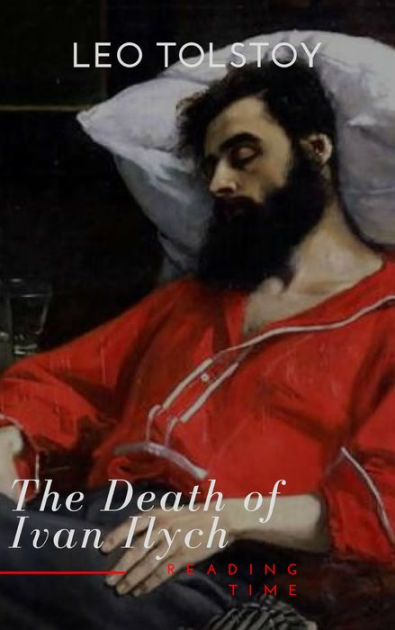
Recently I was listening to Karen Swallor Prior in discussion with Matthew Barrett on the Credo Podcast. One of the things that came up was Tolstoy’s The Death of Ivan Ilych, and that discussion prompted me to re-read it. One of the nice things about this story is that it is so short. Everyone has heard of Tolstoy, but most people do not have the courage to take on some of his better-known novels such as War and Peace (1400 pages) or Anna Karenina (950 pages).

If you would like to read it, you can download it here (I’m not sure about the quality of the translation – but hey! it’s free). Note that the following reflection contains spoilers if you haven’t read the story yet.

I am struck by the power of words, ideas, and story. In only 50 pages or so, Tolstoy harnesses that power and delivers to the reader a profound encounter with truth. One of the first things that strikes me in the story is the brutal honesty of the internal dialogue. Tolstoy gets inside the mind and around the various self-deceptions we employ and reveals what is truly there in all of its ugliness. It is done in a matter-of-fact way:

Each one thought or felt, “Well, he’s dead but I’m alive!” But the more intimate of Ivan Ilych’s acquaintances, his so-called friends, could not help thinking also that they would now have to fulfill the very tiresome demands of propriety by attending the funeral service and paying a visit of condolence to the widow.

The story reveals how hard it is to come to believe something that you really don’t want to believe, something that has profound and far-reaching implications for the verdict of how you lived your life. We oppose these kinds of paradigm-shifts in many areas of our lives because re-evaluation is costly. We are invested in our way of seeing things. Within the story this is seen in everybody’s stubborn denial of their own mortality (save for the peasant Gerasim), and especially in Ivan’s wrestling with whether he has lived a good life. There were many layers to peel away before he could get to the honest core of this question. It is only at the end of a long struggle that he breaks through his own defenses to the truth:

… the question suddenly occurred to him: “What if my whole life has been wrong?” It occurred to him that what had appeared perfectly impossible before, namely that he had not spent his life as he should have done, might after all be true. It occurred to him that his scarcely perceptible attempts to struggle against what was considered good by the most highly placed people, those scarcely noticeable impulses which he had immediately suppressed, might have been the real thing, and all the rest false. And his professional duties and the whole arrangement of his life and of his family, and all his social and official interests, might all have been false. He tried to defend all those things to himself and suddenly felt the weakness of what he was defending. There was nothing to defend.

… he saw himself—all that for which he had lived—and saw clearly that it was not real at all, but a terrible and huge deception which had hidden both life and death.

There is another dimension to this. Just like Ivan has been living in a cocoon of self-deception, the same is true for his colleagues and his family in their own ways. As mentioned above, they are all in denial about their own inevitable death. But without the harsh and inescapable pain to shock them into a sober honesty, we do not see these characters make any progress towards escaping that deception.

At the very end, in the last two or three hours of Ivan’s life, he experiences a conversion and rebirth. He breaks through into light. Tolstoy does not name Christ, but rather describes the change of heart and makes an oblique reference to God:

At that very moment Ivan Ilych fell through and caught sight of the light, and it was revealed to him that though his life had not been what it should have been, this could still be rectified. He asked himself, “What is the right thing?” and grew still, listening. Then he felt that someone was kissing his hand. He opened his eyes, looked at his son, and felt sorry for him. His wife came up to him and he glanced at her. She was gazing at him open-mouthed, with undried tears on her nose and cheek and a despairing look on her face. He felt sorry for her too.

…He tried to add, “Forgive me,” but said “Forego” and waved his hand, knowing that He whose understanding mattered would understand.

… He sought his former accustomed fear of death and did not find it. “Where is it? What death?” There was no fear because there was no death.


In place of death there was light.


“So that’s what it is!” he suddenly exclaimed aloud. “What joy!”

Modern secular readers are probably tempted to view this as a moral reformation or a kind of epiphany, but Tolstoy clearly has something deeper in mind. It is quite common in literature for the conversion of characters to be described in ways that hint at Christ but do not explicitly name him. I’m not entirely sure of the reason for this. C.S. Lewis discusses it somewhere, commenting on the habit of medieval Christians to ‘hide’ Christ in pagan themes and deities in their fiction, something he does in his writing as well.

Nevertheless, the Christian reader can recognize many (though not all) of the elements of true conversion: conviction of sin, repentance for sin, and a changed heart with new desires. Is this fictional portrayal sufficient to point others towards faith in Christ for their salvation? No. But what good fiction (and good art generally) does is faithfully represent some part of reality, it serves as a signpost on the good road. In doing so it adds one more voice to that choir made up of countless voices, singing not the same note but a great and variegated harmony.

Peter Nimble

There is lots to love about this book. A great title, a great first line, and moments of brilliance throughout. The story moves at a fine clip and carries the reader along to an exciting finish. My kids read this book as part of their schooling and they adored it, so I wanted to read it also. I can see why they were taken with it! It certainly leaves the reader wondering what will happen next at each chapters’ end. And while I enjoyed reading this book, I wanted to enjoy it more. There were a few hindrances and shortcomings that impeded that enjoyment. As a debut novel, I say bravo and well done! If I were to write a first novel this good, I’d be a happy man indeed. And so I offer some thoughts – in a spirit of constructive criticism – on what kept this book from being, to my mind, on par with the classics.

10806008

First, while the breadth and playfulness of a fertile imagination is on display throughout the book, there is a certain lack of cohesion and gravitational center to that imagination. The worlds, characters, landscapes, buildings, and monsters are all fantastical and creative, but it felt like there was something lacking that would draw them all into a narrative that fit together well. This unpredictability can give the reader a kind of whiplash as she tries to keep pace with the story. A few unexpected twists and turns makes a story interesting; but constant unexpected turns undermines the stability of the narrative and gives it a chaotic feel.

Second, and related to the first point, is the issue of world-building. This is the bread and butter of all fantasy-fiction. The author must build a world that is believable. But believable does not mean it must conform to our world. As Tolkien said, the key is that world must be internally consistent – what happens there must make sense within the framework of that world. This is the secret ingredient that explains why some fantasy worlds feel real, like Middle-Earth, Narnia, and Aerwiar, and others don’t. The author here shows real promise in the world that he creates, and yet fails to fully convince the reader that this place is so real in his own mind that all this could really take place.

Third and last, stories are irreducibly moral. The best stories are deeply moral, for it is the moral instinct in myself as a reader that makes me care deeply about the characters. On this point, once again, the author does a good job with some characters but does not quite pull off a complete victory. We see some development in Peter Nimble, but not a whole lot. His moral character remains quite static, while his self-understanding grows as he discovers his true identity and steps into the role he has been destined for. Sir Tode seems to me to be more promising, for we find out he is largely a fraud and has not truly earned his knighthood. Yet this assumed persona of a brave knight seems to draw out his courage and moral fibre and self-sacrifice. By the end of the book, despite the dubious origins of his knighthood, he has grown into the true picture of knighthood. This seems to exemplify something that C.S. Lewis pointed out: when growing in virtue, we often start by behaving as if we were more virtuous than we really are, which can feel like a kind of pretending or false persona. But if persevered in, this is often the route by which we do really become virtuous.

The best stories have a moral depth that speaks deeply to the reader about right, wrong, goodness and evil. While the book had a pretty clear moral compass (unlike the nihilistic morally-relativistic nonsense that sometimes gets passed off as modern fiction these days), it would have been improved, and would leave a deeper impression on the reader, if the characters’ moral trajectory had been explored more deeply.

All in all, a very fine book. I look forward to reading some more of Auxier’s fiction and seeing how he has grown as an author over the years.

Chronological Snobbery, Part 1

This is part 1 of 2. Click here to skip ahead to part 2, or see the link at the bottom.

It was Owen Barfield who induced a young C.S. Lewis to abandon what he called ‘chronological snobbery.’ I like the term, but its meaning is not immediately clear. Is this what Lewis is referring to when he exhorts us to read old books as a corrective to the errors of the day (most famously argued in his essay “On the Reading of Old Books”)?

But no – it cannot mean simply reading old books since Lewis was already reading old books even at an early age (he loved classical poetry), well before meeting Barfield and having his chronological snobbery apparently cured. So what is it, then?

In this post I’d like to explore these ideas a little bit. Let’s start with what Lewis writes about it:

In Surprised by Joy, he defines chronological snobbery as

“the uncritical acceptance of the intellectual climate common to our own age and the assumption that whatever has gone out of date is on that account discredited. You must find why it went out of date. Was it ever refuted (and if so by whom, where, and how conclusively) or did it merely die away as fashions do? If the latter, this tells us nothing about its truth or falsehood. From seeing this, one passes to the realization that our own age is also “a period,” and certainly has, like all periods, its own characteristic illusions. They are likeliest to lurk in those widespread assumptions which are so ingrained in the age that no one dares to attack or feels it necessary to defend them.”

There is overlap here with his famous quote from the essay mentioned above on reading old books:

Every age has its own outlook. It is specially good at seeing certain truths and specially liable to make certain mistakes. We all, therefore, need the books that will correct the characteristic mistakes of our own period. And that means the old books. … Not, of course, that there is any magic about the past. People were no cleverer then than they are now; they made as many mistakes as we. But not the same mistakes. Two heads are better than one, not because either is infallible, but because they are unlikely to go wrong in the same direction. To be sure, the books of the future would be just as good a corrective as the books of the past, but unfortunately we cannot get at them.

Reading old books is part of the solution, but the assumption of “newer is better” goes deeper, and it will likely take something more than mere exposure to old ideas to cure you of it. The fact that today we have many university humanities departments devoted to exposing the ‘hetero-normative patriarchal misogyny’ of Shakespeare and Dante and Milton makes that clear enough. They are reading the material, but with such a distorted lens that it renders no benefit, like eating a hearty stew but straining out everything except the onions.

This snobbery, like all snobberies, is subtle and mostly invisible to the one infected with it. It is something that one detects in others but never in oneself. Think about how often you have heard “what a snob!” said, and how not once was the person saying it talking about themselves. We accuse ourselves of many things, but snobbery doesn’t tend to be one of them.

I’m cultured, not a snob, you silly peasant.

The attitude, to the degree that one is conscious of it, seems entirely justified by the facts of the case. “After all, I have very good reasons for feeling this way!” So we are dealing with something that must be exposed before it can be dealt with.

I take it as a matter of fact that this attitude is widespread today. And my hunch is that the less historically informed our society becomes, the more this default assumption about the superiority of our fashionable ideas – this snobbery – will spread. I can see two other reasons for its prevalence.

First, there is this myth of progress. Generally speaking, the field of engineering is more advanced now than 400 years ago. The same is true for medicine, physics, and chemistry. These are the hard sciences where a wrong theory pretty quickly slams into the solid wall of objective reality, or better, the world as God made it. Since the delay between theory and result is brief, misguided ideas tend to reveal themselves as dead ends before getting too far, and more importantly, before the theorizers get too attached to the ideas.

But it really is another story when we are talking about fields such as sociology, anthropology, morality, or ethics. The myth of progress is the assumption that steady progress has been taking place in these fields similar to the progress that we can all see happening when we look out the window at the high-speed trains, jet-liners, and orbiting satellites. In this mode of thinking, the latest idea is, by virtue of its novelty, the best idea.

The problem is that the delay between theory and result in these other fields is much longer. By the time the fruit of misbegotten ideas becomes undeniable, not only can there be a huge human cost, but sometimes the entire field of study has become institutionally committed to the bad idea and cannot abandon it despite the growing evidence for its failure.

Second, it is basic human nature to desire to feel superior to others. Simply put: chronological snobbery allows me to feel superior to an awful lot of people – and most of them are not around to call me out on it. It is therefore a satisfying attitude to adopt.

To return to a point in the second quote above, every age – our own included – has its characteristic virtues and its prevalent vices. Future ages, or contemporary observers from outside the culture in question, are able to see and denounce what we cannot. And so we rightly reject the cruel tortures of the medieval world, the inexcusable infanticide of the Romans, and the perverted pedophilia of the ancient Greeks. But if we are not careful, we will miss their virtues and miss the chance to see and address some of our own vices.

In the next post, I’d like to reflect on some related insights I’ve gleaned from René Girard.

Reflection on The Strange Death of Europe by Douglas Murray

Say what you will about Murray, he is a pretty honest guy. And these days that is a rare quality. He is willing to say what many are not, and willing to ask questions which make people squirm. The on-the-ground feel of the book was one of its strengths. Murray draws on his travels and conversations for first-hand experience of the realities on the ground. Upon this foundation he builds his arguments using carefully researched statistics and citations.

I think there is a counter-argument to be made, and I hope it is made publicly. The problem seems to be that these important conversations and debates are so often being shut down with slurs and slanders before they can even begin. Despite the fact that Murray everywhere rejects far-right nationalism and racism, a quick glance at the reviews in major outlets shows that these accusations are often made.

While the entire book was interesting, the most fascinating part to me, as a Christian, was chapter 16, titled “The feeling that the story has run out.” In this chapter, Murray delves into the big questions: “What am I doing here? What is my life for? Does it have any purpose beyond itself?” and reflects on the inability of modern Western Europeans to come up with satisfying answers: “the answers to these questions that we have held onto for centuries seem to have run out.” With striking clarity, Murray argues that modern Europe, with its culture of human rights and freedoms, is built on “beliefs that we have left behind…” And yet, despite acknowledging that this has prompted some “to become better acquainted with our own traditions,” such as Christianity, he says multiple times that modern people “cannot force themselves into sincere belief.” It is clear that he finds this to be true for himself as well as others.

In another striking part of this chapter, Murray reflects on a quote by Richard Dawkins to the effect that the theory of evolution bequeathed to us by Charles Darwin has solved ‘the greatest of all mysteries’: “Right there is the gulf that now exists between the accepted secular-atheist world view of our culture and the reality of how people live and experience their lives. Because although Dawkins may feel that our mystery has been solved – and although science has indeed solved part of it [notice how Murray is more modest in his claim than the ever-bombastic Dawkins] – most of us still do not feel solved.” Turning to the fact that humans are now shown to be highly evolved apes, he says “we also know that we are more than animals and that to live merely as animals would be to degrade this thing that we are. […] We know we are something else, even if we do now know what that else is.”

Perfectly anticipating my exasperation at his clear-headed insights and half-answers, the next line is: “Of course religious people find talk like this frustrating because for real believers the question will always be, ‘Why do you not just believe?’ Yet this latter question ignores the most likely irreversible damage that science and historical criticism have done to the literal-truth claims of religion and ignores the fact that people cannot be forced into faith.” He is exactly right that I find it frustrating, but he is exactly wrong about the question I would pose. ‘Why do you not just believe’ is a stupid question to ask someone whose intellect and reason have raised objections to the content of Christianity. Real faith does no violence to the intellect, although it may transcend it.

The most crucial part of the quote above is Murray’s listing of his two main intellectual objections to belief: ‘science’ and ‘historical criticism’. So the questions should be: ‘Why do you believe science and historical criticism make belief impossible? Have you taken the time to read the best responses to those objections? Why is it that there are leading thinkers in nearly every advanced field of scientific knowledge who are devout Christians? Do you understand the science better than them?’ It’s almost like he’s read the pamphlets put out by the atheists and thrown up his hands and said “so it’s hopeless – no intelligent person can believe this God stuff!”

But Murray is certainly correct that one cannot simply choose to believe. There is a mystery to true conversion; as Jesus explained to Nicodemus: “The wind blows where it wishes, and you hear its sound, but you do not know where it comes from or where it goes. So it is with everyone who is born of the Spirit.” (John 3:8). Even once the intellectual objections are dealt with, there is a surrender, a yielding, an unveiling, an inner transformation, which only the Spirit’s work can accomplish.

On the Writing of Novels

I joked about writing a novel a few days ago, but the truth is that I feel as far from writing a novel as ever before.

Seriously, just thinking about it makes me feel like this:

Image

It’s similar to a one-legged man who has always dreamed of climbing mount Everest. He arrives at base camp and gets a taste for the effects of high altitude and the difficulty of, well, climbing the world’s highest peak with half as many legs as is typically needed. In other words, he gains an appreciation for the immensity of the task, and the romantic glow which accompanied the thought in his mind is replaced by a stagnant dread.

Recently I discovered that my brother is into writing electronic music, and being musically inclined myself, I asked him to show me how he does it. I figured I could take a look at the interface and whip up something decent sounding in a few minutes. Well, not so much. He uses an online interactive in-browser set of tools that is as expansive as it is complicated and intricate, from mixing boards to effects pedals to wave synthesizers and loops, each with dozens of settings and adjustments. I didn’t even know how or where you could even start putting notes down, never mind putting together something with any more complexity than The Itsy Bitsy Spider in C major.

Even if I could manage to produce a sound that I liked, and wrote a little hook, to think of building upon that layers and layers of individually tailored sounds and beats and loops, each requiring a mastery of minutiae, is just overwhelming. The effort required to focus all your faculties on tiny details all while holding in your mind a vision of the entire piece so that each created section fits cohesively within the whole is simply staggering. And writing a novel is just like that. In that sense, even the most basic and formulaic novel is an impressive achievement, never mind creating believable characters that draw you in emotionally, scenes that play out in the readers’ minds with 1080p clarity, story arcs that are suspenseful and thrilling, and a depth of humanity and honesty that moves the work from mere entertainment to literature.

Maybe, I hope, I’ll get there someday. But for now I’m sticking with bite-sized pieces that my mind can wrap itself around. I’ll leave the grand weaving to others who feel so inclined, and heartily cheer when they do it. It is no small task. My humble goal this month is to submit a short story I’ve written to the CBC Canada Writes Creative Non-Fiction Competition. All the previous winners seem to be legit published authors with actual credentials so my expectations are low, but that’s not a reason not to try!

So here’s to you, novelists: well done, well done indeed.

*slow clapping*

Announcing My New Upcoming Debut Novel Pioneering An Entirely New Sub-Sub-Genre

300px-Lancaster_County_Amish_03

Do you love horse-drawn carriages and the sweet smell of manure wafting across the endless prairies? Do you long for the thrill of international espionage and counter-terrorism? Well thanks to me you won’t have to spend one single more candle-lit evening sitting at home and wondering how you’ll ever be able to reconcile these two passions…

Well that’s it, I’ve decided to throw my lot in with all those countless aspiring authors. The problem is: how to get noticed? How can one stand out of the crowd? Or conversely, how can one find a niche so nichey that one becomes a big fish in a very, very small pond? Well, as I was driving to Wal-Mart today to buy more Hot Wheels cars for mysel– I mean my son — I had the idea of a lifetime. Well actually I shouldn’t be quite so modest; it was the idea of a generation, an era, an eon. What if I could take a niche and niche it a little further? And then what if that new niche was actually a hybrid super-genre with massive public appeal? Well shoot if I haven’t gone and done it.

segwaycommandosIn fact it wasn’t terribly complicated – I simply combined the one genre that all Christians who are female and between the ages of 12 and 82 can’t resist: Amish Romance, with one of the hottest selling genres of all time. No, not vampires – someone beat me to the punch – I’m talking about the very first Amish Romance Geopolitical Terrorist Plot Thriller.

The title will be:

A Bomb in Her Bonnet

Synopsis: The incredible based-on-a-true-story story of a young Amish woman who rebels, heads to a massive city of twelve thousand people, and falls in love with a rebellious occasional drinker of alcoholic beverages who turns out to be a CIA spy who actually turns out to be a Middle-Eastern terrorist mastermind who forces this poor damsel to become the world’s first Amish Suicide Bomber by threatening her fourteen younger siblings with iPhones and Netflix accounts and similar forms of torture. She pretends to go along with the plot but secretly informs the police by way of carrier pigeon that she is indeed carrying a bomb in her bonnet. With the help of an extremely handsome, pious, and conservative police officer, she thwarts the threat and returns home on horseback and he proposes to her in the rain and they marry and have lots of children.

Scheduled for release in late March 2014, with sequels every six months afterwards, you may want to pre-order these puppies because they will sell faster than Twilight at a Justin Bieber concert.