Vaccine Passports for Churches?

(This is first of two posts on this topic. Part 2 can be found here.)

It is a dark day for churches in Quebec, and my heart is heavy. Word came down on the evening of December 16th that houses of worship have been mandated by the provincial government to turn away from their public services those without vaccine passports.

I do not make it a habit to get on my soapbox and declare my thoughts about public policy, but today I am making an exception. I would like to try and make the argument that this new regulation from the government is categorically different than any other regulation that has heretofore been applied to churches, and that in asking churches to do this, the government is asking churches to disobey the teaching of the Scriptures and to betray the essence of being a church.

Elders and pastors have carried a heavy burden since the very start of this pandemic. I know the weight of it, as I served as an elder for the first chaotic year of the pandemic. All the local church elders and pastors I’ve spoken to, without exception, affirmed that they have had under their shepherding care people at both ends of the spectrum (and everywhere in between) when it comes to responding to this pandemic. This government decree has, with one fell swoop, made each of their lives and leadership exponentially more difficult.

Church leaders have, by and large, done their best to thread the needle during these two tortuous years, and have repeatedly had to adapt at the last minute to ever-changing regulations, coming up with new policies for their gatherings. Each of those decisions has been stressful, demanding, and usually criticized by some for going too far and by others for not going far enough. I have immense respect and admiration for these faithful leaders.

When we were mandated to wear masks indoors, we bought masks and wore them. When we were restricted to 50, and then 25 people in the building, we mobilized volunteers and multiplied services, running three per Sunday at one point. We also bought equipment, trained volunteers, and started live-streaming services. When singing was restricted, we chafed and struggled but we sang with our hearts instead of our lips. We did all these things because, as hard as these restrictions were, they did not seem to directly go against the teaching of the Scriptures which we hold as the only ultimate authority in matters of faith and worship.

I will not pretend to be of two minds about this. The announcement from the government marks the start of something completely new. Everything that has come before has been on the scale from mildly to extremely inconvenient. To my mind, the church in Quebec now faces a test not of creativity and flexibility, or of neighbourly love and graciousness, but of conviction and principle.

To be plain: I think it unconscionable for a local church, which is a visible manifestation of the universal church of Christ on earth, to enforce this kind of discrimination. We simply cannot say in our call to worship, “This church opens wide her doors,” while at the same time having someone with a QR-Code scanner shutting those doors on the unvaccinated.

Yes, this new regulation is different. I believe it asks churches to disobey the clear teaching and principles of Scripture that we find in several passages. I will limit myself to two that come to mind, for the sake of brevity and clarity.

First, James 2. In this passage, the church is commanded to not show favoritism by seating a rich person in a good seat and telling a poor person to “Stand over there” or to sit on the floor. The passage concludes by saying to those who behave this way: “haven’t you made distinctions among yourselves and become judges with evil thoughts?” (James 2:4). The principle is simple: favoritism that makes such distinctions among the body of believers is wrong. The distinction need not be between rich and poor, but between any two groups of people within the church body who are not treated the same. More could be said, but we move on to a second passage.

In Galatians 2, Peter fell into hypocrisy by separating from one group of believers (the Gentile believers in Antioch) out of a fear of displeasing another group (legalistic Jewish believers from Jerusalem). Paul rebuked him publicly, for he saw that creating such a division in the body of Christ was tantamount to “deviating from the truth of the gospel” (Gal. 2:14). These passages do not mince words – let us heed them and consider their implications carefully.

And although the Scriptural principles are clear, perhaps an even more powerful line of argument is found in the power of symbolism.

So let’s picture the scene: In order to obey this mandate, someone will need to stand at the front door with a device that has some government application on it. And that person will need to take each arriving worshipper in turn and scan their government-provided code, at which point their device will communicate with a government database, exchange some packets of information, and find out if they are allowed to come in and worship the living God in person.  

But not so fast – a successful scan will not be enough. A photo ID will also be required to establish that the person is who they claim to be. The ecclesiastical bouncer will need to be ready to turn people away; people who are looking for hope, life-giving truth, and fellowship. Yes, that person will need to be willing to say words to this effect: “You cannot come in to this church, since you do not meet our government’s definition of ‘fully vaccinated.’ You will have to turn around, get back in your car, and go home.” Who is willing to do this work? Are you?

It is a shocking scene even to imagine, but we must imagine it and be clear about what it means. Tragically, I assume it will be a scene playing out at some houses of worship this Sunday and in coming weeks.

While different churches have responded differently thus far in the pandemic, the vast majority have made extraordinary efforts to meet and exceed the safety measures required by the government regulations, even when some of those regulations had awfully thin rationales behind them; the vast majority have sought to honor and obey the magistrates over them. But brothers and sisters, this is not one more rule among many; this is not just a new item on the list. No, this is something we cannot do. Whatever creative solutions and workarounds churches come up with – and there is surely a place for that – this is a line no church should cross.

I earnestly hope and pray that houses of worship of every type and stripe will hold firm to their convictions on these matters and present a unified front of non-compliance. I also hope and expect that those houses of worship will continue to follow all the other recommended safety guidelines even as they disobey this new rule. The posture must be one of gracious but firm refusal: We have bent over backwards, we have stretched, we have multiplied our services, we have taxed our volunteers, we have found ways to make it work, but we cannot and we will not do this thing. To do so would be to cease to be the kind of church we say we are.

The people of God are surely willing to be inconvenienced to a great extent, even to sacrifice much. But we cannot betray those principles and truths which amount to our very obedience to the One who is forever and infinitely above any provincial or national authority. We cannot turn hungry and thirsty souls away from the place where they might hear the words of life spoken to them. The heart of the gospel is the free offer of forgiving and renewing grace to any and all who would come to Jesus Christ by faith. We cannot make such an offer to people who have been turned away because the government told us to.

One feels that this moment is pregnant with meaning, and that much is at stake. The dramatic tension is high. In such a moment, dramatic words are not uncalled for. And I can’t think of any better suited to the moment than those purportedly uttered by the reformer Martin Luther (slightly adapted for our purposes). May this be the essence of the unified voice of the churches of the Lord Jesus Christ in response to this moment:

“Unless we are convinced by the testimony of the Scriptures and by clear reason, we are bound by the Scriptures. Our conscience is captive to the Word of God. We cannot and we will not enforce this mandate, since it is neither safe nor right to go against conscience. Here we stand. We cannot do otherwise. God help us. Amen.”

(I think maybe even a Roman Catholic could say “Amen” to that).

I conclude with a word to church leaders, among whom are many dear friends and family members. I do not envy your position. Whatever decision you make, there will be emails, messages, and phone calls to face from those who disagree. And indeed, many churches are led by teams of elders, meaning that there is a diversity of viewpoints on all kinds of matters among them. The final decision may not be what every member (or any one member) of that group desired. And yet, for the good of the church, and the glory of God, decisions are made, policies put in place, and the work continues. I have tried to make my case as plain and clear as possible. And while I see a red line here, others may not. Even in disagreement, may we be known for a remarkable gentleness and humility. We never know all that goes into a group decision. Let us believe the best about each other and seek to preserve that precious bond of unity when all around us is division.

Thoughts on Devoted to the Service of the Temple: Piety, Persecution, and Ministry in the Writings of Hercules Collins

This is a little gem of a book.

The opening biographical essay sketches the history of the Particular Baptists clearly and helpfully. It also gives the reader a foretaste of Collins’ warm and experiential style. Hercules Collins, though largely unknown today, was an important figure in the Particular (Calvinistic) Baptist community in the 17th century. These Baptists were part of the Dissenters, a larger group of Christians that, for one reason or another, were not in the Church of England.

3416980

I found it interesting that in the body of Collins’ work was an early defense of religious liberty, where he argued that compulsion cannot bring about true spiritual enlightenment. Indeed, force cannot change the heart, and heart change is at the very core of Christianity.

His is a legacy where his teaching is highlighted, underlined, and put in bold by the powerful testimony of his life. Imprisoned for his opposition to the prevailing religious and political authority of his day, in abysmal conditions (two fellow pastors in prison with him died while in captivity), he remained faithful and wrote stirring letters to his congregation while in chains. This harrowing context gave his writing a kind of Pauline grittiness and verve.

The selections, well picked and edited, give the reader a real sense for his style and substance. The length of the book makes this long-departed brother’s words accessible, portable, and edifying. What a gift! How else is a 21st-century Christian going to encounter such material?

For those in ministry and leadership, there were a number of selections specifically dealing with the realities of ministry and the task of preaching. While all the selections were good in content, some of them were simply stellar. My favorites were #s 5, 6, 8, 9, 12, 20, 21, 24, 28, 30, 35.

The last selection was actually a poem that Collins wrote. This third stanza I thought was really quite good:

Come haste that blessed break of Light,

Let shadows flee away;

When ordinances all shall cease,

Come on Eternal Day.

Then through a glass shall look no more,

Unless the glass divine;

We shall through human nature see,

The blessed Godhead shine.

I highly recommend getting a few volumes in this series. There is nothing like reaching across the centuries and reading the words of a fellow Christian from another age. There is blessed similarity and blessed dissimilarity. Similar because the experience and convictions of true Christians have a common thread wherever they are found; dissimilar because we have lost much in our day and are blind in ways they are not.

If I was to try and find one thing to quibble with, it might be the title. Having finished the book, I now get it. At first glance, however, it was not a title that drew me in towards the book or piqued my interest.

Ivan Ilych is Alive

One of the purposes of this blog is to help people access the world of literature. (You can pronounce it the boring way, or you can do it properly, the way Michael Caine would – “litshratshurr“). I do this through book reviews and short reflections on things that I’m reading. Not only does this help me process what I’m reading, it also hopefully gives others a taste of the benefit from engaging with this material, which often feels too distant and intimidating. One of the things that compelled me to make the effort to read “the classics” was hearing how they had such an impact on others, and observing others appreciate them.

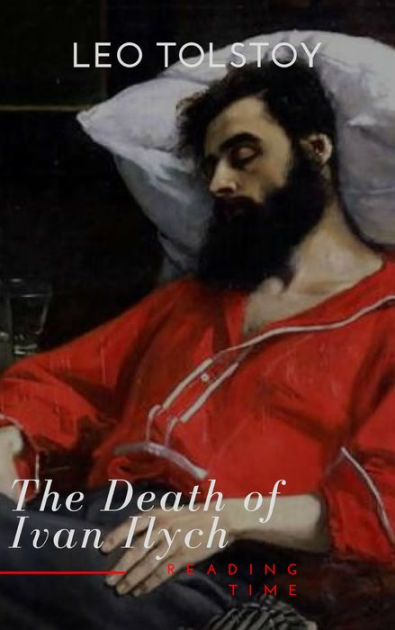
Recently I was listening to Karen Swallor Prior in discussion with Matthew Barrett on the Credo Podcast. One of the things that came up was Tolstoy’s The Death of Ivan Ilych, and that discussion prompted me to re-read it. One of the nice things about this story is that it is so short. Everyone has heard of Tolstoy, but most people do not have the courage to take on some of his better-known novels such as War and Peace (1400 pages) or Anna Karenina (950 pages).

If you would like to read it, you can download it here (I’m not sure about the quality of the translation – but hey! it’s free). Note that the following reflection contains spoilers if you haven’t read the story yet.

I am struck by the power of words, ideas, and story. In only 50 pages or so, Tolstoy harnesses that power and delivers to the reader a profound encounter with truth. One of the first things that strikes me in the story is the brutal honesty of the internal dialogue. Tolstoy gets inside the mind and around the various self-deceptions we employ and reveals what is truly there in all of its ugliness. It is done in a matter-of-fact way:

Each one thought or felt, “Well, he’s dead but I’m alive!” But the more intimate of Ivan Ilych’s acquaintances, his so-called friends, could not help thinking also that they would now have to fulfill the very tiresome demands of propriety by attending the funeral service and paying a visit of condolence to the widow.

The story reveals how hard it is to come to believe something that you really don’t want to believe, something that has profound and far-reaching implications for the verdict of how you lived your life. We oppose these kinds of paradigm-shifts in many areas of our lives because re-evaluation is costly. We are invested in our way of seeing things. Within the story this is seen in everybody’s stubborn denial of their own mortality (save for the peasant Gerasim), and especially in Ivan’s wrestling with whether he has lived a good life. There were many layers to peel away before he could get to the honest core of this question. It is only at the end of a long struggle that he breaks through his own defenses to the truth:

… the question suddenly occurred to him: “What if my whole life has been wrong?” It occurred to him that what had appeared perfectly impossible before, namely that he had not spent his life as he should have done, might after all be true. It occurred to him that his scarcely perceptible attempts to struggle against what was considered good by the most highly placed people, those scarcely noticeable impulses which he had immediately suppressed, might have been the real thing, and all the rest false. And his professional duties and the whole arrangement of his life and of his family, and all his social and official interests, might all have been false. He tried to defend all those things to himself and suddenly felt the weakness of what he was defending. There was nothing to defend.

… he saw himself—all that for which he had lived—and saw clearly that it was not real at all, but a terrible and huge deception which had hidden both life and death.

There is another dimension to this. Just like Ivan has been living in a cocoon of self-deception, the same is true for his colleagues and his family in their own ways. As mentioned above, they are all in denial about their own inevitable death. But without the harsh and inescapable pain to shock them into a sober honesty, we do not see these characters make any progress towards escaping that deception.

At the very end, in the last two or three hours of Ivan’s life, he experiences a conversion and rebirth. He breaks through into light. Tolstoy does not name Christ, but rather describes the change of heart and makes an oblique reference to God:

At that very moment Ivan Ilych fell through and caught sight of the light, and it was revealed to him that though his life had not been what it should have been, this could still be rectified. He asked himself, “What is the right thing?” and grew still, listening. Then he felt that someone was kissing his hand. He opened his eyes, looked at his son, and felt sorry for him. His wife came up to him and he glanced at her. She was gazing at him open-mouthed, with undried tears on her nose and cheek and a despairing look on her face. He felt sorry for her too.

…He tried to add, “Forgive me,” but said “Forego” and waved his hand, knowing that He whose understanding mattered would understand.

… He sought his former accustomed fear of death and did not find it. “Where is it? What death?” There was no fear because there was no death.


In place of death there was light.


“So that’s what it is!” he suddenly exclaimed aloud. “What joy!”

Modern secular readers are probably tempted to view this as a moral reformation or a kind of epiphany, but Tolstoy clearly has something deeper in mind. It is quite common in literature for the conversion of characters to be described in ways that hint at Christ but do not explicitly name him. I’m not entirely sure of the reason for this. C.S. Lewis discusses it somewhere, commenting on the habit of medieval Christians to ‘hide’ Christ in pagan themes and deities in their fiction, something he does in his writing as well.

Nevertheless, the Christian reader can recognize many (though not all) of the elements of true conversion: conviction of sin, repentance for sin, and a changed heart with new desires. Is this fictional portrayal sufficient to point others towards faith in Christ for their salvation? No. But what good fiction (and good art generally) does is faithfully represent some part of reality, it serves as a signpost on the good road. In doing so it adds one more voice to that choir made up of countless voices, singing not the same note but a great and variegated harmony.

Flashback: 1984… and the Gospel

I’m going back through my old blog posts and tagging them appropriately, categorizing them for the sake of organization. This is forcing me to read over some old posts I had forgotten about. And some of them are better left forgotten, or they feel dated, or fall short for any number of reasons.

But some are not that bad! So I thought I’d recycle some of these a bit and throw them back on top of the pile once in a while.

Here is one that draws a tangent between the perpetually relevant dystopian 1984 by George Orwell and the gospel.

Chronological Snobbery – Part 2

In the first post on the topic of chronological snobbery we looked at what C.S. Lewis meant by the phrase and we considered two reasons for its particular prevalence in our own day. In this post I would like to explore related ideas from a thinker that has been helpful to me: René Girard.

Girard was a profound and original thinker whose work ranges over many disciplines. I am familiar with only a few small slices of that work, but some of those slices have been eye-opening. Consider his reflections on the words of Jesus in Matthew 23:29-30.

“Woe to you, scribes and Pharisees, hypocrites! For you build the tombs of the prophets and decorate the monuments of the righteous, saying, ‘If we had lived in the days of our fathers, we would not have taken part with them in shedding the blood of the prophets.’ 

Girard focuses in on the attitude of the scribes and Pharisees as they built tombs and monuments for prophets who were harassed, persecuted, and killed by their forefathers: “If we had lived in the days of our fathers, we would not have taken part with them in shedding the blood of the prophets.” He considers this as a kind of spirit, an attitude of the heart that any of us can adopt.

In the context of his broader theory of mimetic desire and the scapegoating mechanism, he describes this impulse as a mob of the living scapegoating the dead. For our purposes, we can simply say it is the attitude whereby one generation or group condemns those who came before them, exonerating themselves.

Girard points out one historical example of this in the phenomenon of Christian anti-Semitism, the kind that blames the Jews for killing Jesus. It says “if we, who are the spiritual children of Abraham, had been there when Jesus was crucified, we would not have joined the actual children of Abraham in condemning and killing Jesus. We are better than them. We alone would have resisted the mob. We would have stood by him when all had deserted him. We would have been willing to be killed with him rather than deny him.”

When one lays out what such an attitude really claims, as I did above, it starts to be seen for what it is. But usually the claim to superiority is not parsed and exposed for what it is. A claim like that is really more about the person making it than about the people he or she is supposedly superior to. At bottom, such statements are saying something like: “If everyone was as innocent as I am the world would be better. Therefore they must not be innocent like me, because someone has to be responsible for all this mess.”

Ask any high school class if they think they would have stood up against the Nazis if they had lived in Germany leading up to and during WW2. Most will say they would have resisted, which is to claim that if Germany had been populated with 21st-century North American teenagers instead of Weimar-era Germans, Hitler would not have done what he did. More pointedly, it is to claim that each of those students raising their hands, students who allow their wardrobes, attitudes, mannerisms, and vocabulary to be dictated by the passing fads and peer pressures of their social peers, yes these paragons of strict moral virtue, would have had the backbone to stand against what was an immense amount of social pressure and very real threats to their reputations, social standing, finances, and very lives.

In Romans 2:1, the apostle Paul writes “Therefore you have no excuse, O man, every one of you who judges. For in passing judgment on another you condemn yourself, because you, the judge, practice the very same things.” We live in a time when forces all around us seem to be working hard to whip up offense, outrage, and judgment towards the other. But not all judgment is the same. Some judgment is warranted and needed, but a lot of it is spiritually dangerous.

What do I mean by spiritually dangerous? Well, I mean that it is dependent on sin and it fosters sin. To judge others for what I am guilty of is to reinforce my own blindness to that sin, thereby distancing myself further from the truth about myself that might lead me to repentance and freedom. It is much harder to admit to a sin that I have clearly – and perhaps publicly – judged another for. I am less able to see it in myself when I get a kick out of pointing it out in others.

So this leaves the one judging further from the grace of humility, further from the grace of gospel sanity, further from the grace of honesty about my sin. These are graces that flow from Christ and to Christ.

When one takes this principle and applies it, what happens? It becomes very difficult to stand in judgment over our historical predecessors, because we now see that to do so is to fall into a very dangerous spiritual trap. It is the trap of saying that we are better and we would not have done what they did.

But does this rule out any and all criticism of the past? Quite the opposite: It allows for the kind of criticism that is good for us, rather than a danger. When I recognize that in the garden of my own soul grows the same root that in others bore such heinous fruit, it motivates me to weed it out. When I recognize that there is more than a little family resemblance between their sin and my own – if not in the fruit, then in the root – this encourages humility.

Indeed the effect is precisely the opposite of what self-righteous criticism produces, namely a deepening blindness with regard to my own expressions of whatever fault I am pointing out in others married to a swelling pride at being found so much superior.

The best writers of history intuitively (or perhaps intentionally) treat their subjects with this kind of moral sensitivity. They do not fall into moral relativism, which may be an enjoyable intellectual hobby for rich and comfortable Westerners, but is insufferable in the face of actual evil. Neither do they unleash a full one-dimensional moral tirade against historical villains, painting them as uniformly evil characters. Rather they preserve the humanity of both heroes and villains, allowing for nuance and being honest about the shortcomings of the heroes as well as the positive qualities of the villains, all while writing with a sense of moral clarity. This kind of history proves informative and beneficial to the reader. It is humbling, sobering, inspiring.

Moving from history to the contemporary, we can apply this idea to so many current cultural issues. For example, I see a lot of folks these days eager to tear down statues of people who, terribly flawed and implicated in evil as they may have been, are nevertheless in many ways their betters. Leaving aside the specific arguments for or against any particular monument, or even for the taking down of statues in general, I just want to point out that this kind of fury, this kind of one-dimensional judgment of those in the past, is spiritually dangerous for all the reasons described above.

To take an example from the opposite side of the culture wars, we have the phenomenon of so many conservative religious leaders who were so thundering in their denouncing of sexual immorality being revealed to be sexually immoral themselves. Zacharias, Falwell, Hybels, and the list goes on and on. We all know such failures do not happen overnight. So we have someone publicly denouncing a sin in others that they are not just struggling against but positively nurturing in their own hearts.

This can happen on the political left as much as on the right, both inside and outside the church. But from my perspective, which is admittedly conservative, it does seem to be a particularly fashionable attitude among progressives on the left these days. If you think I’m wrong about that, let me know why in the comments.

Peter Nimble

There is lots to love about this book. A great title, a great first line, and moments of brilliance throughout. The story moves at a fine clip and carries the reader along to an exciting finish. My kids read this book as part of their schooling and they adored it, so I wanted to read it also. I can see why they were taken with it! It certainly leaves the reader wondering what will happen next at each chapters’ end. And while I enjoyed reading this book, I wanted to enjoy it more. There were a few hindrances and shortcomings that impeded that enjoyment. As a debut novel, I say bravo and well done! If I were to write a first novel this good, I’d be a happy man indeed. And so I offer some thoughts – in a spirit of constructive criticism – on what kept this book from being, to my mind, on par with the classics.

10806008

First, while the breadth and playfulness of a fertile imagination is on display throughout the book, there is a certain lack of cohesion and gravitational center to that imagination. The worlds, characters, landscapes, buildings, and monsters are all fantastical and creative, but it felt like there was something lacking that would draw them all into a narrative that fit together well. This unpredictability can give the reader a kind of whiplash as she tries to keep pace with the story. A few unexpected twists and turns makes a story interesting; but constant unexpected turns undermines the stability of the narrative and gives it a chaotic feel.

Second, and related to the first point, is the issue of world-building. This is the bread and butter of all fantasy-fiction. The author must build a world that is believable. But believable does not mean it must conform to our world. As Tolkien said, the key is that world must be internally consistent – what happens there must make sense within the framework of that world. This is the secret ingredient that explains why some fantasy worlds feel real, like Middle-Earth, Narnia, and Aerwiar, and others don’t. The author here shows real promise in the world that he creates, and yet fails to fully convince the reader that this place is so real in his own mind that all this could really take place.

Third and last, stories are irreducibly moral. The best stories are deeply moral, for it is the moral instinct in myself as a reader that makes me care deeply about the characters. On this point, once again, the author does a good job with some characters but does not quite pull off a complete victory. We see some development in Peter Nimble, but not a whole lot. His moral character remains quite static, while his self-understanding grows as he discovers his true identity and steps into the role he has been destined for. Sir Tode seems to me to be more promising, for we find out he is largely a fraud and has not truly earned his knighthood. Yet this assumed persona of a brave knight seems to draw out his courage and moral fibre and self-sacrifice. By the end of the book, despite the dubious origins of his knighthood, he has grown into the true picture of knighthood. This seems to exemplify something that C.S. Lewis pointed out: when growing in virtue, we often start by behaving as if we were more virtuous than we really are, which can feel like a kind of pretending or false persona. But if persevered in, this is often the route by which we do really become virtuous.

The best stories have a moral depth that speaks deeply to the reader about right, wrong, goodness and evil. While the book had a pretty clear moral compass (unlike the nihilistic morally-relativistic nonsense that sometimes gets passed off as modern fiction these days), it would have been improved, and would leave a deeper impression on the reader, if the characters’ moral trajectory had been explored more deeply.

All in all, a very fine book. I look forward to reading some more of Auxier’s fiction and seeing how he has grown as an author over the years.

Chronological Snobbery, Part 1

This is part 1 of 2. Click here to skip ahead to part 2, or see the link at the bottom.

It was Owen Barfield who induced a young C.S. Lewis to abandon what he called ‘chronological snobbery.’ I like the term, but its meaning is not immediately clear. Is this what Lewis is referring to when he exhorts us to read old books as a corrective to the errors of the day (most famously argued in his essay “On the Reading of Old Books”)?

But no – it cannot mean simply reading old books since Lewis was already reading old books even at an early age (he loved classical poetry), well before meeting Barfield and having his chronological snobbery apparently cured. So what is it, then?

In this post I’d like to explore these ideas a little bit. Let’s start with what Lewis writes about it:

In Surprised by Joy, he defines chronological snobbery as

“the uncritical acceptance of the intellectual climate common to our own age and the assumption that whatever has gone out of date is on that account discredited. You must find why it went out of date. Was it ever refuted (and if so by whom, where, and how conclusively) or did it merely die away as fashions do? If the latter, this tells us nothing about its truth or falsehood. From seeing this, one passes to the realization that our own age is also “a period,” and certainly has, like all periods, its own characteristic illusions. They are likeliest to lurk in those widespread assumptions which are so ingrained in the age that no one dares to attack or feels it necessary to defend them.”

There is overlap here with his famous quote from the essay mentioned above on reading old books:

Every age has its own outlook. It is specially good at seeing certain truths and specially liable to make certain mistakes. We all, therefore, need the books that will correct the characteristic mistakes of our own period. And that means the old books. … Not, of course, that there is any magic about the past. People were no cleverer then than they are now; they made as many mistakes as we. But not the same mistakes. Two heads are better than one, not because either is infallible, but because they are unlikely to go wrong in the same direction. To be sure, the books of the future would be just as good a corrective as the books of the past, but unfortunately we cannot get at them.

Reading old books is part of the solution, but the assumption of “newer is better” goes deeper, and it will likely take something more than mere exposure to old ideas to cure you of it. The fact that today we have many university humanities departments devoted to exposing the ‘hetero-normative patriarchal misogyny’ of Shakespeare and Dante and Milton makes that clear enough. They are reading the material, but with such a distorted lens that it renders no benefit, like eating a hearty stew but straining out everything except the onions.

This snobbery, like all snobberies, is subtle and mostly invisible to the one infected with it. It is something that one detects in others but never in oneself. Think about how often you have heard “what a snob!” said, and how not once was the person saying it talking about themselves. We accuse ourselves of many things, but snobbery doesn’t tend to be one of them.

I’m cultured, not a snob, you silly peasant.

The attitude, to the degree that one is conscious of it, seems entirely justified by the facts of the case. “After all, I have very good reasons for feeling this way!” So we are dealing with something that must be exposed before it can be dealt with.

I take it as a matter of fact that this attitude is widespread today. And my hunch is that the less historically informed our society becomes, the more this default assumption about the superiority of our fashionable ideas – this snobbery – will spread. I can see two other reasons for its prevalence.

First, there is this myth of progress. Generally speaking, the field of engineering is more advanced now than 400 years ago. The same is true for medicine, physics, and chemistry. These are the hard sciences where a wrong theory pretty quickly slams into the solid wall of objective reality, or better, the world as God made it. Since the delay between theory and result is brief, misguided ideas tend to reveal themselves as dead ends before getting too far, and more importantly, before the theorizers get too attached to the ideas.

But it really is another story when we are talking about fields such as sociology, anthropology, morality, or ethics. The myth of progress is the assumption that steady progress has been taking place in these fields similar to the progress that we can all see happening when we look out the window at the high-speed trains, jet-liners, and orbiting satellites. In this mode of thinking, the latest idea is, by virtue of its novelty, the best idea.

The problem is that the delay between theory and result in these other fields is much longer. By the time the fruit of misbegotten ideas becomes undeniable, not only can there be a huge human cost, but sometimes the entire field of study has become institutionally committed to the bad idea and cannot abandon it despite the growing evidence for its failure.

Second, it is basic human nature to desire to feel superior to others. Simply put: chronological snobbery allows me to feel superior to an awful lot of people – and most of them are not around to call me out on it. It is therefore a satisfying attitude to adopt.

To return to a point in the second quote above, every age – our own included – has its characteristic virtues and its prevalent vices. Future ages, or contemporary observers from outside the culture in question, are able to see and denounce what we cannot. And so we rightly reject the cruel tortures of the medieval world, the inexcusable infanticide of the Romans, and the perverted pedophilia of the ancient Greeks. But if we are not careful, we will miss their virtues and miss the chance to see and address some of our own vices.

In the next post, I’d like to reflect on some related insights I’ve gleaned from René Girard.

A Baby’s Stare

Have you ever thought about the uniqueness of a baby’s stare? Since having our 4th child in November 2020, I have been thinking about this. Of all our children, this one is the stare-iest. She just loves to look; she’s glad to gaze and gape and gawk! Yes our little Lucy is simply obsessed with observing everyone and everything around her.

“I see you.”

I have spent many luxurious minutes returning her stare and wondering what might be going on in that adorable little head of hers. I realized that I could not exchange a stare like this with just anyone in the street. Could you imagine silently staring into the eyes of a stranger on the street for even 15 seconds? 30 seconds? An entire minute? Try it. Folks nowadays hardly make eye contact at all, never mind a sustained stare. “Do I know you? Is there a problem?” … “I’m calling the police.” Heck, even my other kids wouldn’t stand for that: “Dad, stop being weird.” Or my wife: “What are you doing? Do I have something on my face?!”

But with baby Lucy, there is no such reaction. Why is that? For one, she can’t talk. So while she’s staring at me, I can’t engage her with a question. If I try to stare at anyone verbal, they will inevitably engage me with words quite quickly along the lines described above. But if they know I can’t speak, they will intuitively put up with a much longer gaze. In the absence of words, we find other ways to communicate.

She’s especially expressionless soon after waking up, as seen here.

Still, it’s more than that. A non-verbal person of normal intelligence will use hand signals and facial expressions to communicate. But a baby can’t do even that. And this gets to the heart of the vulnerability and magic of babies. They come into the world with no ideas about how the world should be. A baby simply takes in the world as it is. And to do that, a baby stares. (Babies also put every single possible thing within their reach into their mouths like some kind of overzealous Roomba, but that’s not the topic of this particular reflection.)

So we have the situation that we embrace from infants what we would never accept from anyone of an older age – long silent stares. As you may know, babies don’t really make facial expressions in reaction to visual stimulus for the first few months. It’s hard work to get that baby to smile back at you. So the stare I’m talking about is wide-eyed, mouth slightly open, and expressionless. Which goes back to my previous point: a child simply takes in the world around it without making any value judgement on what it finds. It has nothing to compare to, no way to evaluate. The mother it has becomes the idea of Mother; the father it has becomes the idea of Father; the family and home it has likewise. I often imagined Lucy saying to herself, when she was in one of her gazing moods, “so this is what life is like.” This open-hearted receptiveness contributes to the weightiness of parenting; who is equal to this task?

So the next time a baby stares at you, don’t look away, don’t feel awkward, don’t laugh it off. Something momentous is happening. This child is taking in everything it can through the windows of the mind we call eyes. The open-hearted receptiveness you see on display will not survive the next two decades of various pains, disappointments, losses; no – it will give way to some level of guardedness and maybe even cynicism. While that may be inevitable, maybe this beautiful stare can remind you of a time when you were less guarded and cynical. And if you can, use that moment to let down your guard and stow your cynicism: that would make the world just a little better for this baby and for you.

Reflection on The Strange Death of Europe by Douglas Murray

Say what you will about Murray, he is a pretty honest guy. And these days that is a rare quality. He is willing to say what many are not, and willing to ask questions which make people squirm. The on-the-ground feel of the book was one of its strengths. Murray draws on his travels and conversations for first-hand experience of the realities on the ground. Upon this foundation he builds his arguments using carefully researched statistics and citations.

I think there is a counter-argument to be made, and I hope it is made publicly. The problem seems to be that these important conversations and debates are so often being shut down with slurs and slanders before they can even begin. Despite the fact that Murray everywhere rejects far-right nationalism and racism, a quick glance at the reviews in major outlets shows that these accusations are often made.

While the entire book was interesting, the most fascinating part to me, as a Christian, was chapter 16, titled “The feeling that the story has run out.” In this chapter, Murray delves into the big questions: “What am I doing here? What is my life for? Does it have any purpose beyond itself?” and reflects on the inability of modern Western Europeans to come up with satisfying answers: “the answers to these questions that we have held onto for centuries seem to have run out.” With striking clarity, Murray argues that modern Europe, with its culture of human rights and freedoms, is built on “beliefs that we have left behind…” And yet, despite acknowledging that this has prompted some “to become better acquainted with our own traditions,” such as Christianity, he says multiple times that modern people “cannot force themselves into sincere belief.” It is clear that he finds this to be true for himself as well as others.

In another striking part of this chapter, Murray reflects on a quote by Richard Dawkins to the effect that the theory of evolution bequeathed to us by Charles Darwin has solved ‘the greatest of all mysteries’: “Right there is the gulf that now exists between the accepted secular-atheist world view of our culture and the reality of how people live and experience their lives. Because although Dawkins may feel that our mystery has been solved – and although science has indeed solved part of it [notice how Murray is more modest in his claim than the ever-bombastic Dawkins] – most of us still do not feel solved.” Turning to the fact that humans are now shown to be highly evolved apes, he says “we also know that we are more than animals and that to live merely as animals would be to degrade this thing that we are. […] We know we are something else, even if we do now know what that else is.”

Perfectly anticipating my exasperation at his clear-headed insights and half-answers, the next line is: “Of course religious people find talk like this frustrating because for real believers the question will always be, ‘Why do you not just believe?’ Yet this latter question ignores the most likely irreversible damage that science and historical criticism have done to the literal-truth claims of religion and ignores the fact that people cannot be forced into faith.” He is exactly right that I find it frustrating, but he is exactly wrong about the question I would pose. ‘Why do you not just believe’ is a stupid question to ask someone whose intellect and reason have raised objections to the content of Christianity. Real faith does no violence to the intellect, although it may transcend it.

The most crucial part of the quote above is Murray’s listing of his two main intellectual objections to belief: ‘science’ and ‘historical criticism’. So the questions should be: ‘Why do you believe science and historical criticism make belief impossible? Have you taken the time to read the best responses to those objections? Why is it that there are leading thinkers in nearly every advanced field of scientific knowledge who are devout Christians? Do you understand the science better than them?’ It’s almost like he’s read the pamphlets put out by the atheists and thrown up his hands and said “so it’s hopeless – no intelligent person can believe this God stuff!”

But Murray is certainly correct that one cannot simply choose to believe. There is a mystery to true conversion; as Jesus explained to Nicodemus: “The wind blows where it wishes, and you hear its sound, but you do not know where it comes from or where it goes. So it is with everyone who is born of the Spirit.” (John 3:8). Even once the intellectual objections are dealt with, there is a surrender, a yielding, an unveiling, an inner transformation, which only the Spirit’s work can accomplish.

Listen to that Existential Dread

In the Christian worldview, there is always a god.

In every person, there are desires and drives and values. Every person has purpose. Whatever most controls and compels you, that is your god. Whatever has the strongest hold on your emotions and behavior, that is your god.

In those with powerful addictions, this is easily seen. In others, however, and perhaps in yourself, it is not so easy to discern. But it is there, rest assured, as surely as there is a brain in your head if you are reading this. (Apologies to any brainless readers). This needs some nuance, as I recognize in myself the working of many different gods at different times, although I profess and strive to worship one God alone.

Speaking of the human heart, Thomas Chalmers put it this way: “Its desire for one particular object may be conquered; but as to its desire for having some one object or other, this is unconquerable.” This is from his excellent work, “The Expulsive Power of a New Affection,” which lays this out about as well as I have ever seen.

How can I know what these gods are? Where can I find them? How will I uncover their hiding places? Often this is a good thing that we’ve turned into a god thing. This is a large part of what counseling tries to do—let’s find out why you do what you do and feel what you feel. Discovering the roots of your behavior and emotions can be profound, enlightening, and transformative. For Christians, this rooting out of false gods and replacing them with the worship of the true God is one way (among many) of conceiving of progressive sanctification—the lifelong stuttering journey towards maturity and Christ-likeness.

One sure way to identify such an idol is to find where in your life you experience what I call existential dread. This is the feeling of the ground opening up to swallow you into darkness. We experience this when someone or something threatens one of our gods.

Falling into Pit

For example, as a young single man I took in a lot of solid teaching on marriage and developed a deep desire to be a good and godly husband. At some point this went from being a good thing to a god thing. It subtly became a part of my identity and hope. This was revealed over time as I experienced recurring existential dread when my wife would point out some obvious, glaring, usually minor shortcoming in me as a husband. These conversations would send me into the depths of despair and elicit unbidden a blizzard of dark emotions. Whoa. Touched a nerve, as they say.

This overly strong reaction was a flashing neon sign for those with eyes to see and ears to hear. It took me a few years to develop those eyes and ears. As a child of God I know I am to root my identity and hope in God Himself, but I only do this partially. I couldn’t accept the truth that I was not the kind of husband I wanted to be because I had to be that kind of husband. My worth was tied to it. And when that worth was threatened, a dark pit swallowed my heart.

Armed with this new insight, I can now repent of absolutely needing to be a good husband. In fact, shifting my hope from this god to Christ frees me to listen openly to my wife’s constructive criticism—the very doorway that edges me in the direction of being a good husband. Which, by the way, I still want to be.

Perhaps for you it is being a certain kind of employee, or boss, or leader, or spouse, or parent, or musician, or writer, or pumpkin-spice latte-maker, or anything else under the sun. This is what Calvin meant when he said that our hearts are idol-factories. To quote Chalmers again:

[The heart’s] desire for one particular object may be conquered; but as to its desire for having some one object or other, this is unconquerable.