The State of the Blog (What I’ve Been Up To)

Things have been quiet here at the blog, you might have noticed. Life has its way of crowding in and getting busy, doesn’t it? Work has been a couple notches busier than normal, and then I also recently was voted in to serve as an elder in my local church (again). By the way, I just signed up for the Amazon affiliates program, so that if you are so convinced by my writing to make a purchase on Amazon through a link on my site, I will become an internet millionaire through Bitcoin. I’m pretty sure that’s how it works. Anyways, moving on.

I’ve been keeping up my reading, though. I read Church Elders by Jeramie Rinne – simple and good on the topic. I finally got around to reading Rod Dreher’s Benedict Option, which I found myself resonating with. It’s a bleak perspective on the state of the West, to be sure, but I largely agree with his assessment. I also found that the loudest critiques of the book I’d heard were pretty obviously mis-readings of Dreher’s actual argument. I’ve got an idea to combine a review of it with a review of Aaron Renn’s Life in the Negative World (which is sitting on my shelf), putting the books in conversation with each other.

I also read a Canadian book called Divorcing Marriage, a collection of essays from social conservatives and lawyers from the era a generation ago in 2004 when homosexual marriage was just being pushed through the courts. It was astonishing just how much things have changed in the last twenty years. At the time, I was not politically or socially conscious. I was easily convinced by simple appeals to fairness and empathy that gay marriage regulated by the secular state was fine – it had no bearing on Christians and I could not imagine any reason why society as a whole might wish to retain a traditional view of marriage. Well, this book really helped crystalize my thinking, which I now realize was about as solid as my 100-year old barn that is half fallen over and whose beams are rotted. I hope to write something more extensive on this, we’ll see.

After finishing that I felt I was due for some classics, so I’ve read Sir Gawain and the Green Knight and the story of Percival, and I’m now reading Roger Lancelyn Green’s classic King Arthur and His Knights of the Round Table, which retells those two stories as well as many others. My son, who just turned 13, read it this year in his schooling so we’ve been able to connect over it. Lastly, I started Charles Dickens’ Great Expectations and am enjoying that as well.

Oh, I forgot, I’m also reading Thomas Watson’s The Lord’s Supper as recommended by Gavin Ortlund during his video on the topic. It’s excellent. It argues for what is known as the ‘Spiritual Presence’ view of the Lord’s supper, as a middle way between the excesses of transubstantiation and memorialism. I’ve become very interested in this topic as I’ve been thinking through re-enchantment and the church (more on which in a moment).

Did you know that both the Westminster Confession and the London Baptist Confession of 1689 took this view? Somewhere along the way the default evangelical view seems to have gotten filtered through enlightenment materialism and the supernatural was stripped out, leaving only the human-level interaction with memory and Scripture. This mere memorialism is the view explicitly laid out in the Southern Baptist document, the Baptist Faith and Message, as well as my own denomination’s Affirmation of Faith. But I haven’t been able to find out why. On the strength of which argument was the more classic reformed view replaced? I am eagerly looking forward to reading Dr. Michael Haykin’s book Amidst Us Our Belovèd Stands: Recovering Sacrament in the Baptist Tradition, which argues this point. Here is the short blurb summarizing the book:

When it comes to baptism and the Lord’s Supper, many Baptists reject the language of sacrament. As a people of the book, the logic goes, Baptists must not let tradition supersede the Bible. So Baptists tend to view baptism and Communion as ordinances and symbols, not sacraments.

But the history of Baptists and the sacraments is complicated. In Amidst Us Our Beloved Stands, Michael A. G. Haykin argues that earlier Baptists, such as Charles Spurgeon, stood closer to Reformed sacramental thought than most Baptists today do. More than mere memorials, baptism and Communion have spiritual implications that were celebrated by Baptists of the past. Haykin calls for a renewal of sacramental life in churches today—Baptists can and should be sacramental.

That’s exactly what I have been leaning towards. It marries my interest in historical retrieval & ressourcement and my desire to exhort evangelical churches to steward well the cultural movement towards re-enchantment.

I translated that desire into an article, my latest over at TGC Canada: Leaning into Evangelical Re-enchantment. If you haven’t, I hope you’ll read it. I was pleased to see Aaron Renn & Rod Dreher both linked to it at their Substacks – it’s a real blessing to a small-beans writer to get amplified and shared to much wider audiences.

I really don’t know much of anything about internet traffic, but I have to say I have been surprised at the sustained level of reading on this here, my little blog. I have been averaging about 150 visitors and 200 views a week since early this year. This may not interest anyone, but I find it interesting. Here are my most popular posts of 2024. The #1 article, about Adult AI, was boosted by a link from Tim Challies, which also led to an interview with Moody Radio’s Kurt & Kate in the Mornings, which you can listen to if you so wish. Challies is a singular blogging phenomenon.
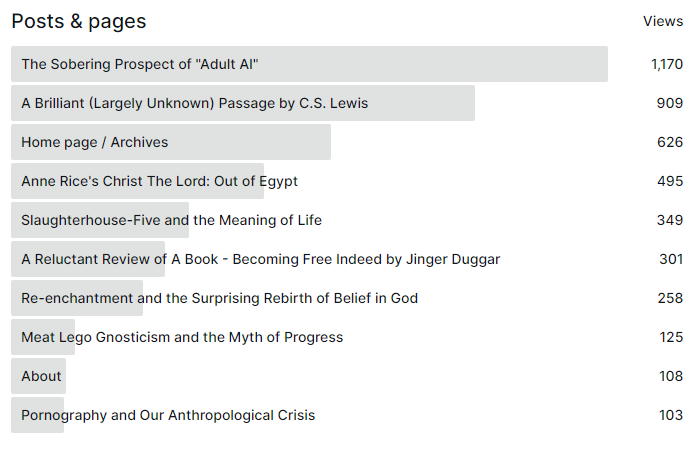
The #2 post, an extended quote from C.S. Lewis, has been quietly accumulating views week by week as people from all over the world find it, mostly through Google searches and perhaps links on forums. After that it seems that my reviews of popular books are of enduring interest. I would also like to add to my website here a page with links to all my published pieces elsewhere – a kind of central hub where those can be easily found.

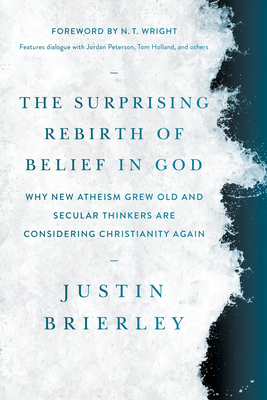
Aside from that piece at TGCC, I have one submitted to another outlet (which I haven’t been published at before) and I am waiting to hear back from the editors. It’s another piece about psychedelics. Speaking of psychedelics, I was pleased to be interviewed by none other than Justin Brierley for his excellent documentary podcast series, The Surprising Rebirth of Belief in God. The episode on psychedelics hasn’t been released yet, but I’ll link to it when it comes out. I think I will wind down my writing on psychedelics, however – I’ve said what I had to say, and I think there are others who are better placed to continue writing for the church on this topic.

That about does it for me at this point. I’ve got some articles at various points of completion: on the Pride Rainbow compared to Vaclav Havel’s greengrocer illustration; on cathedral beauty and gospel beauty; and an article on the Haitian Christian community in Montreal which has been commissioned by Faith Today.

As always, thanks for reading.

As an Amazon Affiliate I earn a small commission from qualifying purchases of books purchased through links on my website, while customers do not pay anything extra.

At the Mercy of Narcissists

I reluctantly read Mary Harrington’s recent article about Lauren Southern and the “tradwife” movement. It’s not a happy tale. I won’t blame you for being unaware of Southern—she was a Canadian “media personality” on the alt-right, working at times with Rebel news and featured on various conservative shows as she pursued activism and controversy. She left the media world and sort of disappeared when she got married at the age of 22, around 2017. Her dreams of being a traditional, stay-at-home wife—the ultimate rejection of feminism—had come true.

But those dreams turned into a nightmare. Her husband, it seems, turned out to be a harsh, cruel, selfish man. The marriage eventually fell apart, and she fled back to Canada with her child, where she had to rebuild a life from the ruins. The article goes into a lot more detail, if you’re interested. Harrington’s angle on the story is that these internet-generated ideologies, whether it be transgenderism or tradwifery, are disconnected from reality. The web, she writes, allows these “viral and overly simplistic ideas [to] replicate with seemingly very little reference to reality, human nature, or the world as it actually is.” As far as that goes, I agree with her. Mary Harrington is always a perceptive writer, but especially on the subject of technology. See here for my review of her book, Feminism Against Progress.

My interest, and the main point I’d like to make, takes a different angle on the sad story of Lauren Southern’s marriage. Simply put, it’s that shared values are not enough to build a loving marriage; for that, you need godly character, or what we might call true virtue. Harrington tells the story: “By the time she met her husband, she’d been condensing conservative values into ‘listicle’ form as a media influencer for some years.” (A listicle is an online article that is really just a slightly-expanded list, usually of the ‘how-to’ kind). The man she met obviously agreed with her “conservative values,” which formed the basis for their shared value commitments and future plans together. But when I was retelling this story to my wife, she immediately spotted a problem: Southern had been publicly arguing for a strongly anti-feminist, pro-traditional lifestyle as a single woman. “That’s sure to attract narcissists,” she said. And why not? Any selfish man would want to find himself a woman who believed it was her duty to submit and obey and smile and keep a happy home.

Narcissists are very good at pretending to be something they are not. It’s easy to espouse agreement about values, but the proof is in the track record of relationships past and present. There are so many things I don’t know about this situation, so I can’t speak with any authority on the specifics, but my sense is that we are living through a time when men and women are having a lot of trouble finding one another, falling in love, and forming stable families. This seems to be the case regardless of political persuasion. On the Left, there is a wholesale breakdown of the family, or even gender, as stable categories. As women trend more progressive as a whole, we are seeing a lot of feminine-driven pathologies crop up across our culture, including the fact that women initiate the majority of divorces. But on the Right—where I would find myself (to some degree) politically—I also see all kinds of problems, some of which are illustrated all too well by this emblematic story.

Without virtue, no healthy relationship can grow. Without character, integrity, and humility, no flourishing marriage can form. Shared values are not nearly enough; shared dislikes and hatreds even less so. Have we lost sight of this basic kind of wisdom in our internet age? Are we so entrenched and caught up in culture wars that we think someone on the same side as us is sure to be a good spouse? There is a profoundly ugly misogyny that does exist and spread in some red-pilled, anti-feminist corners of the web. It’s not as widespread as the cultural left would like to claim; they really cannot tell the difference between a godly conservative man and a moral monster. But it’s widespread enough to be an issue that needs to be addressed.

If the women in these kinds of spaces don’t have wisdom, discernment, and good community around them, they are simply at the mercy of narcissists. What about that good community? As I read the article a part of me was thinking that this terrible state of affairs could have been helped so much by a healthy local church community. Such a church could have stepped in and advised against the marriage beforehand, or supported her once the issues arose. Good elders could have confronted the husband. But it doesn’t sound like such a church was ever a part of their lives. And with our increasingly fragmented, individualistic communities, nothing else was there to take its place.

Here is another lesson that returns to the theme of technology. Online communities can be great in some ways, but they cannot replace the embedded, embodied communities that once formed the fabric of our societies. When the marriage is really a nightmare, a friend at the front door or a place to stay is what you need, not an avatar or emojis on a messaging platform. A healthy local church is the last best remnant of this kind of community.

But for those of us with daughters, there is one more lesson to draw: we must model for them what good men are like and teach them to spot bad men. And then let’s embed our families in thick communities that look out for one another and take care of each other.

To be clear, I am not blaming Lauren Southern for the situation she found herself in. As I said above, I really don’t know the details and it’s not my place to render that kind of judgment. I do think the situation, public as it is, can be instructive for us. The article includes an unexpectedly positive note, telling how Southern found healing as she lived with her child in a small cabin in the woods, connecting with working class people living in trailers nearby. She described it as “unexpectedly healing, and filled with a genuine sense of community.”

Sorry, Finch: Robots Aren’t Humans

My wife and I like Tom Hanks. When we are flipping through the options on a quiet evening, if we see a Tom Hanks movie we haven’t seen, we’re more inclined to look into it and watch the trailer than not. So here we were with access to Apple TV (because we got it for free when we bought our TV recently, and then paid for an extra month to finish Masters of the Air, and then forgot to cancel it), and this Tom Hanks movie shows up: Finch. Post-Apocalyptic? Hmm, we aren’t really into cannibalism. Oh it’s just PG-13, and apparently mostly about a dog. Okay sure, let’s try it.

Fair warning: I’ll be dropping some real spoilers here. The story is that Finch, a man dying of radiation poisoning (we are never told how he got it), has been living by himself in a wind-turbine powered facility outside St. Louis after a worldwide cataclysm caused by a freak solar flare. I’ll give them points for going with a climate catastrophe that isn’t human-caused; very counter-cultural. He stays away from people because they are doing what people always do in post-apocalyptic movies: hunting and stealing and killing and eating each other. Thankfully all of that is left pretty much off-screen – there are plenty of movies where you can get your fill of such things. Finch has a dog who he really loves, and a couple of robotic helpers that he designed, built, and programmed.

His greatest creation is the robot we meet near the start of the film, a bipedal, humanoid robot with a kind of advanced AI ability to learn and pre-loaded with a huge chunk of the accumulated knowledge of humankind. This robot is eventually given the name Jeff. What becomes clear as the movie progresses is that Finch has designed Jeff to take care of the dog when he is gone. And in order to escape a deadly storm, they take a dangerous road trip to San Francisco in a special RV.

Hanks is a good enough actor to carry this movie by himself just like with the classic, Cast Away. “Wilson!” But what I found particularly interesting was the way in which the writers and moviemakers decided to present the robot, Jeff. Everything was designed to make the audience like Jeff. His questions and foibles early on are exactly those of a curious and naïve toddler. Later he takes on the character of a typical teenager as he insists on driving the RV before Finch is ready to trust him with it. Lastly, he matures into the caretaker Finch wanted for his beloved dog. What it boils down to is this: everything likeable about Jeff is what reminds us of humans and not robots. Robots cannot and do not have agency or will, they do not have consciousness or conscience. But we are pretty obsessed with projecting our own internal experience of human selfhood onto the robotic creations we make.

So this is why the robots like C-3P0 and R2-D2 in Star Wars are actual characters – because they behave like human beings and not robots. Back in the 70s the kinds of robotics in the movie were a far-off dream. But not anymore. The more technology and AI advances, the more this spell will be cast, trying to convince us that somehow robots can be as human as we are, that they can think and feel as we do. If you pay attention, this messaging is already out there loud and clear. I will not here divert into the separate but related conversation about whether AI or any other artificial brain-like technology can be somehow influenced or occupied by discarnate intelligences. The answer to that question is a thorny mess of nightmare fuel. For now, let’s stick to the movies.

There is an interesting comparison to be made between Cast Away and Finch. In Cast Away, Hanks’s character becomes so lonely that he paints a face on Wilson and starts talking to him like a friend. The audience knows Wilson is not real, but we also understand that there is something deeply human about the need to connect with someone else like us. It is not good for man to be alone. After all the animals had passed by Adam, the conclusion of the matter was: “But for Adam no suitable helper was found.” This goes deep. We understand that extreme solitude will strain and fray the sanity of almost anyone. But Cast Away does not try to convince us that Wilson is really a suitable friend for Hanks. If anything, the movie helps us realize that pretending to have a friend as a way of holding on to your sanity is better than losing it entirely.

But Finch is a different story. After a pretty interesting opening and middle section—the character is compelling, the robot and dog are amusing, the adventures are exciting—the ending is one of the most dissatisfying movie experiences I can remember. And it is so dissatisfying exactly because it tries to present itself as a happy ending. What is that ending? A montage multiple minutes long of the robot, Jeff, taking care of Finch’s dog after Finch dies. Playing fetch. Feeding it. Ta-da! A robot taking care of a dog, and all the humans dead and gone, or still killing each other like animals off screen somewhere. Finch tries to convince the audience that humans are expendable, and that the best parts of humanity—the love, care, and goodness—can be pulled off just as well by clever robots. Cast Away took away all the humans except one to reveal something profoundly true about humanity; Finch took away all the humans and pretended it didn’t matter.

I’ll tell you – this really did not sit well with me. “Who cares?” I said to myself. If there are no humans to experience it, remember it, tell of it; no children to raise and bequeath what little we have to— then who cares if a robot takes care of a hundred dogs for eternity? The image of God resides not in robots and dogs, as good and glorious as technology and the canine species is. How could that be the ending of the movie? How could that possibly feel like a happy ending to anyone? Because—guess what?—there will not be any robots or dogs watching and comprehending this movie. Why? Because they can’t.

The way this movie resolved, it felt like an advertisement for post-humanity. “Time for this failed experiment called humans to shuffle off the stage and leave things for the robots and animals.” It felt like it was trying to get me to feel good about something that my whole soul was screaming “this is BAD” about. I hope I’m not being unfair here. I love dogs and robots! But they aren’t humans. And no movie made by humans for humans should pretend it’s somehow going to have a satisfying ending for human hearts and minds if that ending has all the humans we spent 90 minutes getting emotionally invested into dead and buried. The only way people could make this movie is if they really convinced themselves that, at bottom, there is no fundamental difference between humans and dogs (just slightly different mammals) or between humans and robots (just computers in bodies).

This gets back to a theme I’ve been returning to repeatedly in this space, and that is the idea of a robust, Christian anthropology. What is a human being? The church really needs to get a handle on its answer to this question, because the assaults against human nature are going to get exponentially worse. If a robot can demonstrate some evidence of consciousness, should we grant it human rights? What about DNA alterations? What about the integration of digital hardware directly into human bodies, like the recent Neuralink patient? What is the Christian response to these things? Are they good? Permissible? Sinful? Demonic?

In a recent podcast interview with Annie Crawford, she quoted a certain Stratford Caldecott as saying: “We don’t know how to educate, because we don’t know what a human is; we don’t know what a human is because we don’t know what reality is; and we don’t know what reality is because we don’t know the One who made reality.” This sums up the depth of the problem nicely, as well as the beauty and nestled, fractal unity of the ultimate Answer.

Digging for Roots: Theological Retrieval

Amid the tumult of our times, a lot of people have been looking for answers. Among Christians, one of the ways that has manifested itself is a search for rootedness, or solid foundations. And because evangelical Protestants are often ignorant of the roots of their tradition, or have been taught to be suspicious of any appeals to tradition and history, they are primed for the idea that all of this – their upbringing – has been wrong and that what they really need is the oldest church with the strongest claim to have preserved the unbroken practice of the early church. I’m sympathetic to that impulse.

Photo by Eilis Garvey on Unsplash

Another related challenge is the transition to adulthood. This is true for believers of all stripes and traditions, since integrating one’s life into the structures and institutions of this world does not encourage faith but undermines it. I think it’s worth thinking about why that is.

It’s only natural that we adopt the beliefs of our parents as we grow. This state of affairs typically enjoys a phase of equilibrium until adolescence or early adulthood. Growing minds and widening spheres of life experience cause us to rub shoulders with all kinds of people who hold all kinds of different beliefs. This experience can be destabilizing; we encounter people who believe that what we believe is utter nonsense. And who’s to say they’re not right and we’re not wrong?

It’s worth mentioning that this is largely a modern phenomenon. In premodern times there was usually a consensus of beliefs within one’s village or town, with perhaps a few exceptions – eccentrics, weirdos, outcasts. But nothing like the cosmopolitan culture of today where every religion and every shocking variation of no religion can be seen walking the streets of any mid-size town.

Sociologist Peter Berger speaks of plausibility structures as a way to understand how one’s social environment contributes to certain beliefs, not by argument, but by making them look reasonable and respectable. In a homogeneous society, the structures of belief are extremely strong and rigid – all the people in one’s life basically share the same worldview. In such contexts it takes courage, imagination, and a fiercely independent spirit to dissent from the rigid consensus. Dissenters are then met with a wide variety of social pressures aimed at discouraging such non-conformity. Examples of this would be pre-reformation medieval towns or current-day middle-eastern Muslim societies.

Families and church communities have their own sets of plausibility structures, but when nested within a larger secular culture, that framework of shared beliefs and relationships is far less robust. Going to public high school, university, or getting one’s first job plunges a person into a pot pourri of different beliefs, philosophies, and lifestyles. For many growing up in the church, the experience of this plunge is bewildering. They are simply not equipped to process it. They hear compelling arguments from authority figures like competent teachers or successful bosses that undermine Christianity’s claims. 

But more subversive than the arguments themselves are the subtle workings of other dynamics: the social pressures that play on our desires to be liked, included, and accepted. To be thought clever, right-thinking, and on the correct side of important issues.

Under these kinds of pressures, it is quite easy for a faith that isn’t deeply rooted to wither away. My own experience has taught me that theological and historical retrieval can serve as a kind of inoculation to these forces. That brings me to the work of Gavin Ortlund, and specifically his book Theological Retrieval for Evangelicals as well as his thoughtful and substantive video content on his YouTube channel, Truth Unites.

Gavin’s strengths are his academic rigor, his irenic demeanour, and the depth of his familiarity with the primary sources of church history, including Roman Catholicism and Orthodoxy. And for bonus points, he regularly interacts with the work of C.S. Lewis.

Speaking of Lewis, I often think of this memorable passage from Screwtape Letters when pondering this issue:

One of our great allies at present is the Church itself. Do not misunderstand me. I do not mean the Church as we see her spread out through all time and space and rooted in eternity, terrible as an army with banners. That, I confess, is a spectacle which makes our boldest tempters uneasy. But fortunately it is quite invisible to these humans. All your patient sees is the half-finished, sham Gothic erection on the new building estate.

When he goes inside, he sees the local grocer with rather an oily expression on his face bustling up to offer him one shiny little book containing a liturgy which neither of them understands, and one shabby little book containing corrupt texts of a number of religious lyrics, mostly bad, and in very small print. When he gets to his pew and looks round him he sees just that selection of his neighbours whom he has hitherto avoided.

You want to lean pretty heavily on those neighbours. Make his mind flit to and fro between an expression like “the body of Christ” and the actual faces in the next pew. It matters very little, of course, what kind of people that next pew really contains. You may know one of them to be a great warrior on the Enemy’s side. No matter. Your patient, thanks to Our Father below, is a fool. Provided that any of those neighbours sing out of tune, or have boots that squeak, or double chins, or odd clothes, the patient will quite easily believe that their religion must therefore be somehow ridiculous.

Screwtape Letters, chapter 2.

Notice the inadvertent revelation that the Church is glorious and rooted in eternity. Every true church is in some way connected to that vital reality. But the enemy works hard to set up plausibility structures such that the humdrum and all-too-human quality of any one local church can seem “somehow ridiculous.” Surely this cannot be the Church, the vehicle of God’s plan for the world. But here is a beautiful thing we should be reminding our congregations of regularly: that this little local church is in spiritual continuity and communion with the great stream of Christianity flowing directly from the apostolic headwaters all those centuries ago. 

So if you find yourself among the growing number of evangelicals troubled by the lack of historical rootedness in your tradition, dissatisfied by the shallowness of the faith that was passed on to you through your upbringing in Sunday school and youth groups, and hungering for a faith that has a tangible connection to that unbroken string of believers joining us to the first disciples, then I commend to you the work of Gavin Ortlund.

He has shown himself to be a worthy guide for introducing evangelicals and Protestants to the ways in which the Christian past can inform and deepen our faith. He has also done excellent work engaging with the claims of those branches of the Christian tree which most often attract disaffected evangelicals: Roman Catholicism and Eastern Orthodoxy. This engagement has been mostly on his YouTube channel, but it connects to the book on a number of levels.

The book itself is written at a fairly high academic level, with copious footnotes and robust engagement with academic journal articles and books. The book also ranges from extremely readable to quite challenging at points, using rarified theological language without bothering to explain and define terms. I’ve taken theological courses at a college level and am generally quite conversant with that world but I admit I had to google at least one term for which I was drawing a blank: perichoresis. Beyond the sometimes technical language, it can be mentally taxing to wrap one’s mind around the way that medieval or patristic Christians thought. Gavin does a good job guiding the modern reader across that conceptual gap but it is demanding nonetheless. The flip side of that effort as a reader is the reward of really grasping a foreign way of thinking. For example, I really enjoyed it when I finally started to grasp how the medievals understood God as being outside of time. Maybe understood is too strong a term, but I grasped something that had previously escaped me.

The most useful parts of the book for me were the introduction, the chapter on atonement, and the engagement with Gregory’s work on pastoral practice. The atonement discussion, for me at least, alone was worth the price of the book. Very helpful and edifying. Gavin’s YouTube content is more approachable and less academic than the book. He speaks to a popular audience but still makes regular use of primary sources when making his points. I don’t always agree with him, but he works hard to engage opponents in ways that I think demonstrate a good faith approach.

In conclusion, I think the book – Theological Retrieval for Evangelicals – as well as his increasingly popular YouTube channel, are both profoundly helpful to the evangelical Protestant church. There are large swaths of evangelicals who are not struggling with the kinds of questions this book seeks to address. But for those who are, I believe it could be paradigm-shifting. And if my reading of the cultural moment is correct, the number of people asking these kinds of questions will only be increasing for years to come.

As an Amazon Affiliate I earn a small commission from qualifying purchases of books purchased through links on my website, while customers do not pay anything extra.

On Facts & Meaning; Nihilism & Salvation

I recently re-read that great collection of essays & talks by C.S. Lewis, The Weight of Glory. Any regular readers here know I cannot go long without referring to Lewis’s thought in some way. I’m afraid that is just the way it’s going to be. I find reading Lewis to be like spreading a large bag of super-fertilizer all over the garden of my mind – it stimulates growth and activity of all kinds.

One of the essays in that book is called ‘Transposition’. It is on the more philosophical end of things, discussing how things on one level of reality look to the level below it, such as how 3-dimensional shapes can be represented on 2-dimensional paper but only in a flattened and reductionist way. You can find it online (usually bundled with other essays) but here is an audio version of it: https://www.youtube.com/watch?v=PXwJk8WtpUY.

He uses this analogy to make sense of how the reality of the spiritual so often looks and feels prosaic and explainable in material terms. He argues that this is exactly what we should expect, but that when one assumes there cannot be a higher realm then he will always find some such explanation:

And the sceptic’s conclusion that the so-called spiritual is really derived from the natural, that it is a mirage or projection or imaginary extension of the natural, is also exactly what we should expect; for, as we have seen, this is the mistake which an observer who knew only the lower medium would be bound to make in every case of Transposition. The brutal man never can by analysis find anything but lust in love; the Flatlander never can find anything but flat shapes in a picture; physiology never can find anything in thought except twitchings of the grey matter. It is no good browbeating the critic who approaches a Transposition from below. On the evidence available to him his conclusion is the only one possible.

This line of reasoning found its apogee in the New Atheists, who never grew tired of pointing out that such and such transcendent experience was really “just” this or that. You can see this little trick being pulled by Dawkins, Bill Nye, Neil DeGrasse Tyson, and so on. Here is a little clip of Jonathan Pageau making the very same point as Lewis:

It’s surely no accident that Pageau looks at the world hierarchically and symbolically, seeing it as laid out across different levels of being or reality. This is the same basic structure as what Lewis lays out in his essay. Near the end of the essay, Lewis makes his point even more explicitly, and I quite enjoyed it. Allow me to quote it at length:

I have tried to stress throughout the inevitableness of the error made about every transposition by one who approaches it from the lower medium only. The strength of such a critic lies in the words “merely” or “nothing but”. He sees all the facts but not the meaning. Quite truly, therefore, he claims to have seen all the facts. There is nothing else there; except the meaning. He is therefore, as regards the matter in hand, in the position of an animal.

You will have noticed that most dogs cannot understand pointing. You point to a bit of food on the floor: the dog, instead of looking at the floor, sniffs at your finger. A finger is a finger to him, and that is all. His world is all fact and no meaning. And in a period when factual realism is dominant we shall find people deliberately inducing upon themselves this doglike mind. A man who has experienced love from within will deliberately go about to inspect it analytically from outside and regard the results of this analysis as truer than his experience.

The extreme limit of this self-blinding is seen in those who, like the rest of us, have consciousness, yet go about to study the human organism as if they did not know it was conscious. As long as this deliberate refusal to understand things from above, even where such understanding is possible, continues, it is idle to talk of any final victory over materialism. The critique of every experience from below, the voluntary ignoring of meaning and concentration on fact, will always have the same plausibility. There will always be evidence, and every month fresh evidence, to show that religion is only psychological, justice only self-protection, politics only economics, love only lust, and thought itself only cerebral biochemistry.

His line about the one who has experienced love from within analyzing it and finding “the results of this analysis as truer than his experience” reminds me of the Preface to J. Budziszewski’s book “The Revenge of Conscience.” I read this fifteen years ago but I have never forgotten those opening pages. In them the Budziszewski tells the story of his conversion from materialistic naturalism (or nihilism as he refers to it) to Christianity. This is how he describes his love for his wife and family during that time:

I resisted the temptation to believe in good with as much energy as some saints resist the temptation to neglect good. For instance, I loved my wife and children, but I was determined to regard this love as merely a subjective preference with no real and objective value. Think what this did to very capacity to love them. After all, love is a commitment of the will to the true good of another person, and how can one’s will be committed to the true good of another person if he denies the reality of good, denies the reality of persons, and denies that his commitments are in his control?

In another place, he writes this memorable quote:

Though it always comes as a surprise to intellectuals, there are some forms of stupidity that one must be highly intelligent and educated to commit. God keeps them in his arsenal to pull down mulish pride, and I discovered them all.

It was ultimately his existential dread at the kind of person he was becoming that convinced him that if there was horror there must be its opposite as well: “I knew that if there existed a horrible, there had to exist a wonderful of which the horrible was the absence. So my walls of self-deception collapsed all at once.”

As the dominance of New Atheism fades and crumbles, there remain a huge number of people whose operative worldview was shaped and cemented by their arguments. Yes, there may be a “Surprising Rebirth of Belief in God” dawning among leading thinkers but these things take time to filter down to the masses. The fact is that there are still countless millions of people walking around with basically the same form of nihilism as Budziszewski describes above.

May their “walls of self-deception” collapse as well, unto light and life and salvation.

The Sobering Prospect of “Adult AI”

Samuel D. James has a thought-provoking article over on his Substack that I’d like to interact with a bit. His main point is that we need to prepare for a change in tactics in the fight against the scourge of pornography because one of the main arguments is about to be made largely obsolete:

For many years, one of the key arguments anti-porn crusaders have used is that pornography objectifies and degrades women. Theologically speaking, this is absolutely true. Yet it is not been an effective argument, either in convincing lawmakers to put more legal restrictions on porn, or in persuading individuals to resist it.

I agree. It is a true and important argument, but not a terribly effective one. In my own writing on this subject, I have used this line of argument in a limited way and focused more on wider societal effects and on the personal spiritual effects. James goes on to argue that the church needs to shore up other lines of argumentation in anticipation for the day when pornography is available which does not make use of human actors, but uses AI to generate content. Again, I agree that Christian leaders ought to have a full-orbed view of the harms of pornography, going far beyond a focus on the harm done to those who produce it. But I think Samuel James overstates his case somewhat, and I’d like to lay out a couple of counter-arguments in the spirit of friendly pushback and in the interest of sharpening our thinking on this difficult but vital issue.

Make no mistake: this is no academic debate. This topic forms the battleground where millions of men (and women) are being ensnared by incredibly powerful temptations and progressively transformed into despicable moral cretins.

So while I agree with the main thrust of the argument, I have two pushbacks to offer.

The first regards this statement: “The next era of pornography will almost certainly feature no humans at all, but lifelike computer-generated images that have no souls, no legal status, and no inhibitions.” I think this will be partially true, but perhaps not nearly as much as the author thinks. Why? Because there is a difference that the user will quickly discern between the real and the artificial, and just like the completely CGI-fabricated fight scenes in all the new Marvel movies feel so flat and weightless and unsatisfying, so the novelty of the AI stuff will probably not satisfy the perverted minds and lusts of the users. There is a dark corner of the porn-addicted soul that not only wants to be titillated, but wants to know that this scene really happened.

The second is with respect to this part of the last paragraph: “When there’s no one to exploit, there is still God to offend. When there is no one to be trafficked, there is still God who sees.” True enough about God being offended and God seeing, but the dynamic of sin in the human heart is always towards deeper involvement. So even if we grant that AI-porn will displace most of the Western human actors, the one-way ratchet of this sin-slavery will pull the user towards real-life experience of their dark fantasies, and this will sustain or even increase the tragic demand for trafficked humans to serve as victims to those fantasies.

Related to this, one must ask why OnlyFans grew to be so popular despite an inexhaustible amount of free pornography already available on the web. The answer to this question weakens James’ claim that “porn’s future is post-human.” The lonely lust-addled men clearly find some added value to the OnlyFans experience such that they are happy to part with eye-watering amounts of money. And what is that value? My guess would be the thin veneer of human connection that OnlyFans apparently markets as its main appeal. There is some possibility of direct communication and access. I have my doubts that even the best “Adult AI” offering will be able to replicate the particular thrill this provides.

So I agree that the church needs to articulate a strong and robust argument against porn that does not focus so much on the damage done to the people featured in it. This will be critically important when the so-called “victimless AI porn” becomes even more mainstream. But I am not as optimistic as Samuel James that all this will really lower the demand for content featuring real humans and real bodies, nor that this will result in any decrease in human trafficking for the purpose of sexual exploitation.

Despite my slight disagreements here, I really appreciate Samuel James’ writing both at his Substack and in his recent book, Digital Liturgies. In fact, I’m very pleased to say I have an enthusiastically positive review of it slated for publication in the March/April (print and online) issue of Canada’s biggest evangelical publication, Faith Today. I’ll link to that when it goes live.

Note: The core of this post was first written as a comment on the Substack article and then expanded here.

Re-enchantment and the Surprising Rebirth of Belief in God

The year of our Lord 2023 was the first full year of whatever era comes after the second Elizabethan age, what we might call the long twentieth century. As we turn upon this hinge of history, if you’ll permit me a mechanical metaphor, it feels as though the transmission long left in neutral is grinding its gears and lurching us all forward towards some foreboding edge.

In the wake of Queen Elizabeth’s passing in 2022, I wrote a few words of reflection and poetry. What I tried to express in that piece was the combination of two strong impressions at work in my mind: the decline of our civilization and the hope of renewal. After reading the stimulating but pessimistic Rod Dreher, as well as the piercing but somber insights of Paul Kingsnorth, I feel as though that second element, the hope of renewal, is perhaps more of a distinctly Protestant posture than I had previously realized. Why might that be?

Well, I don’t think it’s terribly complicated. It was the Protestant church which was born in the midst of a bona fide revival as it recovered the glorious gospel which had too long been obscured. For a tiny taste of how that spiritual outpouring was experienced by normal everyday people in medieval Europe at the time of the reformation, see this short clip of pastor Mark Dever holding forth about assurance of salvation. It was the Protestant church which served as the vehicle for the Great Awakening which revitalized not only the church but affected the whole of the British empire (including the American colonies).

This heritage of revival and renewal is part and parcel of evangelical history, it shapes our imagination, and ever directs our hopes and prayers. I’m not at all sure this is true of Roman Catholic or Orthodox believers in the same way.

How fitting then that in the midst of all this talk about re-enchantment and the end of our godless era, it is a Protestant who decides to write a book called “The Surprising Rebirth of Belief in God.” Justin Brierley, the author, is ideally situated to comment on these shifts in public thought as he is perhaps the one person who has moderated the most high-level conversations between Christians and skeptics over the last decade and a half in his role as moderator and host of the UK-based radio show and podcast Unbelievable, as well as The Big Conversation and Re-Enchanting. And also another podcast by the same title as the book. The guy keeps busy.

In contrast to the more pessimistic takes on the decline of culture, which abound for understandable reasons, this book looks at the silver lining which we might characterize as the surprising appeal a number of influential public figures (and regular people like them) have been finding in the claims of Christianity. Brierley argues that this may be the first fruits of a coming harvest, the first wave of a newly rising tide of faith.

The metaphor of the tide is taken from Matthew Arnold’s poem, Dover Beach. The key lines are as follows:

The Sea of Faith

Was once, too, at the full, and round earth’s shore

Lay like the folds of a bright girdle furled.

But now I only hear

Its melancholy, long, withdrawing roar,

Retreating, to the breath

Of the night-wind, down the vast edges drear

And naked shingles of the world.

Dover Beach (https://www.poetryfoundation.org/poems/43588/dover-beach)

Brierley opens the book with a stirring reflection on the idea that the powerful pull away from faith that characterized the two hundred years since the Enlightenment is now exhausted, the New Atheists of the 2000s being the last gasp of this spent force. I appreciated the well-researched summary of the New Atheist movement, from its confident rise to its fracturing and dissipation. Its bombastic, overheated rhetoric was matched only by the speed with which it collapsed into infighting and bloviating on Twitter. This dovetails with my own thinking and writing over the last few years, so I found myself agreeing wholeheartedly.

The term that kept coming back to me as I read the book was ‘plausibility structures,’ coined by the sociologist Peter Berger. The idea has a lot of overlap with Taylor’s ‘social imaginary’ in the sense that it tries to capture the intangibles of why certain fashions of thought prevail at certain times. What Brierley describes, through profiles of recent converts like Paul Kingsnorth and Martin Shaw, and Christian-friendly thinkers like Jordan Peterson, Douglas Murray, and Tom Holland, is a profound shift in our culture’s plausibility structures. Suddenly, it doesn’t feel ridiculous to posit that Christianity might be true. Rather, in an unexpected turn, it is those like Richard Dawkins, Sam Harris, or Steven Pinker, still bravely holding the line that Western moral values are self-evident from materialistic premises – despite the incoherence of this view and the rapidly accumulating counter-evidence in the accelerating moral disintegration of our societies – who now seem just a little bit ridiculous.

Time will tell whether Brierley, and I with him, are too optimistic about a turn back towards Christ. One of the interesting aspects of the “surprising rebirth of belief in God” is to note which streams of Christianity these people are being drawn to. There is certainly a draw to Orthodoxy that I never encountered until a few years ago, with the rising popularity of Jonathan Pageau and now Paul Kingsnorth and Martin Shaw. In my own circles I certainly see many people being drawn to faith and baptized into healthy evangelical Protestant churches in a way that wasn’t typical five years ago. As Protestants firmly in the tradition of the great revivals, I think we cannot help thinking in the categories of renewal and longing for the same in our day. How could it be otherwise? The evangelical Protestant heart studies those high points of church history and says, “Lord, do it again.”

This brings me to another point which I have been pondering since Rod Dreher picked up on my psychedelics piece over at Mere Orthodoxy and wrote about it on his Substack. It’s behind a paywall, but Dreher interacted robustly and appreciatively with the claims of the piece before turning to a reflection on his own college LSD experience and the metaphysical questions it brought up for him.

He goes on to clarify what he does and doesn’t mean:

Let me be clear: we are NOT animistic! We do not believe that material things are God. There is an ontological gulf between Creator and Created. Yet we also believe that the divine energies (as distinct from the divine essence) fills all things. It’s like when the sun warms a meadow in the summer, we believe that the energies of the sun penetrate the meadow, and in some sense become part of the meadow’s existence. The lesson for us in this newsletter’s context is that the barrier between matter and spirit is far more porous than most of us moderns think. This is how the cosmos is truly constructed. This was far easier for pre-modern people to perceive; the use of psychedelics is a way to temporarily recover some of that pre-modern perception.

I find this all extremely interesting for a couple of reasons. First, the idea of modern and pre-modern metaphysics. Canadian Baptist theologian Craig Carter, author of the highly regarded ‘Great Tradition’ books, has written very helpfully on his Substack about these different approaches to metaphysics. Here is what he writes in a post called ‘Can Theology Do Without Metaphysics?‘:

The classical metaphysics of premodern Western culture sought to articulate what C. S. Lewis called “the Dao,” that is, the natural law that many cultures have recognized as built in to the fabric of reality. This natural law or wisdom has functioned as the foundation of cultures from Egypt to China to Israel. Positive law is an elaboration of it. Religion reinforces it. Political arrangements are judged by it. Morals are based on it.

After explaining how Plato made the foundational contribution to this project, he argues that “[d]uring the first five centuries of church history, the Platonic tradition was integrated with biblical revelation and the result was the Christian Platonism of Augustine.” He goes on to claim that the medieval synthesis of Aquinas was a high water mark for metaphysics, the undoing of which gave us modernity. After discussing how modernity manifests in three different modern approaches to theology (liberal, fundamentalist, and Barthian), he writes the following conclusion, which I will quote at length:

What can we take away from all of this? It seems to me that three points stand out as most important:

  1. Christian theology is not merely a narrative we tell each other to express our experience of God. Rather, it is a metaphysical description of reality, that is, of God and all things in relation to God. It deals with objective truth, not merely subjective opinion.
  2. Since metaphysical realism is a deduction from biblical revelation and necessary for an adequate statement of Christian orthodoxy, we must go back before the Enlightenment to the period of Protestant scholastic orthodoxy to pick up the thread of the Great Tradition and build further on the foundations of the tradition handed down to us from the church fathers, medieval schoolmen, and Protestant reformers.
  3. Evangelicalism, as the heir of fundamentalism, has failed us and so we need a revival of historic Protestantism. We need “Evangelical Protestantism” not merely “Evangelicalism.”

Theological liberalism, reactionary fundamentalism, and neo-orthodox Barthianism involve various degrees of compromise with modernity. But we should read the signs of the times and conclude that modernity has run its course and is now in the process of self-destruction. Those who marry the spirit of the age will soon find themselves widowed.

We are entering into a period of Ressourcement in which premodern exegesis, doctrine, and metaphysics are being recovered and used to reinvigorate twenty-first [century] theology. The recovery of Christian metaphysics is a massive task that will require the efforts of many historical and systematic theologians in the decades ahead. But it will be worthwhile because ultimately a theology without classical metaphysics can never be classical orthodoxy.

What’s the point of all this? In sum, that there is a core agreement between Dreher, an Orthodox believer and astute observer of culture, and Carter, a Canadian evangelical Protestant like myself, that modern metaphysics is a dead end, and that the future involves a ressourcement or a return to classical (pre-modern) metaphysics, which includes a more enchanted view of the world.

The second thing I find fascinating about the quote above from Dreher is the talk of a porous barrier between matter and spirit:

The lesson for us in this newsletter’s context is that the barrier between matter and spirit is far more porous than most of us moderns think. This is how the cosmos is truly constructed. This was far easier for pre-modern people to perceive; the use of psychedelics is a way to temporarily recover some of that pre-modern perception.

This is very important. I think you will find that many people in our society today are intuiting this porousness in a new way. Not everyone, of course, but there is a sizeable shift. For instance, many have noted that the events of the last three years have awakened them to the reality of evil, even of supernatural evil – Naomi Wolf would be one example of this. We see also the long-ridiculed and suppressed testimonies of those who have had some kind of contact with entities (extra-terrestrial or otherwise) finding unprecedented coverage and attention. We see a fascination with lost ancient civilizations and alternative narratives to the standard historical model teasing at lost high technologies and abilities. We see, as I’ve written about, a renaissance of interest in psychedelics and other ways to achieve altered states of consciousness. In other words, lots of weird stuff.

I recently got my hands on a book of essays by the philosopher Charles Taylor, in which I found the following quote in an essay titled “Disenchantment-Reenchantment”:

But the big change [brought about by disenchantment], which would be hard to undo, is that which has replaced the porous selves of yore with what I would describe as “buffered” selves. Let’s look again at the enchanted world, the world of spirits, demons, moral forces which our predecessors acknowledged. The process of disenchantment is the disappearance of this world, and the substitution of what we live today: a world in which the only locus of thoughts, feelings, and spiritual élan is what we call minds; the only minds in the cosmos are those of humans (grosso modo, with apologies to possible Martians or extraterrestrials); and minds are bounded, so that these thoughts, feelings, and so forth are situated “within” them.

I agree with Taylor that, circa 2011, when this book was released, there seemed to be no chink in the armor of the buffered self. New Atheism was at its height and materialism had the glossy shine of triumphant explanatory power. But today we seem to be entering a different moment, the plausibility structures have shifted, and many today experience a porousness that I think Taylor may find positively medieval, or even pagan.

This is the theme of professor (of religious studies) Diana Pasulka’s recent book, Encounters, which traces the stories of a number of people who experience encounters with… beings, or entities, beyond normal classification. Scratch beneath the surface of people into these fringe topics, and what you find is precisely the opposite of what Taylor asserts about the modern mind: the “only locus of thoughts, feelings, and spiritual élan,” “bounded, so that these thoughts, feelings, and so forth are situated ‘within’ them.” Rather, you find people whose experience is that there are others who can reach into our lives, our homes, and our very minds seemingly at will.

The last thing Dreher turned to is the way in which Orthodoxy, in his view, is uniquely positioned to meet this porous reality:

I believe that Orthodoxy — which is a Way of Life attached to a religious institution — is the best and most complete way to prepare oneself for that encounter [with God]. This is something hard to express to a Western Christian, whose idea of Christianity typically has more to do with propositional thought — with thinking about God, as opposed to experiencing Him.

I’m not sure how to respond to this as a Protestant. In fact, it’s a question I’d like to pose to Mr. Brierley and other evangelicals who are attuned to this whole discussion: How does evangelical Protestantism address this desire for the supernatural to infuse our everyday reality? How can those who are searching for some touch of the transcendent through psychedelics or other pursuits find their true heart’s desire in the form of faith our churches teach?

I think Protestantism can and does meet those desires through, in part, its stream of warm-hearted pietism – the intimacy of a close walk with Christ – but I’m also open to the idea that we have something to learn from the Orthodox in this regard. What would you say?

Whatever the case, we certainly live in interesting days, and my hope and prayer is that by the Father’s good will we might see a glorious outpouring of the Spirit causing a glorious ingathering of souls into the divine enchantment of Christ. Lord, do it again.

In the Valley of the Shadow of Ego Death

That was the proposed title for my newest article, but I can understand why the editor opted to go with something a little more accessible: The Coming Psychedelic Moment. You can find it over at Mere Orthodoxy, an online and print publication that regularly features very thoughtful engagement with the culture from a broadly Protestant perspective. It’s my first piece there, and I’m thankful for the editor, Jake Meador, showing interest in my work and giving me an opportunity to contribute to the intelligent conversation which takes place in their pages.

The idea for this piece came to me one random morning while driving to work. I remember dictating some scattered thoughts and big ideas to my phone and texting it to myself. I saw in a moment of clarity that there was a collision coming our way as two speeding trains were heading for one another.

The first was the downward spiral of worsening mental health among young people. Too complex in its variegated causes to be parsed by me, it could still be presented as a fact. And a fact that meant a growing market demand for answers and solutions.

The second speeding train was the fast-growing level of interest in psychedelics for its medical, therapeutic, and spiritual benefits. With unprecedented institutional support, medical research, and breathless endorsements from celebrities, this train has been gaining steam for quite some time now.

Without some unforeseen intervention, I cannot see what would prevent the popularity of psychedelics from continuing to rise as a primary vehicle for meeting the demands of the mental sufferers that our nihilistic and digitally-addicted age produces. But what will be the result of this collision?

The article is my attempt to answer that question, and to frame all this as part of the broader re-enchantment overtaking the West in our time. The tide of atheism is receding, and the fringes are washing in towards the center again. The world will get weirder and weirder as our overdue payments to reality, which is endlessly weird, come due after deferring them under the pleasant illusions of materialistic naturalism.

This was one of those articles that took a few months to write, bit by bit. I find these the most demanding and most rewarding. I hope you’ll click over and give it a read and share it with someone who might be helped by it. You know, “like and subscribe” and all that self-serving nonsense that is part and parcel of the digital content-creation game.

One of the joys of writing and reading online is stumbling upon hidden gems, and that happened to me shortly after the article above went live. It was linked and suggested to a certain Ashley Lande, who it turns out is one of these New-Age-to-Jesus converts and the author of a fantastic essay, The Self Destroyed, about that journey. It was published at Ekstasis Magazine, an artistic offshoot of Christianity Today. It is a beautifully-written account of her journey through psychedelics and New Age practices (read: endless wheel of religious works) to Christ. You can find it here: Link.

One of the aspects of her story which struck me was how the experience of having a baby helped to deconstruct her false belief system. This was uncannily similar to the testimony of the brilliant and contrarian writer Mary Harrington, whose book I reviewed here a while ago. It has often been remarked that the idealism and ideologies of youth do not always survive the transition to family life, and perhaps these are two more examples of that. But for women there seems to be something particularly powerful about the process of growing a life, a soul, inside one’s body, and then getting to hold and behold that little person in one’s arms.

Is there anything more undeniably real and powerful than this miraculous experience? How can it not slip a few shafts of light through whatever umbrella of protective beliefs we have collected around ourselves? And I think there is another level of meaning here, for in the Christian story the salvation of the world is wrapped up in this very thing: the birth of a baby. We glimpse the first echoes of this in Genesis 3, when we read that the offspring of the woman will crush the head of the offspring of the serpent. And you might have heard of this thing called Christmas, or the Incarnation.

The experiences of our lives connect us to these biggest-of-all themes in ways that our modern, truncated, and flattened mindset cannot easily grasp. But at a deeper level—on the mythic, symbolic level where most humans have lived throughout history—these experiences have purchase and weight enough to move the unseen things.

One of the great joys of the Christian life is making those connections at this deeper level; to recognize that we all participate in the patterns that govern all of reality, and that these patterns exist and extend fractally from the heavenly host around the throne to the church gathered in worship to the children sitting around my table – He upholds “all things by the word of his power.”

Four Lessons from Writing History

“Of making many books there is no end” – Ecclesiastes 12:12

Last week I traveled to Toronto for the annual convention of my denomination, the Fellowship of Evangelical Baptist Churches in Canada – or The Fellowship for short. It was there that every delegate from around the country received a free copy of the book I’ve been working on for over a year, a revised and expanded second edition of A Glorious Fellowship of Churches, which tells the history of our little denomination. This was a collaborative effort with the esteemed historian Dr. Michael Haykin, our second such partnership. In this post I describe a bit of what that process was like and then reflect on what I took away from the experience.

These things are subjective but I think the new cover is quite nice.

As I’ve mentioned before, this was a special project for me to work on because the first edition, published in 2003, was worked on by my mother, Ginette Cotnoir, who served as the editor of the Fellowship’s magazine: then called The Evangelical Baptist and subsequently rebranded to Thrive. She worked with longtime missionary pastor Ernie Keefe on the chapter dealing with Quebec. For the second edition, updating that chapter to cover the time period from its publication in 2003 to current day (2023) was my main writing assignment. This meant interviews with several key leaders and research through annual reports, books, etc. The chapter was already quite long, so there was quite a bit of tightening up to do to make room for the new content. Then the whole thing needed a careful edit so that the narrative voice of the chapter was consistent and enjoyable to read. The main challenge there was to create a bit of distance between the narrator and the narrative. Mr. Keefe – a good and godly man – was a bit wordy and wrote in a style more reminiscent of a missionary update than a history book.

Beyond the writing, the project required a lot of communication, coordination, and editing. Each chapter needed to be expanded to cover the last twenty years, but aside from one chapter, none of the original authors were available to do the work. So this meant finding someone willing to take on the unenviable task of researching and writing a few thousand words of recent history and trying to meld it smoothly into an existing chapter written by someone else completely – with nothing but a “Thank You” and a free copy of the book to show for it. No wonder we had such a hard time finding willing souls for some of the chapters. But in the end we got contributors lined up and I gave them clear instructions as well as a deadline. All of this started well over a year ago, in August of 2022.

Once I received all the chapter updates, I simply blocked off chunks of time in the evenings and went through all the new text with a fine-toothed comb, and then the entire chapter as a whole. There was also one entirely new chapter, written by Steven Jones, the president of the Fellowship since 2011, which dealt with national ministries and how the head office has morphed and changed over the years. It was a needed addition as the first edition did not really deal with the big picture national issues at all.

The last few weeks were a blur of proofreading, sourcing pictures, and putting the finishing touches on the book. Then off to the printers it went, with no small worry in my mind that they might not actually be ready in time for the convention. I could just imagine showing up there and having to tell everyone it would be a week late. But then an email came in on the Friday, just three days before the opening day. The books had arrived! I slept well that night.

My first glimpse of the physical copies happened as I approached the registration tables to get my lanyard and nametag. Then my name wasn’t in their system, and I had to go to another table. After a few minutes, they printed one up for me, and handed me a tote bag with pamphlets and brochures for the conference, but no book. I pointed a bit sheepishly at the pile of books and asked if I could perhaps have a copy. “Sorry, the book is only for those registered as delegates.”

I was not a delegate that year, so I wasn’t sure what to say. I knew I’d be getting a free copy somehow, but I didn’t really want to plead my case at the busy registration table, so I was about to smile and walk away when my friend spoke up and told them that I had worked on it and pointed out my name on the front cover. How nice to have an advocate. So I got a copy of the book and held it in my hands, a very satisfying moment. It looks and feels great. It’s a bit thicker than we expected, but the font is quite large, with generous margins, and lots of colour pictures throughout. So while it feels a bit thick in the hand, it doesn’t feel dense, and therefore not overly intimidating.


So what did I take away from all this? Let me single out four things:

  1. The Importance of Roots

We all love a good tree analogy, do we not? Trees need strong roots. They cannot grow tall or broad without them. Christians and churches and denominations are similar. If there is a consistent weakness in evangelical Baptist groups, it is historical rootlessness. Many of us simply do not know where we came from. This was certainly the case for me growing up. And although this was probably exacerbated by the unusual context of my upbringing, being a part of a church filled with first-generation Christians coming out of a dead French-Canadian Catholicism, it is still a defining feature of evangelicals more broadly. This explains to some part the exodus from evangelicalism to Roman Catholicism, Eastern Orthodoxy, and Anglicanism – three branches of Christianity which emphasize their historical continuity far more than we do.

This was illustrated powerfully by a comment made by Dr. Haykin during a workshop session he gave at the conference. He described how, upon coming to Christ as a young man through the ministry of Stanley Park Baptist Church in Hamilton, he asked his leaders: “Where do Baptists come from?!” But he received no real compelling answer, aside from a suggestion that maybe the folks at Wycliffe College could help him, and that set him on the path to becoming one of the foremost Baptist church historians in the world.

This rootlessness has driven a lot of my own reading and intellectual curiosity over the last two decades. I’ve become convinced that within historic Protestantism, which is in continuity with the best of the ancient and medieval church, we have abundant resources for growing deep, healthy roots. So the problem is not a lack of nutrients but the prevailing alienation from those nutrients and, even worse, an attitude that assumes that the modern church has no need for all that old stuff.

Working on this book reminded me in a fresh way how stabilizing and encouraging it can be to discover one’s roots. The history of the churches that make up the Fellowship in some cases go back to the 18th and 19th centuries. The list of faithful men and women who built and sustained all those churches is long, and we shuffle onto the stage in their wake, holding their props, and seeking to carry on the faithful work they left us. Each new generation receives this legacy from the one before. And that, if it sinks down deep, helps us chart a path that is straight and true.

2. The Nearly-Forgotten Faithful

There are a few names in church history that everybody knows: Augustine, Aquinas, Luther, Whitefield, Spurgeon, Billy Graham. We continue to read and write books about them because of their compelling personalities and the momentous nature of their ministries. But for each of us, there is another, closer set of ancestors – locally, regionally, and nationally – who more directly shaped the church family in which we find ourselves. It is good and right for us to make the effort to remember these men and women. Unlike with Luther and Augustine, if we don’t remember them, no one will. As the spiritual descendants of these saints, it is our responsibility to remember them, to rehearse the works God did through them, and to honour their memory. This seems to me to flow naturally out of the repeated chorus we find throughout the Old Testament to remember the works of God in previous generations.

I’m so glad to have been a part of writing a history of The Fellowship, for I think it helps preserve the health and future of that movement of churches. It helps us remember who we are, and what we’re a part of. The narrower scope means that the book won’t sell thousands of copies, that’s true, but I think it has the potential to have a deeper impact on those who are part of The Fellowship as a result of that narrower focus.

3. The Forgotten Faithful

But here is the reality that we all must embrace: the vast majority of God’s people are, in a human sense, utterly forgotten within a short period of time after their death. This was a curious effect of my research and reading. As I came across name after name I had never heard of before, it impressed upon my mind the reality that there was simply no end to the names or the stories. I could never hear all of them, know all of them, or capture them rightly in words. And yet each of them played their parts through prayer and service and teaching and outreach and building and sowing and reaping, no less than anyone else.

Friends, this is going to be case with you and me, almost certainly. Few will make it into whatever history books are written, and that’s okay. As I heard it put many years ago, there will be only one name lifted high in the new heavens and new earth, and it won’t be yours or mine. The sooner we get on board with that, the better.

4. Don’t Live for the Next Achievement

If you had told me three years ago that I would have gotten multiple articles published and edited a couple of books with real publishers I would hardly have believed it was possible. I had wanted to explore the writing and publishing world for years, but never really saw how that could happen. So I find myself both deeply grateful for these opportunities and also sobered by the fact that the buzz I get from every new venture doesn’t last long.

Thankfully, I am not looking to my writing and editing to give my life meaning; it already has that. I get a joy from using my gifts and all the usual human sensations that come with trying your hand at something new and getting positive feedback. And on the flip side, when that new article is submitted to a new outlet or the new book manuscript sits almost finished but unsent to the publisher, there’s a typical insecurity wondering if it’s any good at all. This is par for the course for writers (and a recurring joke – Anne Lamott’s writing is pretty hilarious on this point). I hate to think how neurotic I would be if I was looking to these kinds of achievements to give my life meaning or secure my identity.

Let me close with an application of this truth. It may not be writing in your life, but maybe there’s some next thing that you’re aiming for and investing just a little too much security and joy into. Maybe it’s a new ministry position, a new relationship, a new church, a work promotion, or even a new car. Well, get ready to be disappointed. None of these things can fill our cup to overflowing.

But there is something which can: a living union with the risen Christ through the Holy Spirit; knowing and being known by God our exceeding joy.


(Update: The book is available to purchase via this link: https://www.fellowship.ca/GloriousFellowship70thAnniversaryEdition)

Spurgeon’s Sorrows and Our Own

Charles Haddon Spurgeon, the famous 19th-century British Baptist preacher, is known for his booming voice, eloquence, and nearly-perfect memory. However, he has not generally been known for his long bouts of deep depression and despondence. This book seeks to bring balance to our view of Spurgeon, but it also manages to do a lot more, since it is not really a biography. It is not really a work of practical theology or advice for Christian living, either. It doesn’t fit neatly into any of these categories, and yet it is powerful and memorable.

At only 144 pages, it is a quick and edifying read.

Perhaps the best category for it is what we call retrieval: A modern writer, Zack Eswine, has immersed himself in the works of a historical figure and seeks to ‘translate’ it for a modern audience, to take the crucial insights and strengths of that older teaching and make it available for the present day. This is wonderful because most Christians, sadly, aren’t going to pick up a collection of Spurgeon’s sermons, or books by the early church fathers – not even short ones with an introduction by C.S. Lewis! And I can understand why. The linguistic and cultural gap is usually too great, requiring too much effort.

But if we are ignorant of the past, we are impoverished, cut off from the rich heritage of time-tested truths, and also far more vulnerable to the lies and half-truths embedded in the culture of our own day and age. This is why I am so glad to see so many publishers engaging in the selective reprinting of worthy and edifying classics.

Why did I love this book? It beautifully captures the merciful heart of God towards sufferers of depression and melancholy. You sometimes can get the sense that Christians from other ages were all made of granite and would have told the depressed to repent of their sadness. But Spurgeon does not even begin to fit this caricature. In fact, the more I read the writings of Christian leaders in centuries past the less this caricature seems to fit at all. This book helped me to be more merciful to those going through depression, and wiser in how I try to help.

It should come as no surprise that Spurgeon did not use the medicalized language of our modern time. He was not speaking in terms of “clinical depression,” although I think everything he said could be applied to the experiences we now label thus as well as all the other conditions of heart and mind he meant to cover: sadness, sorrow, despondency, melancholy, discouragement, and so on.

The road to sorrow has been well trodden, it is the regular sheep track to heaven, and all the flock of God have had to pass along it.

Especially judge not the sons and daughters of sorrow. Allow no ungenerous suspicions of the afflicted, the poor, and the despondent. Do not hastily say they ought to be more brave, and exhibit a greater faith. Ask not – “why are they so nervous, and so absurdly fearful?” No… I beseech you, remember that you understand not your fellow man.

Time for some highlights. Chapter 7 is titled “Help that Harms” and in it there is a small section called “Why We Are Harsh with Sufferers.” Allow me just to list the four items which the author expands upon:

  1. We judge others according to our circumstances rather than theirs.
  2. We still think that trite sayings or a raised voice can heal deep wounds.
  3. We try to control what should be rather than surrender to what is.
  4. We resist humility regarding our own lack of experience.

Whew. As someone who has failed on all these points to some degree, that is convicting but helpful. Some more quotes from the book:

“The mind can descend far lower than the body, for in it there are bottomless pits. The flesh can bear only a certain number of wounds and no more, but the soul can bleed in ten thousand ways, and die over and over again each hour.”

“But isn’t following Jesus supposed to change all of this? Isn’t Jesus supposed to heal our diseases? Many of us feel that if we were more true to Jesus we wouldn’t struggle this way. Others actually tell us earnestly that our salvation in Jesus is threatened and put into question. But just as a man with asthma or a woman born mute will likely remain this way even though they love Jesus, so our mental disorders and melancholy inclinations often remain with us too. Conversion to Jesus isn’t heaven, but [a foretaste of it]… Christian faith on earth is neither as escape nor heaven.”

“It has long been recognized that a spirituality focused only on sunshine, positive thinking, immediacy and quick-fix Bible quoting ‘breaks down impotently as soon as melancholy comes.'”

“It is here, when dealing with spiritual depression, that Charles takes a marked turn in his usually gentle approach as a caregiver and sufferer. Many circumstantial, biological, and spiritual pains outlast our abilities to control them or understand them. But, when we face this ancient foe, the devil, there remains only one thing we can and must do. ‘Fight!'”

“Six years prior to his death, as he looked back over his life, he startles us with his perspective regarding the use of suffering to do good in life. ‘I am sure that I have run more swiftly with a lame leg than I ever did with a sound one. I am certain that I have seen more in the dark than ever I saw in the light-more stars, most certainly-more things in heaven if fewer things on earth. The anvil, the fire, and the hammer, are the making of us: we do not get fashioned much by anything else. That heavy hammer falling on us helps to shape us; therefore let affliction and trouble and trial come.'”


Zack Eswine has written a wonderful little book that captures the merciful heart of God towards sufferers of depression and melancholy. He accomplishes this by exploring the life and teaching of Charles Spurgeon, that great preacher of the 19th century. Spurgeon was a remarkable man in many ways, but perhaps none more surprising than his deep understanding of human suffering, especially mental anguish.

My experience reading this book reminded me of how it felt to read Richard Sibbes’ The Bruised Reed and Thomas Goodwin’s The Heart of Christ. And since Spurgeon was steeped in the Puritans, perhaps that is no accident. These works all capture the lamb-like tenderhearted mercy of God to the weary, sad, and low.

Therefore I recommend this book highly to anyone struggling with depression and also to anyone in ministry (especially if you have never experienced depression). We who would speak for God better make sure we understand His heart towards the weak and struggling, and better still, to so meditate on that heart that it becomes our own.