
What a delightful year of reading it has been. Despite travels for work and other responsibilities, I always found time to read (surpassing my reading goal of 52 books this year). Perhaps too much time! For me reading is like eating or sleeping—a necessity without which I shrivel up and die. I know not everyone feels that way, and that’s good. It would not be good if everyone was like me.
I’ve collected 15 of the best reads from this year (in no particular order), along with some brief thoughts from my Goodreads reviews (where I track all my reading). For longer reviews, I cut it short and put a link to the full review.
Let me take this opportunity to say thank you for reading and subscribing to my little blog.
I wish you and yours a Merry Christmas season and a Happy New Year.
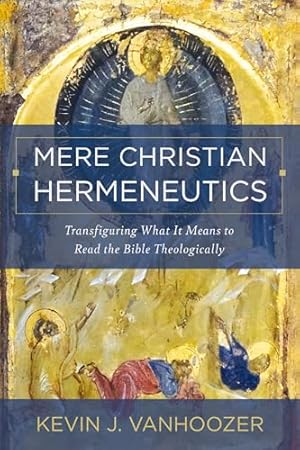
Mere Christian Hermeneutics – Kevin Vanhoozer
This is a game changer, on my short list of life-changing books. I have so much to say about it, but I am trying to gather my thoughts and write something coherent about it elsewhere. For here, I will simply say that I listened to it twice and then bought a paper copy to re-read again. It answered a lot of lingering questions for me and renewed and deepened my love for the Word. Reading it was so very edifying. You get the idea. I loved it.
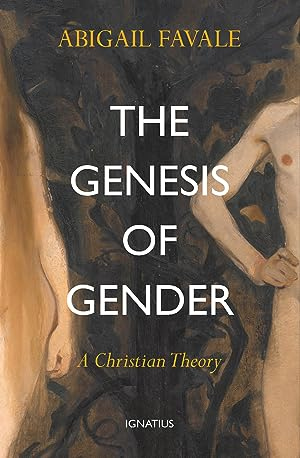
The Genesis of Gender – Abigail Favale
This is a very fine contribution to the growing body of work by Christian (or Christian-adjacent) women who are confidently standing up to the feminist dogma that has deceived and disappointed generations of women. Included in this list would be Mary Harrington, Louise Perry, and Erika Bachiochi.
The book is both positive and negative in its approach: positively building a vision for gender and femininity in particular from the basis of the book of Genesis; and negative in critiquing at a profound level the reigning views of secular feminist and gender theorists today. …
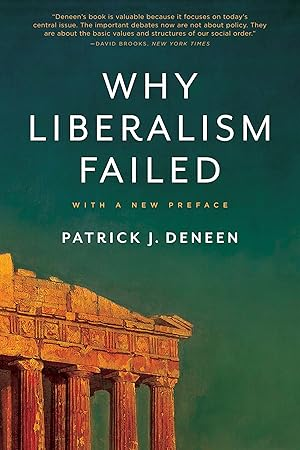
Why Liberalism Failed – Patrick Deneen
I’ve had this book on my radar for some years, but until now haven’t found the opportunity to read it. I was happy to find a copy in a library and pick it up. As a novice in the field of political theory, I feared the book would be confusing, boring, or some mix of the two, but it really wasn’t. In fact, it was very well written, with long flowing sentences that were easy to follow, sprinkled with some advanced vocabulary fitting for a distinguished professor at an elite University.
So what is this book? It is a diagnosis and critique. But not just any critique; Deneen offers a radical-to the roots-critique of liberalism as an ideology. For that is exactly what he claims it is. Born out of the myth of the autonomous individual freely choosing to form a state by way of the social contract, it was in fact a revolution in anthropology, he claims. The free market was devised to serve the telos of this new project: the emancipation of the human person, not from vice and passions, but from any unchosen external restraint or limit. …
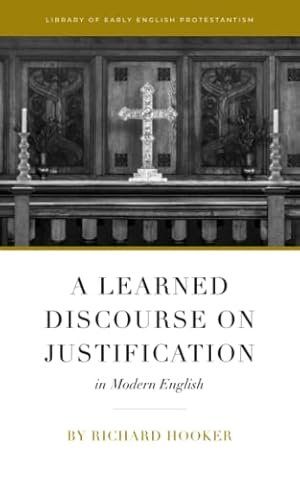
A Learned Discourse on Justification – Richard Hooker
This is my first reading of Richard Hooker. Very impressive. I resonated deeply with his demeanour and approach to the topic of what divides Protestants from Roman Catholics, and the irenic way he went about clarifying those differences. He by no means blurs the differences or downplays their significance, but he does make a compelling argument about the fact that people can be truly children of God while being simultaneously mistaken on some serious doctrinal errors, not because those errors are no big deal, but because they do not directly deny the foundation of the faith.
Rather, they affirm things that undermine the foundation by necessary logical implication, but, as he points out, and as anyone who has gone back and forth with a muddle-headed person knows, not everyone has the cognitive ability to see logical inconsistencies that are one or two or four steps removed from the starting premises. …
The Hidden Life of Trees – Peter Wohlleben
An enjoyable read that will re-enchant your experience of trees and forests. It demonstrates that everything Tolkien wrote about trees in The Lord of the Rings is basically true.
The Harvard Psychedelic Club – Don Lattin
Lattin tells the compelling story of four pioneering figures who shaped not only the 60s counterculture movement but also American society since then. Their lives were, on the whole, chaotic. Their relationships? Enlightened and harmonious, of course, glowing with the unity that psychedelic revelations of universal oneness has enshrined in their souls. Actually, not quite. Their relationships were fractious and troubled; all too human.
The book is well written and researched, with copious insights and quotes coming from Lattin’s own interviews with the subjects of the book. Lattin’s journalistic prose is very easy and pleasant to read. And although he puts his cards on the table in the Afterword—as a baby boomer former psychonaut still quite positive on psychedelics—I always got the sense he was playing it fair with his portrayals of people and events.
In a time when pro-psychedelic writing often has a strong bias driven by a sense of mission to advance the cause, this book was not at all like that. It helped me tremendously to understand the 60s better.
The Collected Writings of Stanley K. Fowler
Dr. Stan Fowler may not be a household name among evangelicals, but he was a faithful voice of biblical wisdom in the Canadian evangelical church and beyond for decades. This handsome set of his shorter writings makes his thought available to a whole new generation.
Some of the pieces that are decades old have an uncanny relevance today. The lack of historical roots in evangelical churches? Check. The resulting wave of interest in more historical, liturgical, and sacramental forms of worship? Check. Baptists debating ecclesiology and membership? Check. Baptists converting to Anglicanism? Check. Evangelicals converting to Eastern Orthodoxy? Check. And all of it happening fully a generation ago in the 80s, 90s, and 2000s. Fowler was on the vanguard of formulating cogent answers to these challenges, answers which remain relevant and helpful to this day.
Dr. Fowler’s work is always thoughtful, irenic, and worthwhile. I really enjoyed this collection of his shorter writings, especially his thought on sacramentalism for Baptists.
Gilead – Marilynne Robinson
Third time through, and I feel I’m starting to understand why I love this book so much and the effect it has upon me. Much of it comes down to a kind of sacramental view of Creation; or a participatory aspect to existence — that we might participate in God’s goodness in some way simply by enjoying what He has made. It teaches me to see, to look and really see what is there.
“Wherever you turn your eyes the world can shine like transfiguration. You don’t have to bring thing to it except a little willingness to see. Only, who could have the courage to see it?”
“There are two occasions when the sacred beauty of Creation becomes dazzlingly apparent, and they occur together. One is when we feel our mortal insufficiency to the world, and the other is when we feel the world’s mortal insufficiency to us.”
Click here to read my recent personal essay over at Front Porch Republic: Gilead Reveals a Gilded World.
To Gaze Upon God – Samuel G. Parkison
This book is a great achievement. It succeeds in its mission, which is to retrieve the doctrine of the beatific vision for evangelicals, and in so doing, reintroducing new generations of Protestants to the riches of their own tradition. The introduction and opening chapters do a great job situating the modern reader in terms of where we are in late modernity and how that relates to the metaphysical foundations that undergirded earlier eras of Christian thought. The book self-consciously situates itself within the ‘Great Tradition’ and calls evangelicals back to classical Trinitarian theism from the barren wilds of modernist biblicism.
Having been thus oriented, Parkison takes the reader through a number of major figures from the early church, the middle ages, and the Reformation, and explores how the church’s view of the beatific vision has evolved over the centuries. The author then attempts to synthesize the best of these views into a coherent whole that is digestible for modern readers. His distinctive contribution seems to be a more thoroughly trinitarian formulation of the beatific vision, drawing on and continuing the work of Protestant giants such as John Owen and Jonathan Edwards.
One of the book’s strengths is the affective tone, the marriage of academic and spiritual concerns. In other words, the book is edifying and, when rightly read, is sure to bring the reader to worship. That being said, it is still quite dense, and some of the middle chapters felt like a bit of a slog at times. Perseverance, however, is richly rewarded. I recommend it most heartily.
A History of the English Speaking Peoples (4 volumes) – Winston Churchill
On the one hand, I want to think it’s an achievement to have completed the four volumes of Churchill’s History of the English Speaking Peoples, but on the other hand, it took no great effort at all, such was the pull of the unfolding narrative in Winston’s characteristic voice.
One of the notable elements of Churchill’s treatment of the history is his detailed interest in the particulars of wars. There is a story told about his childhood, where his father was unconvinced that Winston was well suited for the usual aristocratic occupations. Then he came upon him with his lead soldiers, which numbered over a thousand, all lined up upon the (living room) battlefield, with infantry and cavalry divisions clearly delineated. And so it was decided: Winston would become a soldier. This childlike delight in the organization and movement of troops upon the field never left Churchill.
It is this fascination with the minutiae of troop movements which gave his historical treatment a bit of a lopsided feel. He spilled much ink tracing the marches, maneuvers, and munitions of both sides of the American Civil War, to such a degree that it was a bit comical. One feels that the author was indulging his own interest at the cost of the book’s narrative flow, but this can be forgiven.
The impression I am left with at the conclusion of volume 4 is that this is a momentous achievement of popular history, and with prose of such a quality that it must be considered a triumph of the English language.
From Bauhaus to Our House – Tom Wolfe
Similarly to The Painted Word (about modern art), Wolfe hilariously pokes the pretenses of modernist architecture. And again it is quite informative and insightful. The cataclysmic break with everything past was driven by the same revolutionary spirit that animated the radical politics of the early-mid 20th century.
Sex and the Unreal City – Anthony Esolen
While the book certainly deals with sex in a broad and philosophical way, it’s probably a lot less than a casual reader might expect from that clickbait of a title. What it really is is a loosely-connected series of essays that all revolve around the central idea of the Real, and the degree to which our current hollowed-out culture is in a futile war against it.
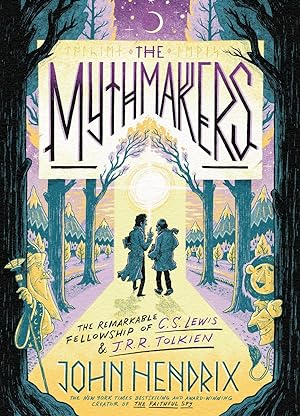
Mythmakers – John Hendrix
Dang. I did not expect this graphic novel to so good or so moving (especially the ending). It provides a great introduction to the biographies of Lewis and Tolkien, their fruitful but troubled friendship, and the themes of myth that guided their fictional writing.

Nuclear War – Annie Jacobsen
The style of this book was very creative – using a plausible scenario as a spine from which to educate the reader on countless aspects of nuclear weapons and nuclear war. I thought it was generally very well done; indeed I could hardly stop listening to the book. There were a few twists to the scenario that did stretch credulity, but overall it was all too believable.
The message, of course, is dire, troubling, and urgent. If Jacobsen (and her sources) are correct, then nuclear war is un-winnable, and preventing the use of nuclear weapons is unspeakably important. The scale of destruction from just one of these warheads is truly unimaginable; the consequences of an escalatory exchange of such weapons is apocalyptic.
In these matters, concern and advocacy goes well with a secure trust in the providence of God.

Delighting in the Trinity – Michael Reeves
Simply fantastic. Somehow manages to be both readable and very profound. The church is seriously in need of a revival of trinity-shaped piety among the laity. There has been a heartening renewal of classical trinitarianism among scholars and pastors, but I don’t think it has properly filtered down into the lived spirituality of normal Christians yet. This book ought to be in every church library and be considered a ‘standard’ along with Packer’s Knowing God and Sproul’s The Holiness of God.

 Phil's Scribblings