Why Hollywood Can’t Pull Off Goodness (According to C.S. Lewis)

I’m no movie critic – not even close. I don’t seem to have whatever artistic antennae are required to appreciate the subtleties of the cinematic medium. Nevertheless, like most people, I do have eyes in my head and do enjoy a good movie. And it happens to be a fact that every movie works from a script – a story with characters and dialogue. So the basis for every movie is the written word, while it cannot be said that every book is based on a movie. (Woe to the book that is based on a movie: Thou art a fraud.) My point is that the same dynamics of moral imagination are at play in a movie as in a novel or any other creative work of fiction. And this is where the following quote by C.S. Lewis collided in my mind with a simple observation I’ve made about many of the movies and TV shows made in recent decades, which I’ll get to in a moment.

It remains, of course, true that Satan is the best drawn of Milton’s characters. The reason is not hard to find. Of the major characters whom Milton attempted he is incomparably the easiest to draw. Set a hundred poets to tell the same story and in ninety of the resulting poems Satan will be the best character. In all but a few writers the ‘good’ characters are the least successful, and every one who has ever tried to make even the humblest story ought to know why. To make a character worse than oneself it is only necessary to release imaginatively from control some of the bad passions which, in real life, are always straining at the leash; the Satan, the Iago [the scheming antagonist from Shakespeare’s play Othello], the Becky Sharp [the morally vile protagonist from Thackeray’s novel Vanity Fair], within each of us, is always there and only too ready, the moment the leash is slipped, to come out and have in our books that holiday we try to deny them in our lives. But if you try to draw a character better than yourself, all you can do is to take the best moments you have had and to imagine them prolonged and more consistently embodied in action. But the real high virtues which we do not possess at all, we cannot depict except in a purely external fashion. We do not really know what it feels like to be a man much better than ourselves. His whole inner landscape is one we have never seen, and when we guess it we blunder. It is in their ‘good’ characters that novelists make, unawares, the most shocking self-revelations. … To project ourselves into a wicked character, we have only to stop doing something, and something that we are already tired of doing; to project ourselves into a good one we have to do what we cannot and become what we are not.

C.S. Lewis, A Preface to Paradise Lost, Chapter 13. Emphasis mine.

Now since I’ve already dipped into the mode of the woe-throwing Old Testament prophet, I’ll allow myself one more: Woe to the one who looks to Hollywood for moral clarity. And all the people said Amen. But even without looking to movies for moral clarity, it remains a fact that so much of what is compelling about a movie is the moral fabric of the main characters, both good and evil. I am limiting myself here to those movies which are a essentially a contest between moral opposites: crime dramas, thrillers, action movies, or the never-ending series of original or rebooted or off-shoot superhero movies. The simple observation I am making about such movies and shows is that the good characters are becoming more troubled and morally compromised. It is so very rare to see a compelling protagonist that is good. The anti-hero is the hero for our age; the anti-hero is the only kind of hero we can believe in.

The above quote by Lewis is commenting on the scholarly consensus that Milton’s Satan (in Paradise Lost) is more compelling as a character than any other in the story. Lewis then lays out a morally insightful explanation for why that is necessarily the case in fallen humanity’s literature. Another example of this principle is found in the fact that Dante’s Inferno is by far and away more popular and compelling to the typical reader than either Purgatorio or Paradisio.

I used to think that an author’s characters had no vital connection to them – that an imagination could dream up moral monsters and virtuous heroes without it being a reflection of itself. But this is not true. As Lewis says, “It is in their ‘good’ characters that novelists [and screenwriters] make, unawares, the most shocking self-revelations.” Indeed, we are infected with moral cynicism. We look back on the virtuous heroes of past literature and we groan at the naivety of such caricatures. But this reaction reveals far more about our modern moral weakness than it does about anything else. And our modern writers cannot conceive of a truly virtuous person because our culture has jettisoned objective morality and the priority of character formation.

Adam and Eve and the obedient angels may not have been Milton’s best characters, but I dare say he was able to make them far more compelling than our typical cadre of authors and screenwriters could today. Even when they attempt to treat subjects of similar greatness, it seems they cannot avoid falling into caricatures either of rigid moralists and unhappily repressed religious people on the one hand, or vile hypocrites who are only pretending to be good on the other.

Small wonder then that the heroes we see onscreen, whatever technical mastery and skill they may have, are hardly ever compelling examples of deep moral goodness: Iron Man and the whole Marvel cast, John Wick, Deadpool, and so on. There are of course blessed exceptions to this rule, such as Aragorn in Peter Jackson’s LotR Trilogy and Franz & Fani from Terrence Malick’s recent movie A Hidden Life. It takes real effort to pull off these characters well and avoid portraying a plastic pseudo-goodness that comes across more as naivety than virtue. One common element between them is suffering. Perhaps goodness untested by suffering and evil is never very compelling. But I am straying from my main point, which is that we do learn all too much about the storytellers of our time by the manifestations of goodness that they are able to imagine and conjure for us.

Simply put, we do not have deep and compelling moral goodness manifested in our entertainment because a writer’s imagination is constrained by his or her own moral character and by and large we have forgotten (or rejected) the possibility and priority of conforming ourselves to an objective standard of virtue.

I mean, have you ever seen Caillou? That kid’s a brat.

“Weak point, sir. I’m from Canada, not Hollywood.”

As an Amazon Affiliate I earn a small commission from qualifying purchases of books purchased through links on my website, while customers do not pay anything extra.
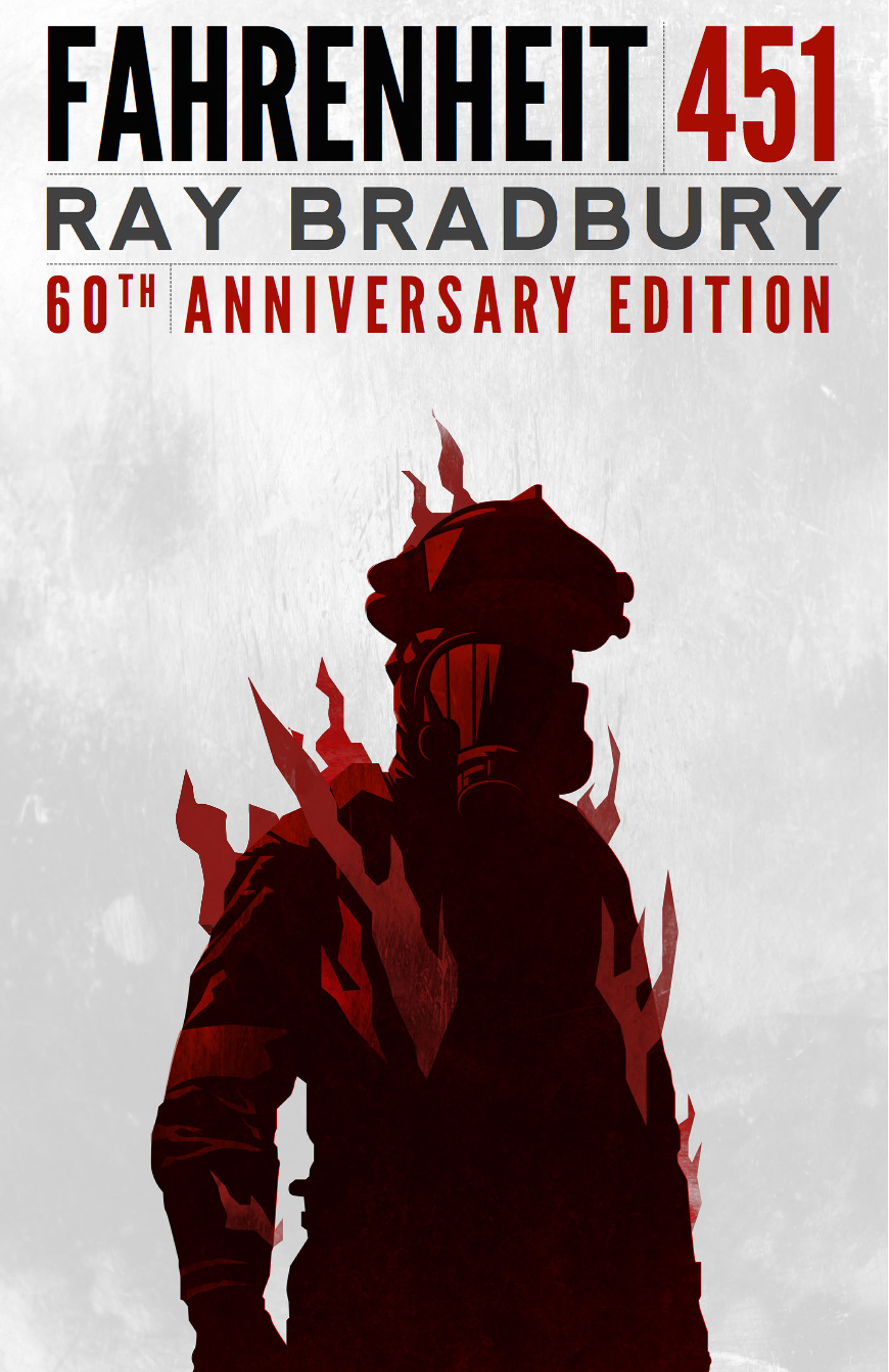
Turning Up the Heat

The spirit of censorship is ascendant.

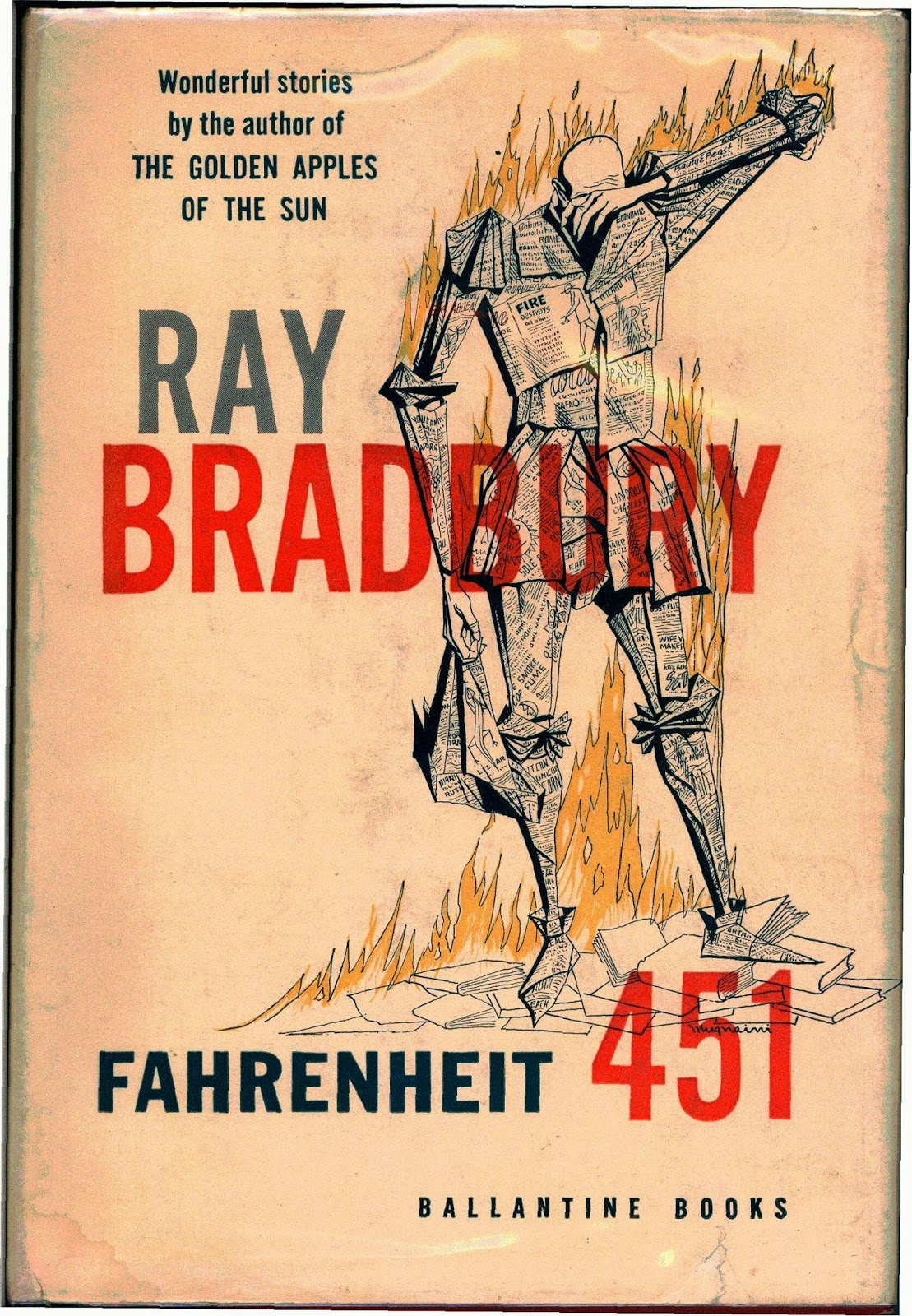
So it seems like a good time to revisit Fahrenheit 451.

I didn’t realize the first time I read it (in 2014) how much of a role the Bible plays in the story. In a book about burning books, the Book plays a prominent role. Of course, this being a 20th-century novel, the Bible is not treated as inerrant or infallible, but as something like a deep well of nourishment for our civilization and the human spirit, as a cornerstone, as something precious. This is true.

There is a loss of memory and the erasing of history. (This is one of the most recurring themes in all dystopian literature – shall we listen?). How interesting that the vast majority of the people in that society seem to be distracted by the constant presence and noise of technology and entertainment in the form of AI-powered screens that know their names and, I kid you not, wireless earbuds that have never-ending audio content. Here is an illustration of the fact that some time has to pass before one can truly say if a work is prescient. And in this regard at least, F-451 is spot on.

The effect of this technology is that people do not notice or appreciate the natural world. This is a curious fact and I’m not sure I understand the connection. Why would that kind of ubiquitous technology necessarily result in the inability or lack of interest in the material world? It is the protagonist’s new neighbour who awakens him to the beauty of nature, such as tasting the rain.

In one of the book’s most striking scenes, a house full of books is discovered and the firemen (including Montag, the protagonist) arrive and spray kerosene all over it as they prepare to burn it down. The woman in the house refuses to leave, and even strikes the match which sets the whole thing ablaze. And then in the silence of the ride back to the firehouse, this conversation takes place:

“Master Ridley,” said Montag, at last.

“What?” said Beatty.

“She said, ‘Master Ridley.’ She said some crazy thing when we came in the door. ‘Play the man,’ she said, ‘Master Ridley.’ Something, something, something.”

“‘We shall this day light such a candle, by God’s grace, in England, as I trust shall never be put out,'” said Beatty. Stoneman glanced over at the Captain [Beatty], as did Montag, startled. Beatty rubbed his chin.

“A man named Latimer said that to a man named Nicholas Ridley, as they were being burnt alive at Oxford, for heresy, on October 16, 1555.”

Fahrenheit 451, page 40.

Why would the author include this historical anecdote from the English reformation? Perhaps he saw something analogous to the spirit that animated those who murdered Latimer and Ridley starting to percolate in our own society. And perhaps he saw that the courage of Latimer would be needed before the end. Fear is contagious, but so is courage.

I happen to be writing this as the invasion of Ukraine by Russia has just started one day ago. Soldiers and civilians are dying. Fathers are putting their families on buses or taking them to the border and then returning to fight. We have already heard the story of a young soldier sacrificing himself to detonate a bridge and hinder the advance of invading troops. Courage is on display in a way that it has not been for a long time. Moral clarity seems to be returning.

All this is whirling about in my mind along with words I heard from Archbishop Charles Chaput during an interview: If there is nothing in your life that you are willing to die for, then are you really living a good life?

At the same time, tectonic shifts are taking place in our societies that many of us are struggling to grapple with. Will things continue on as they have? Or are we at the turning of an age? It feels like history has started up again, and we are waking from a dream.

So we better know our principles and our convictions. And we better be willing to stand up for them come what may. Yes, we better be willing to die for them.

Ivan Ilych is Alive

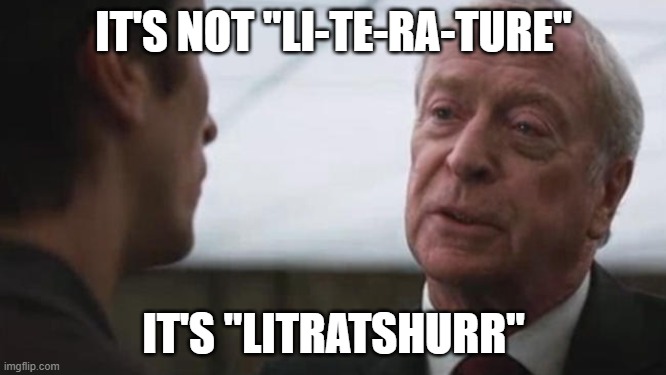
One of the purposes of this blog is to help people access the world of literature. (You can pronounce it the boring way, or you can do it properly, the way Michael Caine would – “litshratshurr“). I do this through book reviews and short reflections on things that I’m reading. Not only does this help me process what I’m reading, it also hopefully gives others a taste of the benefit from engaging with this material, which often feels too distant and intimidating. One of the things that compelled me to make the effort to read “the classics” was hearing how they had such an impact on others, and observing others appreciate them.

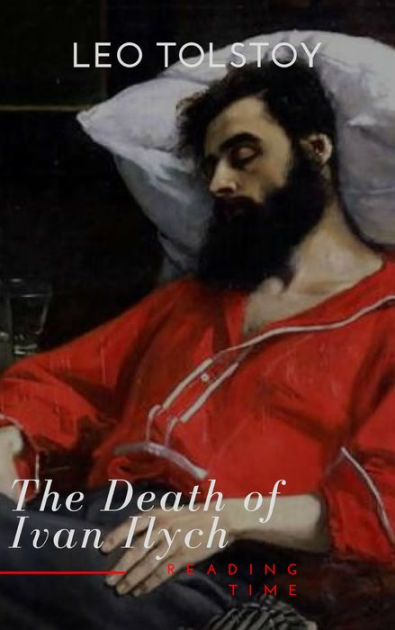
Recently I was listening to Karen Swallor Prior in discussion with Matthew Barrett on the Credo Podcast. One of the things that came up was Tolstoy’s The Death of Ivan Ilych, and that discussion prompted me to re-read it. One of the nice things about this story is that it is so short. Everyone has heard of Tolstoy, but most people do not have the courage to take on some of his better-known novels such as War and Peace (1400 pages) or Anna Karenina (950 pages).

If you would like to read it, you can download it here (I’m not sure about the quality of the translation – but hey! it’s free). Note that the following reflection contains spoilers if you haven’t read the story yet.

I am struck by the power of words, ideas, and story. In only 50 pages or so, Tolstoy harnesses that power and delivers to the reader a profound encounter with truth. One of the first things that strikes me in the story is the brutal honesty of the internal dialogue. Tolstoy gets inside the mind and around the various self-deceptions we employ and reveals what is truly there in all of its ugliness. It is done in a matter-of-fact way:

Each one thought or felt, “Well, he’s dead but I’m alive!” But the more intimate of Ivan Ilych’s acquaintances, his so-called friends, could not help thinking also that they would now have to fulfill the very tiresome demands of propriety by attending the funeral service and paying a visit of condolence to the widow.

The story reveals how hard it is to come to believe something that you really don’t want to believe, something that has profound and far-reaching implications for the verdict of how you lived your life. We oppose these kinds of paradigm-shifts in many areas of our lives because re-evaluation is costly. We are invested in our way of seeing things. Within the story this is seen in everybody’s stubborn denial of their own mortality (save for the peasant Gerasim), and especially in Ivan’s wrestling with whether he has lived a good life. There were many layers to peel away before he could get to the honest core of this question. It is only at the end of a long struggle that he breaks through his own defenses to the truth:

… the question suddenly occurred to him: “What if my whole life has been wrong?” It occurred to him that what had appeared perfectly impossible before, namely that he had not spent his life as he should have done, might after all be true. It occurred to him that his scarcely perceptible attempts to struggle against what was considered good by the most highly placed people, those scarcely noticeable impulses which he had immediately suppressed, might have been the real thing, and all the rest false. And his professional duties and the whole arrangement of his life and of his family, and all his social and official interests, might all have been false. He tried to defend all those things to himself and suddenly felt the weakness of what he was defending. There was nothing to defend.

… he saw himself—all that for which he had lived—and saw clearly that it was not real at all, but a terrible and huge deception which had hidden both life and death.

There is another dimension to this. Just like Ivan has been living in a cocoon of self-deception, the same is true for his colleagues and his family in their own ways. As mentioned above, they are all in denial about their own inevitable death. But without the harsh and inescapable pain to shock them into a sober honesty, we do not see these characters make any progress towards escaping that deception.

At the very end, in the last two or three hours of Ivan’s life, he experiences a conversion and rebirth. He breaks through into light. Tolstoy does not name Christ, but rather describes the change of heart and makes an oblique reference to God:

At that very moment Ivan Ilych fell through and caught sight of the light, and it was revealed to him that though his life had not been what it should have been, this could still be rectified. He asked himself, “What is the right thing?” and grew still, listening. Then he felt that someone was kissing his hand. He opened his eyes, looked at his son, and felt sorry for him. His wife came up to him and he glanced at her. She was gazing at him open-mouthed, with undried tears on her nose and cheek and a despairing look on her face. He felt sorry for her too.

…He tried to add, “Forgive me,” but said “Forego” and waved his hand, knowing that He whose understanding mattered would understand.

… He sought his former accustomed fear of death and did not find it. “Where is it? What death?” There was no fear because there was no death.


In place of death there was light.


“So that’s what it is!” he suddenly exclaimed aloud. “What joy!”

Modern secular readers are probably tempted to view this as a moral reformation or a kind of epiphany, but Tolstoy clearly has something deeper in mind. It is quite common in literature for the conversion of characters to be described in ways that hint at Christ but do not explicitly name him. I’m not entirely sure of the reason for this. C.S. Lewis discusses it somewhere, commenting on the habit of medieval Christians to ‘hide’ Christ in pagan themes and deities in their fiction, something he does in his writing as well.

Nevertheless, the Christian reader can recognize many (though not all) of the elements of true conversion: conviction of sin, repentance for sin, and a changed heart with new desires. Is this fictional portrayal sufficient to point others towards faith in Christ for their salvation? No. But what good fiction (and good art generally) does is faithfully represent some part of reality, it serves as a signpost on the good road. In doing so it adds one more voice to that choir made up of countless voices, singing not the same note but a great and variegated harmony.