
A Review of Dr. Heiser’s ‘Demons’

For some reason I was expecting this to be a popular-level book on the topic. Instead, like Unseen Realm, it was a substantive work of scholarship that delved deeply into the academic literature. That’s fine with me, but it is good to know when considering recommending it to others. That being said, the audiobook version I listened to was very well done, with substantive footnotes being included while footnote citations were excluded. This approach came as close as it is possible to get to the experience of reading a physical copy.

I enjoyed the book, much as I enjoyed Unseen Realm. Indeed, there is a lot of overlap between the two books. He chronicles in detail his contention that there were three (instead of one) supernatural rebellions (Gen 3, Gen 6, and Gen 11), each of them by different sorts of beings and for different reasons, with different consequences that play out across the rest of Scripture’s narrative.

Heiser’s strength is also a cause for caution; he pays little heed to interpretive tradition after the NT era. Rather, he privileges Ancient Near Eastern and Second Temple Jewish understandings of these topics since he argues these were the formative influences guiding the thinking of the OT and NT writers. And he undoubtedly has a strong case. It’s undeniable that the NT writers were familiar with this material, like 1 Enoch (referenced in Jude and 2 Peter).

In Heiser’s telling, this 2nd Temple material synthesized the scattered and partial OT teaching on the powers of darkness into a more cohesive narrative. There is explanatory power in this since it’s obvious that when we turn from the OT to the first pages of the NT, a significant shift has occurred in the way these spiritual forces are described. And his framework makes sense of the fragmentary evidence in a way that the typical default framework of Christians does not.

But the concern this work raises is also worth considering. Heiser is perhaps too comfortable departing from the near-consensus of Christian thought throughout the centuries. His reliance on textual variants and extra-biblical sources to frame his narrative mean that we ought to be cautious about thinking we’re on very solid ground. The fact is, despite my desire to understand all this, the topic is shrouded in much mystery. The evidence is scattered and ambiguous–seemingly deliberately.

One strength of the book is what so many have found so helpful about Heiser’s work–he is not beholden to modernist anti-supernaturalism. Instead, he is refreshingly open to a thoroughly supernatural worldview all while being a careful scholar.

He has done much to chart a path forward for Christians to be unembarrassed in our affirmation of the supernatural while being intellectually rigorous. In other words, staying out of the ditch of kooky theories built on the flimsiest conjectures, a ditch with too many denizens already. For that, and for much else, I am thankful for Dr. Heiser’s work.
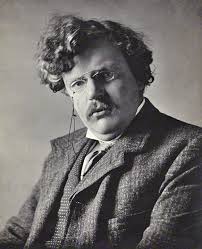
A Too-Good-Not-To-Share Paragraph on the Problem of Evil from G.K. Chesterton

Be warned, a paragraph for ol’ Gee-Kay is a five page article for most of us, but nevertheless, here ’tis.

Context: He is here near the end of his book, and working to show how Christianity differs from both mythology and philosophy. I’ve adjusted the formatting for improved ease of reading, since as superiorly intelligent people in the age of the perpetual interruption we are quite unable to follow a train of thought or argument for more than a dozen or so words.

Image

But if it is not a mythology neither is it a philosophy. It is not a philosophy because, being a vision, it is not a pattern but a picture. It is not one of those simplifications which resolve everything into an abstract explanation; as that everything is recurrent; or everything is relative; or everything is inevitable; or everything is illusive.

It is not a process but a story.

It has proportions, of the sort seen in a picture or a story; it has not the regular repetitions of a pattern or a process; but it replaces them by being convincing as a picture or a story is convincing.

In other words, it is exactly, as the phrase goes, like life. For indeed it is life.

An example of what is meant here might well be found in the treatment of the problem of evil. It is easy enough to make a plan of life of which the background is black, as the pessimists do; and then admit a speck or two of star-dust more or less accidental, or at in the literal sense insignificant. And it is easy enough to make another plan on white paper, as the Christian Scientists do, and explain or explain away somehow such dots or smudges as may be difficult to deny. Lastly it is easiest of all, perhaps, to say as the dualists do, that life is like a chessboard in which the two are equal; and can as truly be said to consist of white squares on a black board or of black squares on a white board.

But every man feels in his heart that none of these three paper plans is like life; that none of these worlds is one in which he can live. Something tells him that the ultimate idea of a world is not bad or even neutral; staring at the sky or the grass or the truths of mathematics or even a new-laid egg, he has a vague feeling like the shadow of that saying of the great Christian philosopher, St. Thomas Aquinas, ‘Every existence, as such, is good.’ On the other hand, something else tells him that it is unmanly and debased and even diseased to minimise evil to a dot or even a blot. He realizes that optimism is morbid. It is if possible even more morbid than pessimism.

These vague but healthy feelings, if he followed them out, would result in the idea that evil is in some way an exception but an enormous exception; and ultimately that evil is an invasion or yet more truly a rebellion.

He does not think that everything is right or that everything is wrong, or that everything is equally right and wrong. But he does think that right has a right to be right and therefore a right to be there; and wrong has no right to be wrong and therefore no right to be there. It is the prince of the world; but it is also a usurper.

So he will apprehend vaguely what the vision will give to him vividly; no less than all that strange story of treason in heaven and the great desertion by which evil damaged and tried to destroy a cosmos that it could not create. It is a very strange story and its proportions and its lines and colors are as arbitrary and absolute as the artistic composition of a picture. It is a vision which we do in fact symbolize in pictures by titanic limbs and passionate tints of plumage; all that abysmal vision of falling stars and the peacock panoplies of the night.

But that strange story has one small, advantage over the diagrams.

It is like life.