I recently re-read that great collection of essays & talks by C.S. Lewis, The Weight of Glory. Any regular readers here know I cannot go long without referring to Lewis’s thought in some way. I’m afraid that is just the way it’s going to be. I find reading Lewis to be like spreading a large bag of super-fertilizer all over the garden of my mind – it stimulates growth and activity of all kinds.
One of the essays in that book is called ‘Transposition’. It is on the more philosophical end of things, discussing how things on one level of reality look to the level below it, such as how 3-dimensional shapes can be represented on 2-dimensional paper but only in a flattened and reductionist way. You can find it online (usually bundled with other essays) but here is an audio version of it: https://www.youtube.com/watch?v=PXwJk8WtpUY.
He uses this analogy to make sense of how the reality of the spiritual so often looks and feels prosaic and explainable in material terms. He argues that this is exactly what we should expect, but that when one assumes there cannot be a higher realm then he will always find some such explanation:
And the sceptic’s conclusion that the so-called spiritual is really derived from the natural, that it is a mirage or projection or imaginary extension of the natural, is also exactly what we should expect; for, as we have seen, this is the mistake which an observer who knew only the lower medium would be bound to make in every case of Transposition. The brutal man never can by analysis find anything but lust in love; the Flatlander never can find anything but flat shapes in a picture; physiology never can find anything in thought except twitchings of the grey matter. It is no good browbeating the critic who approaches a Transposition from below. On the evidence available to him his conclusion is the only one possible.
This line of reasoning found its apogee in the New Atheists, who never grew tired of pointing out that such and such transcendent experience was really “just” this or that. You can see this little trick being pulled by Dawkins, Bill Nye, Neil DeGrasse Tyson, and so on. Here is a little clip of Jonathan Pageau making the very same point as Lewis:
It’s surely no accident that Pageau looks at the world hierarchically and symbolically, seeing it as laid out across different levels of being or reality. This is the same basic structure as what Lewis lays out in his essay. Near the end of the essay, Lewis makes his point even more explicitly, and I quite enjoyed it. Allow me to quote it at length:
I have tried to stress throughout the inevitableness of the error made about every transposition by one who approaches it from the lower medium only. The strength of such a critic lies in the words “merely” or “nothing but”. He sees all the facts but not the meaning. Quite truly, therefore, he claims to have seen all the facts. There is nothing else there; except the meaning. He is therefore, as regards the matter in hand, in the position of an animal.
You will have noticed that most dogs cannot understand pointing. You point to a bit of food on the floor: the dog, instead of looking at the floor, sniffs at your finger. A finger is a finger to him, and that is all. His world is all fact and no meaning. And in a period when factual realism is dominant we shall find people deliberately inducing upon themselves this doglike mind. A man who has experienced love from within will deliberately go about to inspect it analytically from outside and regard the results of this analysis as truer than his experience.
The extreme limit of this self-blinding is seen in those who, like the rest of us, have consciousness, yet go about to study the human organism as if they did not know it was conscious. As long as this deliberate refusal to understand things from above, even where such understanding is possible, continues, it is idle to talk of any final victory over materialism. The critique of every experience from below, the voluntary ignoring of meaning and concentration on fact, will always have the same plausibility. There will always be evidence, and every month fresh evidence, to show that religion is only psychological, justice only self-protection, politics only economics, love only lust, and thought itself only cerebral biochemistry.
His line about the one who has experienced love from within analyzing it and finding “the results of this analysis as truer than his experience” reminds me of the Preface to J. Budziszewski’s book “The Revenge of Conscience.” I read this fifteen years ago but I have never forgotten those opening pages. In them the Budziszewski tells the story of his conversion from materialistic naturalism (or nihilism as he refers to it) to Christianity. This is how he describes his love for his wife and family during that time:
I resisted the temptation to believe in good with as much energy as some saints resist the temptation to neglect good. For instance, I loved my wife and children, but I was determined to regard this love as merely a subjective preference with no real and objective value. Think what this did to very capacity to love them. After all, love is a commitment of the will to the true good of another person, and how can one’s will be committed to the true good of another person if he denies the reality of good, denies the reality of persons, and denies that his commitments are in his control?
In another place, he writes this memorable quote:
Though it always comes as a surprise to intellectuals, there are some forms of stupidity that one must be highly intelligent and educated to commit. God keeps them in his arsenal to pull down mulish pride, and I discovered them all.
It was ultimately his existential dread at the kind of person he was becoming that convinced him that if there was horror there must be its opposite as well: “I knew that if there existed a horrible, there had to exist a wonderful of which the horrible was the absence. So my walls of self-deception collapsed all at once.”
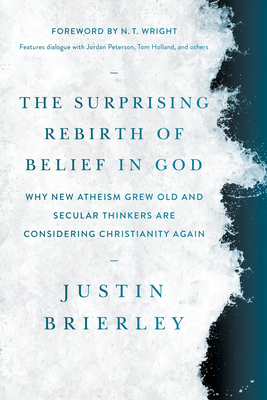
As the dominance of New Atheism fades and crumbles, there remain a huge number of people whose operative worldview was shaped and cemented by their arguments. Yes, there may be a “Surprising Rebirth of Belief in God” dawning among leading thinkers but these things take time to filter down to the masses. The fact is that there are still countless millions of people walking around with basically the same form of nihilism as Budziszewski describes above.
May their “walls of self-deception” collapse as well, unto light and life and salvation.
Samuel D. James has a thought-provoking article over on his Substack that I’d like to interact with a bit. His main point is that we need to prepare for a change in tactics in the fight against the scourge of pornography because one of the main arguments is about to be made largely obsolete:
For many years, one of the key arguments anti-porn crusaders have used is that pornography objectifies and degrades women. Theologically speaking, this is absolutely true. Yet it is not been an effective argument, either in convincing lawmakers to put more legal restrictions on porn, or in persuading individuals to resist it.
I agree. It is a true and important argument, but not a terribly effective one. In my own writing on this subject, I have used this line of argument in a limited way and focused more on wider societal effects and on the personal spiritual effects. James goes on to argue that the church needs to shore up other lines of argumentation in anticipation for the day when pornography is available which does not make use of human actors, but uses AI to generate content. Again, I agree that Christian leaders ought to have a full-orbed view of the harms of pornography, going far beyond a focus on the harm done to those who produce it. But I think Samuel James overstates his case somewhat, and I’d like to lay out a couple of counter-arguments in the spirit of friendly pushback and in the interest of sharpening our thinking on this difficult but vital issue.
Make no mistake: this is no academic debate. This topic forms the battleground where millions of men (and women) are being ensnared by incredibly powerful temptations and progressively transformed into despicable moral cretins.
So while I agree with the main thrust of the argument, I have two pushbacks to offer.
The first regards this statement: “The next era of pornography will almost certainly feature no humans at all, but lifelike computer-generated images that have no souls, no legal status, and no inhibitions.” I think this will be partially true, but perhaps not nearly as much as the author thinks. Why? Because there is a difference that the user will quickly discern between the real and the artificial, and just like the completely CGI-fabricated fight scenes in all the new Marvel movies feel so flat and weightless and unsatisfying, so the novelty of the AI stuff will probably not satisfy the perverted minds and lusts of the users. There is a dark corner of the porn-addicted soul that not only wants to be titillated, but wants to know that this scene really happened.
The second is with respect to this part of the last paragraph: “When there’s no one to exploit, there is still God to offend. When there is no one to be trafficked, there is still God who sees.” True enough about God being offended and God seeing, but the dynamic of sin in the human heart is always towards deeper involvement. So even if we grant that AI-porn will displace most of the Western human actors, the one-way ratchet of this sin-slavery will pull the user towards real-life experience of their dark fantasies, and this will sustain or even increase the tragic demand for trafficked humans to serve as victims to those fantasies.
Related to this, one must ask why OnlyFans grew to be so popular despite an inexhaustible amount of free pornography already available on the web. The answer to this question weakens James’ claim that “porn’s future is post-human.” The lonely lust-addled men clearly find some added value to the OnlyFans experience such that they are happy to part with eye-watering amounts of money. And what is that value? My guess would be the thin veneer of human connection that OnlyFans apparently markets as its main appeal. There is some possibility of direct communication and access. I have my doubts that even the best “Adult AI” offering will be able to replicate the particular thrill this provides.
So I agree that the church needs to articulate a strong and robust argument against porn that does not focus so much on the damage done to the people featured in it. This will be critically important when the so-called “victimless AI porn” becomes even more mainstream. But I am not as optimistic as Samuel James that all this will really lower the demand for content featuring real humans and real bodies, nor that this will result in any decrease in human trafficking for the purpose of sexual exploitation.
Despite my slight disagreements here, I really appreciate Samuel James’ writing both at his Substack and in his recent book, Digital Liturgies. In fact, I’m very pleased to say I have an enthusiastically positive review of it slated for publication in the March/April (print and online) issue of Canada’s biggest evangelical publication, Faith Today. I’ll link to that when it goes live.
Note:The core of this post was first written as a comment on the Substack article and then expanded here.
The year of our Lord 2023 was the first full year of whatever era comes after the second Elizabethan age, what we might call the long twentieth century. As we turn upon this hinge of history, if you’ll permit me a mechanical metaphor, it feels as though the transmission long left in neutral is grinding its gears and lurching us all forward towards some foreboding edge.
In the wake of Queen Elizabeth’s passing in 2022, I wrote a few words of reflection and poetry. What I tried to express in that piece was the combination of two strong impressions at work in my mind: the decline of our civilization and the hope of renewal. After reading the stimulating but pessimistic Rod Dreher, as well as the piercing but somber insights of Paul Kingsnorth, I feel as though that second element, the hope of renewal, is perhaps more of a distinctly Protestant posture than I had previously realized. Why might that be?
Well, I don’t think it’s terribly complicated. It was the Protestant church which was born in the midst of a bona fide revival as it recovered the glorious gospel which had too long been obscured. For a tiny taste of how that spiritual outpouring was experienced by normal everyday people in medieval Europe at the time of the reformation, see this short clip of pastor Mark Dever holding forth about assurance of salvation. It was the Protestant church which served as the vehicle for the Great Awakening which revitalized not only the church but affected the whole of the British empire (including the American colonies).
This heritage of revival and renewal is part and parcel of evangelical history, it shapes our imagination, and ever directs our hopes and prayers. I’m not at all sure this is true of Roman Catholic or Orthodox believers in the same way.
How fitting then that in the midst of all this talk about re-enchantment and the end of our godless era, it is a Protestant who decides to write a book called “The Surprising Rebirth of Belief in God.” Justin Brierley, the author, is ideally situated to comment on these shifts in public thought as he is perhaps the one person who has moderated the most high-level conversations between Christians and skeptics over the last decade and a half in his role as moderator and host of the UK-based radio show and podcast Unbelievable, as well as The Big Conversation and Re-Enchanting. And also another podcast by the same title as the book. The guy keeps busy.
In contrast to the more pessimistic takes on the decline of culture, which abound for understandable reasons, this book looks at the silver lining which we might characterize as the surprising appeal a number of influential public figures (and regular people like them) have been finding in the claims of Christianity. Brierley argues that this may be the first fruits of a coming harvest, the first wave of a newly rising tide of faith.
The metaphor of the tide is taken from Matthew Arnold’s poem, Dover Beach. The key lines are as follows:
The Sea of Faith
Was once, too, at the full, and round earth’s shore
Brierley opens the book with a stirring reflection on the idea that the powerful pull away from faith that characterized the two hundred years since the Enlightenment is now exhausted, the New Atheists of the 2000s being the last gasp of this spent force. I appreciated the well-researched summary of the New Atheist movement, from its confident rise to its fracturing and dissipation. Its bombastic, overheated rhetoric was matched only by the speed with which it collapsed into infighting and bloviating on Twitter. This dovetails with my own thinking and writing over the last few years, so I found myself agreeing wholeheartedly.
The term that kept coming back to me as I read the book was ‘plausibility structures,’ coined by the sociologist Peter Berger. The idea has a lot of overlap with Taylor’s ‘social imaginary’ in the sense that it tries to capture the intangibles of why certain fashions of thought prevail at certain times. What Brierley describes, through profiles of recent converts like Paul Kingsnorth and Martin Shaw, and Christian-friendly thinkers like Jordan Peterson, Douglas Murray, and Tom Holland, is a profound shift in our culture’s plausibility structures. Suddenly, it doesn’t feel ridiculous to posit that Christianity might be true. Rather, in an unexpected turn, it is those like Richard Dawkins, Sam Harris, or Steven Pinker, still bravely holding the line that Western moral values are self-evident from materialistic premises – despite the incoherence of this view and the rapidly accumulating counter-evidence in the accelerating moral disintegration of our societies – who now seem just a little bit ridiculous.
Time will tell whether Brierley, and I with him, are too optimistic about a turn back towards Christ. One of the interesting aspects of the “surprising rebirth of belief in God” is to note which streams of Christianity these people are being drawn to. There is certainly a draw to Orthodoxy that I never encountered until a few years ago, with the rising popularity of Jonathan Pageau and now Paul Kingsnorth and Martin Shaw. In my own circles I certainly see many people being drawn to faith and baptized into healthy evangelical Protestant churches in a way that wasn’t typical five years ago. As Protestants firmly in the tradition of the great revivals, I think we cannot help thinking in the categories of renewal and longing for the same in our day. How could it be otherwise? The evangelical Protestant heart studies those high points of church history and says, “Lord, do it again.”
This brings me to another point which I have been pondering since Rod Dreher picked up on my psychedelics piece over at Mere Orthodoxy and wrote about it on his Substack. It’s behind a paywall, but Dreher interacted robustly and appreciatively with the claims of the piece before turning to a reflection on his own college LSD experience and the metaphysical questions it brought up for him.
He goes on to clarify what he does and doesn’t mean:
Let me be clear: we are NOT animistic! We do not believe that material things are God. There is an ontological gulf between Creator and Created. Yet we also believe that the divine energies (as distinct from the divine essence) fills all things. It’s like when the sun warms a meadow in the summer, we believe that the energies of the sun penetrate the meadow, and in some sense become part of the meadow’s existence. The lesson for us in this newsletter’s context is that the barrier between matter and spirit is far more porous than most of us moderns think. This is how the cosmos is truly constructed. This was far easier for pre-modern people to perceive; the use of psychedelics is a way to temporarily recover some of that pre-modern perception.
I find this all extremely interesting for a couple of reasons. First, the idea of modern and pre-modern metaphysics. Canadian Baptist theologian Craig Carter, author of the highly regarded ‘Great Tradition’ books, has written very helpfully on his Substack about these different approaches to metaphysics. Here is what he writes in a post called ‘Can Theology Do Without Metaphysics?‘:
The classical metaphysics of premodern Western culture sought to articulate what C. S. Lewis called “the Dao,” that is, the natural law that many cultures have recognized as built in to the fabric of reality. This natural law or wisdom has functioned as the foundation of cultures from Egypt to China to Israel. Positive law is an elaboration of it. Religion reinforces it. Political arrangements are judged by it. Morals are based on it.
After explaining how Plato made the foundational contribution to this project, he argues that “[d]uring the first five centuries of church history, the Platonic tradition was integrated with biblical revelation and the result was the Christian Platonism of Augustine.” He goes on to claim that the medieval synthesis of Aquinas was a high water mark for metaphysics, the undoing of which gave us modernity. After discussing how modernity manifests in three different modern approaches to theology (liberal, fundamentalist, and Barthian), he writes the following conclusion, which I will quote at length:
What can we take away from all of this? It seems to me that three points stand out as most important:
Christian theology is not merely a narrative we tell each other to express our experience of God. Rather, it is a metaphysical description of reality, that is, of God and all things in relation to God. It deals with objective truth, not merely subjective opinion.
Since metaphysical realism is a deduction from biblical revelation and necessary for an adequate statement of Christian orthodoxy, we must go back before the Enlightenment to the period of Protestant scholastic orthodoxy to pick up the thread of the Great Tradition and build further on the foundations of the tradition handed down to us from the church fathers, medieval schoolmen, and Protestant reformers.
Evangelicalism, as the heir of fundamentalism, has failed us and so we need a revival of historic Protestantism. We need “Evangelical Protestantism” not merely “Evangelicalism.”
Theological liberalism, reactionary fundamentalism, and neo-orthodox Barthianism involve various degrees of compromise with modernity. But we should read the signs of the times and conclude that modernity has run its course and is now in the process of self-destruction. Those who marry the spirit of the age will soon find themselves widowed.
We are entering into a period of Ressourcement in which premodern exegesis, doctrine, and metaphysics are being recovered and used to reinvigorate twenty-first [century] theology. The recovery of Christian metaphysics is a massive task that will require the efforts of many historical and systematic theologians in the decades ahead. But it will be worthwhile because ultimately a theology without classical metaphysics can never be classical orthodoxy.
What’s the point of all this? In sum, that there is a core agreement between Dreher, an Orthodox believer and astute observer of culture, and Carter, a Canadian evangelical Protestant like myself, that modern metaphysics is a dead end, and that the future involves a ressourcement or a return to classical (pre-modern) metaphysics, which includes a more enchanted view of the world.
The second thing I find fascinating about the quote above from Dreher is the talk of a porous barrier between matter and spirit:
The lesson for us in this newsletter’s context is that the barrier between matter and spirit is far more porous than most of us moderns think. This is how the cosmos is truly constructed. This was far easier for pre-modern people to perceive; the use of psychedelics is a way to temporarily recover some of that pre-modern perception.
This is very important. I think you will find that many people in our society today are intuiting this porousness in a new way. Not everyone, of course, but there is a sizeable shift. For instance, many have noted that the events of the last three years have awakened them to the reality of evil, even of supernatural evil – Naomi Wolf would be one example of this. We see also the long-ridiculed and suppressed testimonies of those who have had some kind of contact with entities (extra-terrestrial or otherwise) finding unprecedented coverage and attention. We see a fascination with lost ancient civilizations and alternative narratives to the standard historical model teasing at lost high technologies and abilities. We see, as I’ve written about, a renaissance of interest in psychedelics and other ways to achieve altered states of consciousness. In other words, lots of weird stuff.
I recently got my hands on a book of essays by the philosopher Charles Taylor, in which I found the following quote in an essay titled “Disenchantment-Reenchantment”:
But the big change [brought about by disenchantment], which would be hard to undo, is that which has replaced the porous selves of yore with what I would describe as “buffered” selves. Let’s look again at the enchanted world, the world of spirits, demons, moral forces which our predecessors acknowledged. The process of disenchantment is the disappearance of this world, and the substitution of what we live today: a world in which the only locus of thoughts, feelings, and spiritual élan is what we call minds; the only minds in the cosmos are those of humans (grosso modo, with apologies to possible Martians or extraterrestrials); and minds are bounded, so that these thoughts, feelings, and so forth are situated “within” them.
I agree with Taylor that, circa 2011, when this book was released, there seemed to be no chink in the armor of the buffered self. New Atheism was at its height and materialism had the glossy shine of triumphant explanatory power. But today we seem to be entering a different moment, the plausibility structures have shifted, and many today experience a porousness that I think Taylor may find positively medieval, or even pagan.
This is the theme of professor (of religious studies) Diana Pasulka’s recent book, Encounters, which traces the stories of a number of people who experience encounters with… beings, or entities, beyond normal classification. Scratch beneath the surface of people into these fringe topics, and what you find is precisely the opposite of what Taylor asserts about the modern mind: the “only locus of thoughts, feelings, and spiritual élan,” “bounded, so that these thoughts, feelings, and so forth are situated ‘within’ them.” Rather, you find people whose experience is that there are others who can reach into our lives, our homes, and our very minds seemingly at will.
The last thing Dreher turned to is the way in which Orthodoxy, in his view, is uniquely positioned to meet this porous reality:
I believe that Orthodoxy — which is a Way of Life attached to a religious institution — is the best and most complete way to prepare oneself for that encounter [with God]. This is something hard to express to a Western Christian, whose idea of Christianity typically has more to do with propositional thought — with thinking about God, as opposed to experiencing Him.
I’m not sure how to respond to this as a Protestant. In fact, it’s a question I’d like to pose to Mr. Brierley and other evangelicals who are attuned to this whole discussion: How does evangelical Protestantism address this desire for the supernatural to infuse our everyday reality? How can those who are searching for some touch of the transcendent through psychedelics or other pursuits find their true heart’s desire in the form of faith our churches teach?
I think Protestantism can and does meet those desires through, in part, its stream of warm-hearted pietism – the intimacy of a close walk with Christ – but I’m also open to the idea that we have something to learn from the Orthodox in this regard. What would you say?
Whatever the case, we certainly live in interesting days, and my hope and prayer is that by the Father’s good will we might see a glorious outpouring of the Spirit causing a glorious ingathering of souls into the divine enchantment of Christ. Lord, do it again.
That was the proposed title for my newest article, but I can understand why the editor opted to go with something a little more accessible: The Coming Psychedelic Moment. You can find it over at Mere Orthodoxy, an online and print publication that regularly features very thoughtful engagement with the culture from a broadly Protestant perspective. It’s my first piece there, and I’m thankful for the editor, Jake Meador, showing interest in my work and giving me an opportunity to contribute to the intelligent conversation which takes place in their pages.
The idea for this piece came to me one random morning while driving to work. I remember dictating some scattered thoughts and big ideas to my phone and texting it to myself. I saw in a moment of clarity that there was a collision coming our way as two speeding trains were heading for one another.
The first was the downward spiral of worsening mental health among young people. Too complex in its variegated causes to be parsed by me, it could still be presented as a fact. And a fact that meant a growing market demand for answers and solutions.
The second speeding train was the fast-growing level of interest in psychedelics for its medical, therapeutic, and spiritual benefits. With unprecedented institutional support, medical research, and breathless endorsements from celebrities, this train has been gaining steam for quite some time now.
Without some unforeseen intervention, I cannot see what would prevent the popularity of psychedelics from continuing to rise as a primary vehicle for meeting the demands of the mental sufferers that our nihilistic and digitally-addicted age produces. But what will be the result of this collision?
The article is my attempt to answer that question, and to frame all this as part of the broader re-enchantment overtaking the West in our time. The tide of atheism is receding, and the fringes are washing in towards the center again. The world will get weirder and weirder as our overdue payments to reality, which is endlessly weird, come due after deferring them under the pleasant illusions of materialistic naturalism.
This was one of those articles that took a few months to write, bit by bit. I find these the most demanding and most rewarding. I hope you’ll click over and give it a read and share it with someone who might be helped by it. You know, “like and subscribe” and all that self-serving nonsense that is part and parcel of the digital content-creation game.
One of the joys of writing and reading online is stumbling upon hidden gems, and that happened to me shortly after the article above went live. It was linked and suggested to a certain Ashley Lande, who it turns out is one of these New-Age-to-Jesus converts and the author of a fantastic essay, The Self Destroyed, about that journey. It was published at Ekstasis Magazine, an artistic offshoot of Christianity Today. It is a beautifully-written account of her journey through psychedelics and New Age practices (read: endless wheel of religious works) to Christ. You can find it here: Link.
One of the aspects of her story which struck me was how the experience of having a baby helped to deconstruct her false belief system. This was uncannily similar to the testimony of the brilliant and contrarian writer Mary Harrington, whose book I reviewed here a while ago. It has often been remarked that the idealism and ideologies of youth do not always survive the transition to family life, and perhaps these are two more examples of that. But for women there seems to be something particularly powerful about the process of growing a life, a soul, inside one’s body, and then getting to hold and behold that little person in one’s arms.
Is there anything more undeniably real and powerful than this miraculous experience? How can it not slip a few shafts of light through whatever umbrella of protective beliefs we have collected around ourselves? And I think there is another level of meaning here, for in the Christian story the salvation of the world is wrapped up in this very thing: the birth of a baby. We glimpse the first echoes of this in Genesis 3, when we read that the offspring of the woman will crush the head of the offspring of the serpent. And you might have heard of this thing called Christmas, or the Incarnation.
The experiences of our lives connect us to these biggest-of-all themes in ways that our modern, truncated, and flattened mindset cannot easily grasp. But at a deeper level—on the mythic, symbolic level where most humans have lived throughout history—these experiences have purchase and weight enough to move the unseen things.
One of the great joys of the Christian life is making those connections at this deeper level; to recognize that we all participate in the patterns that govern all of reality, and that these patterns exist and extend fractally from the heavenly host around the throne to the church gathered in worship to the children sitting around my table – He upholds “all things by the word of his power.”
This was a fascinating biography of Jack Parsons, a pioneer of rocket science and a committed occultist. He helped found the famous Jet Propulsion Laboratory (JPL) and was instrumental in some of the earliest American advances in rocket technology, including the first time a rocket was attached to an airplane, with the JATO (Jet-Assisted Take-Off) program designed to help get heavy bombers airborne on short runways.
Parsons is interesting because he seems like a contradiction. The modern mind finds his two great interests to be at odds: science and magic. But Parsons, who was perhaps the closest thing to a successor that Aleister Crowley ever found, saw them as equivalent pursuits in different domains: namely, the exertion of the human will over created reality. On the one hand, control over the material world; on the other, over the non-material/spiritual/psychic world.
Parsons brought together what the enlightenment pulled apart.
Crowley’s life rule was to “do what thou wilt,” as clear a centering of the human will as can be imagined. What most people do not know is that Parsons was at one time very close to L. Ron Hubbard, whose bogus science of “dianetics” repackaged some of these ideas and thus was born Scientology.
A little digging reveals that many of the early pioneers of the scientific revolution were also deeply interested in spiritual, occult, and theosophical topics. See, for example, Francis Bacon, John Dee, and Isaac Newton, among others. It is Parsons, more so than the modern materialist scientist, who can be said to be their rightful heir. The drive to conquer more and more of nature has continued, with both positive and negative consequences.
Today a new front is opening up, one that strikes at the heart of what it means to be a human being: biological control. The idea is not new. It reared its head in the eugenics movement of the early 20th century. But the eugenicist dream became a Nazi nightmare, so it needed a bit of time out of the limelight and a new marketing strategy. Today the very same ideas have been repackaged as the transhumanist dream (of which transgenderism is a component), though this time with the awful power to engineer our own genetic code. The quest is still the same: exerting the will over created reality, whether with hydraulics, genetics, the surgeon’s knife, or whatever other technology we can devise. This hubristic project against nature cannot end well.
Returning to the book, I appreciated the open-handed way the author dealt with the paranormal aspects of the story. Not every author can resist the temptation to be embarrassed by the beliefs and testimonies of his or her subjects. One striking example is the experience of Parson’s lifelong friend and colleague, Edward Forman. Forman partook of Parson’s occult ceremonies countless times, that is, until the night he saw and heard what the author describes as terrifying screaming apparitions just outside the hallway window. Those in a previous era called them the screaming banshees. Forman was scared witless in that moment, and the fear never quite left him. Decades later, long after Parson’s death, Forman’s family recounts that he would sometimes ask his wife if she could hear people screaming.
This is a strange book, about strange events, written in a strange prose style. First published in 1919, it is now over a hundred years old. And while it was not exactly an enjoyable read, I found it interesting and worthwhile, and at times the heavy sarcastic wit did draw a smile from my lips. I picked it up after hearing it recommended by a Christian who has been active in discussing and examining the paranormal, Ray Boeche.
The book consists of a lengthy collection anomalous events that have been reported by local newspapers and more specialized publications, starting with things falling out of the sky during storms: black rain, red rain, clumps of goo, blood, frogs, fishes, stones, and giant chunks of ice. From this and other observations, Fort speculates about various possible explanations, such as a floating body of matter somewhere above the surface of the earth but beyond our view. I suppose such ideas were more reasonable in 1919; in 2023 they come off as quaint and silly. And yet, for all our knowledge, many things both historical and contemporary remain anomalous and unexplained. While Fort’s speculations have not held up, his critique of how scientific authorities dismiss anomalous events out of hand feels as fresh and relevant today as ever.
Aside from being valuable as a compendium of baffling historical anecdotes, in my view the book’s real contribution lies in two related aspects.
First, the book shines a light on the all-too-human aspects of the scientific establishment. Namely, the inability of authoritative bodies on a given subject to take seriously data which challenges the fundamental assumptions which their authority and prestige is based on. This has been plain to see numerous times throughout history: Copernicus and Galileo, the theory of tectonic plates, and others. A prevailing explanatory model is established with institutional power. It cannot explain all the data, and alternative models are developed which sometimes do a better job explaining the data. But the orthodoxy of the established model is cemented and what ensues is usually silence, ignoring the upstarts, then defamation and slander, and finally a kind of revolution. It is a suppression and denial of data which would threaten not knowledge but status within a given sphere. And humans are rather attached to their status, usually more so than to truth which threatens that status.
Fort’s work is a jab in the eye to the hubristic claim that the scientific establishment is a purely truth-seeking entity.
The second strength is its common sense data-driven undermining of philosophical materialism. With a studied reticence to make any sweeping metaphysical claims, Fort nonetheless pokes holes into the veneer which materialism has enjoyed among the bien-pensants since the Enlightenment. He presents a carnival of inconvenient and vexing observations from all across the world. While many of these might have prosaic explanations, the cumulative effect of them all, page after page, from such a dizzying array of sources, is difficult to dismiss out of hand. Not that that has ever stopped anyone from doing it.
These ideas may be summarized pithily in Fort’s own words: “Science is a turtle that says that its own shell encloses all things.” Here we are, a hundred years hence, and this blindered certainty continues to characterize many skeptics and atheists. Their cultural authority is waning, however, as the West recedes from peak secularism. The new atheists had their day in the sun, but they have now shuffled off the stage.
The tide is now moving towards re-enchantment. The world is growing thin, and the non-material realities that were studiously ignored are making themselves felt once again.
I wonder what Charles Fort would have said about that.
Or how biblical Christians and evolutionary biologists ended up sharing foxholes in the culture war.
One of the strange alignments of recent years has been the agreement between biblical Christians with a strong sense of God’s designing hand in human nature and evolutionary biologists who have their own strong belief in the way that human evolution has given us a whole set of hardwired propensities.
We find ourselves allied against a sweeping advance by those who see nothing permanent or fixed in human nature, and perhaps in all of nature. They advocate for a liquid selfhood, a plastic sexuality, a human nature which is endlessly malleable as long as we have the right social engineering and technology.
Biblical Christians oppose this because they believe that God designed men and women to have specific natures, and that these things are a given. Yes, they are given as in a gift, to be received with gratitude and thanks. Men should be glad to be men, rejoicing in those aspects of their design which are well suited to their roles, and rejoicing in the delightful, intriguing, mysterious, and never-quite-comprehensible femininity of the opposite sex. Likewise the women in their femininity, which can and does take a variety of shapes. This dance has provided the raw material for countless poems, stories, plays, movies, and comedy routines.
Those who believe in evolutionary biology are likewise convinced that human nature is not so easily changed, and that millions of years of reinforced neurological and instinctual development is not so easily overthrown.
And so we find these two groups – groups which a decade ago were squabbling over the age of the Earth and the obvious validity of evolution as well as the obvious absurdity of it – both under fire from a new front. We huddle in the foxhole together and endure public shaming for daring to oppose the great revolution in human nature, the complete remaking and reshaping of humanity.
No time to fight each other now with these bullets flying at us.
The transhumanist dream is to have autonomous control over our bodies and minds. It is the enthronement of the authentic inner self over and against any physical or social reality outside of it. Transgenderism follows the same essential logic. Therefore physical bodies must be surgically changed to conform to one’s inner sense of selfhood and society as a whole must be made to affirm and celebrate every such case as a triumph of one’s authentic inner identity over the constraints of nature.
Of those who mount rational arguments against this new regime, most will fall into one of the two camps described above. Either one grounds human nature in the will of a Creator, or one grounds it in the genetic and neurological hardwiring of our long evolutionary past. It seems obvious to me that the former provides a far more stable and enduring foundation than the latter, since evolution is by definition always in a state of change, but nevertheless quite a few courageous evolutionists have stood up for something like a stable human nature in the midst of our current cultural upheaval.
We should not mistake such a shaky alliance for more than it is. The differences of conviction between Christians and materialist evolutionists go very deep. But I for one am happy to consider them co-belligerents against what threatens to sweep so much good away.
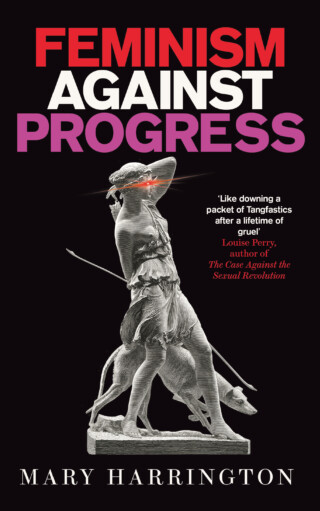
I just finished reading Mary Harrington’s new book, ‘Feminism Against Progress’. I forget exactly when I first came across her writing but it was immediately clear to me that she was not just another cultural commentator. She was willing to say things that were at odds with prevailing orthodoxies and she was clearly well-read. Plus she had a snappy style about her prose that I really liked. Having learned a little bit more about her in subsequent years, I see now why she had these qualities. She was educated at Oxford, went deep into queer theory in abstract and personal ways throughout her 20’s, and was then radically re-oriented by her experience of motherhood in her 30’s. She is one of those modern writers who has been through the swamp of post-modern ideology and emerged the other side sounding a little bit like a conservative. Well, that’s the slur typically deployed against such people; the once-faithful adherents who have abandoned the progressive enclave.
One of the most memorable phrases Harrington uses in her writing is that of meat lego gnosticism. Now that’s a phrase that needs a bit of unpacking the first time you hear it, sort of like moralistictherapeutic deism. “Say what now?” Harrington argues that the logic of the current iteration of feminism is leading our society into a tech-enabled dystopia of meat lego Gnosticism: ‘meat lego’ because we are talking about human bodies that are “liberated” from the biological constraints of gender and sexed differences, and fundamentally reduced to collections of exchangeable parts. And ‘Gnosticism’ because that ancient (and ever-present) heresy rejected the created goodness of embodied existence and made the internal (or spiritual) self the ultimate authority. So whatever I feel myself to be internally is the north star by which all other considerations are guided.
The myth of progress sold to us centers around the idea that ever greater freedom equals ever greater progress. We have equated those two concepts: freedom & progress. Therefore autonomy is prized over responsibility, and constraints are by definition to be resisted. But having achieved historically unprecedented levels of freedom and opportunity already, the modern woman is faced with the uncomfortable reality that women are not really any happier for all their gains. This is one of the book’s strengths: cataloguing all the ways in which a deep malaise haunts men and women who are beholden to this view of freedom-as-progress. So that leaves many in our culture facing the following choice. Either the fundamental promise of liberation was wrong or we just haven’t broken through enough constraints and inequalities to usher in the golden age. Folks on “the right side of history” (as they see it) are convinced it’s the latter, while Mary Harrington makes the case – rather persuasively to my mind – that it’s the former.
There are many other things to commend about this book and Harrington’s other writing in general (typically at the website UnHerd, where she is a regular contributor). She is not a conservative Christian like me, but it is precisely due to this difference of theological and cultural location that her particular insights shine brightly. She sees things differently, comes at them from different angles, and has read entirely different kinds of books. Yet I recognize in her that glimmer of common sense, of seeing the world rightly, of following the evidence when it collides with cherished beliefs, and pursuing truth at the expense of cultural capital among the bien pensants.
This book is precisely the thing to give that person in your life who has bought into all the mottos and slogans of modern feminism. This is not a conservative diatribe against feminism. Those books have their place, though usually not in convincing feminists to rethink their ideas. But this book, written from inside the feminist framework, can accomplish exactly that. And as our world hurtles ever on towards the dystopia of tech-enabled bio-libertarian meat lego gnosticism, Mary Harrington will be a thinker who will help us all to think carefully about the choices we face.
As she points out in this book, the greatest thing we may have to fight for in the coming decades is the right to remain fully and truly human.
I like the image of the bright green snake picked out by the editor, but the title I proposed fell a bit flat. I’m no expert in marketing or anything, but it seems there should be a little twist of intrigue in the title of a piece that piques the interest of the prospective reader. In my case, I just bluntly stated the thesis of my piece in three words and left it at that. No mystery. Upon further reflection, even adding a single word would have helped: How Pornography Poisons Everything. Ah, that’s better. Well, lesson learned.
Despite the title I’ve been very pleased with the engagement the piece has received, as it was linked to by the main TGC website and Twitter account as well as Tim Challies – major boosters of traffic! Such was their reach that I’ve now got a little radio interview scheduled to discuss the topic further with the fine folks at Moody Radio Florida. I expect this will consist of me trying hard not to say anything spectacularly stupid and my wife trying to keep the kids quiet while I talk into my computer.
I have been reflecting on the themes in the article for a number of years, so I am grateful that people seem to find it helpful, or at least confirming of some intuitions they held. What I tried to make clear is some of the subtle ways pornography influences individuals, families, churches, communities, and societies. I found it helpful to use a combination of Scripture and Natural Law reasoning (also known as common sense) to make this case.
I noted in the piece a shifting tide of opinion in some quarters on the question of pornography. The libertarian laissez-faire approach of “do whatever you want as long as it doesn’t hurt me” has proven disastrously inadequate for helping our society, and especially impressionable youth, deal with the wave of pornography that has multiplied proportionally with the spread of Wi-Fi and high-speed data-enabled cellphones with HD screens. And this all the more given the fact that foolish parents anxious to be liked by their teens are pushovers and give them these devices with absolutely no guardrails. Disaster.
So thoughtful people are waking up to the fact that this is noxious and dangerous stuff which is harming a whole generation recently come of age, and that wise leaders will no more allow this to go unrestricted and unregulated as they would let drug dealers open up booths in our community high schools and at local parks. Why? Because young people do not have the moral or even biological resources to muster up a strong defense against the open availability of such powerful stimulants. It’s been interesting to see secular people coming around to this realization and starting to make moral cases against not only open access to pornography for minors but the industry itself.
Another fascinating angle is the growing activism and legal challenge to the frankly criminal behavior of PornHub, the world’s biggest porn site. The lawsuits are huge, and well, money talks. It’s no exaggeration to say that there is a large amount of content on that site which not only depicts heinous crimes but is criminal itself; freely available images and videos that may someday soon be entered as incriminating evidence in a trial. Outrage over that fact should be widespread and non-political, and I have hope that awareness is growing. While we’re on the subject, perhaps you want to sign the online petition over at Traffickinghub.com.
I hope to write more about this in the future, but in the meantime I need to write the promised Part 2 where I try to offer some help for those still ensnared and enslaved to porn. Stay tuned for that in coming weeks.
This brings me to a related topic: anthropology. I know, I know – another big word which we’ve all heard before but aren’t really sure what it means.
And for my most faithful readers, this will feel like a re-run of a previous post, but I’m firmly convinced that it is a necessary word to understand the nature of the rapid transformations taking place in our time. One of the most helpful thinkers in this regard is Carl Trueman, who has made the transition from church historian to cultural critic with great success. And boy can he write. Consider for example this article just published today over at First Things, where he responds to the same controversy I alluded to in my piece, namely the statement made by Dennis Prager that pornography use and lust are not necessarily morally wrong.
Prager’s statement reveals that he lacks a real grasp of what is causing the social and political problems that he claims to abhor: We live in a time of anthropological chaos, where the very notion of what it means to be human is no longer a matter of broad social and political consensus.
Pornography is a great example of this. Behind the problems that should have been obvious to Prager—the objectification of other people, the human trafficking, the transformation of sex into something that is self- rather than other-directed, the reduction of the participants to instruments of pleasure for the spectators—lies a basic philosophy of life that sees me, my desires, and my fulfillment at the core of what it means to be human. Pornography is thus part of an anthropological shift that manifests itself most obviously in sexual mores but is far more comprehensive in its significance.
Later, he adds:
Now, sex and pornography are the most dramatic examples of where this plays out, but they do not exist in isolation from broader considerations of what it means to be a human person. Therefore those, like Prager, who see pornography as having a legitimate function are complicit in this shift. And this change underlies no-fault divorce, gay marriage, and (in its subordination of the body and its functions to the individual’s sense of well-being) even transgenderism. It is foundational to the progressive cause. To concede here is to concede everywhere.
I do encourage you to read the whole thing. This analysis goes much deeper than the moral outrage of an offended conscience and gets at the roots of what is driving a multitude of bewildering cultural phenomena. We do not need the momentary heat of Twitter-depth indignation which tempts us to feel morally self-righteous. That is cheap. But we do need the light of historically-informed thinking that sees through the chaos and confusion of the day and makes clear the deep tectonic shifts happening in our culture. That is “men of Issachar” type stuff.
I hope, in some small way, to continue making contributions to that good work. As always, thanks for reading.
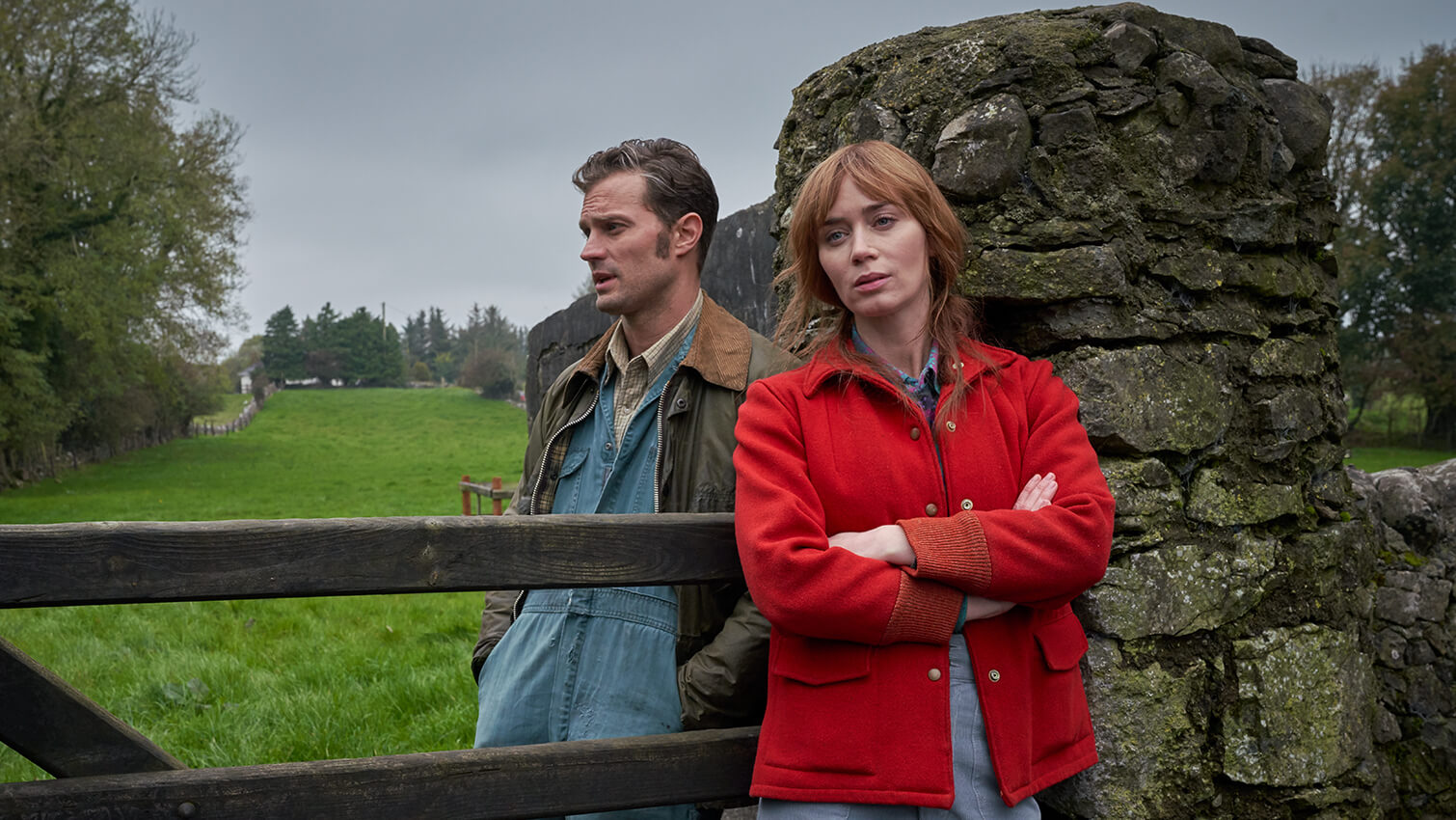
Bewildered, then intrigued, then charmed. This has been the trajectory of my feelings for this movie, Wild Mountain Thyme, which I first watched for no other reason than I recognized the title of it as the name of a song on James Taylor’s recent album, Before This World. I liked the song, with its folk melody that has the peculiar flavor of being non-modern. It’s not a melody that would be written today, nor the words. Something about it calls to the modern ear, a memory echoing from a happy heart among green hills, from before the world grew so complicated and fraught.
So I put the movie on and sat down with my wife on the couch. As the movie started we were caught up into the beautiful cinematography. So far so good. But as the story begun to unfold, and the characters revealed, we were a bit confused. Christopher Walken as an Irish farmer? A man who shoots his shotgun at the crows? A girl who thinks she’s a white swan? The dialogue was both funny and strange, witty and unrealistic. By the end of the movie I was left thinking, what was that?! And it might have been left there, forgotten, but for a nagging sense that there was something rather worthwhile in amongst the odd dialogue and narrow scope of the story.
The story may be summarized thus. Two farms next to each other; two families – the Reillys and the Muldoons. Tony Reilly (Walken) is old, but has doubts about passing the farm on to his bachelor son, Anthony (Jamie Dornan), who has some unknown mental issue which makes him a bit off. He thinks of selling to his American nephew Adam (Jon Hamm) instead. Mr. Muldoon, on the other hand, has passed away. His widow, Aoife, is growing older and will pass the farm down to her daughter Rosemarie (Emily Blunt). Rosemarie and Anthony have known each other since childhood, and are in love with each other, but Rosemarie is waiting for Anthony, who can’t bring himself to act on his feelings because of his mental oddity and his shyness.
My wife and I found ourselves quoting some of the more memorable lines over the next few weeks.
“That horse is Satan on four feet.”
“There’s no answer to blather like that.”
“I can’t stand a man with feelings.”
“A man with feelings should be put down!”
And so we found ourselves putting it on again, but only the scenes that we had thought amusing. We did this repeatedly – which is not normal for us – until we put the whole movie on again one night when the despair of scrolling through the nihilistic offerings of Netflix and Prime were too much.
When I realized the movie was based on a play, it started to make much more sense. The strength of the dialogue, the way the scenes were organized, the way the ending wrapped it all up and brought the whole cast – deceased or not – back on ‘stage.’ With repeated viewing came a richer appreciation for the layers folded into the story. Behind the witty repartees emerged some rather beautiful moments. In fact, the entire ethos of the movie emerged as pre-modern and redemptive, shining all the brighter for the rarity of this quality in all modern movies and shows. It lacked that ubiquitous characteristic of modern cinema: cynicism. Aside from a rather forgettable scene where a character unconnected to the rest of the story tells of having slept with a priest, there is a refreshing innocence to the sexual tension of the movie – which is a romance after all.
Perhaps this is best seen when Rosemarie visits New York city for a day and goes on a date with Adam, the American banker. At the end of the date he kisses her unexpectedly. “Oh my God,” she responds, “What did you do?“
“You know exactly what I did. And now being the gentleman that I am, I’m going to walk you back to your hotel.“
The scene then cuts to her traveling back to Ireland in a shocked stupor from that unexpected kiss, repeating “Oh my God” to herself as if she can’t quite believe it. (The movie, set in Catholic Ireland, has a lot of taking the Lord’s name in vain.) The audience is left with the impression that this was perhaps her very first kiss. But this seems unbelievable to a modern audience. A woman in her late 30’s with no previous sexual experience? The only time we are treated to such characters is to mock them, as in The 40-Year Old Virgin (which I have not seen). Innocence is a rare commodity in Hollywood, something which they seem to be incapable of imagining (which is also why Elf was so charming).
Rural life is presented as simple, difficult, and good. Natural beauty and the order of creation is both shown and described, as in this memorable line: “There’s these green fields… and the animals living off them. And over that there’s us… living off the animals. And over that there’s that which tends to us… and lives off us maybe. Whatever that is… it holds me here.“
Even the American banker dreams of becoming an Irish farmer, as a kind of stand-in for all of us moderns who find ourselves longing for that simpler life and deeper connection to creation. But he can’t help importing his modern mindset, asking Rosemarie how many acres she has.
“I don’t know,” she replies with a shrug.
“How do you not know how many acres of land you own?” he asks, bewildered.
“Because it’s just a number.”
“I’m all about numbers. I manage money for a living.”
“Oh, does money need you to manage it?” she asks.
“I’m not sure,” he answers, after a thoughtful pause.
Lastly, there is a scene of reconciliation and redemption which has grown on me with each viewing. It happens as Tony is dying. He calls Anthony to him and they have a remarkable conversation the effect of which no description here will adequately reproduce. But one part of it speaks of Tony’s… conversion? It’s a kind of watershed moment in his life and marriage that he describes this way:
“Till one day… something gave way. Out in the fields in the wet grass the quiet hand of God touched me. Something came to save me. And it’ll come for you too. I can’t name the day the rain let up. The sun shone on me. And I started in singing. Just like that. That old song. Singing! In the field. Me.“
Well, just imagine Christopher Walken saying that with an attempt at an Irish accent. Like I said, it’s definitely a strange movie. But for a strange duck like me who despairs of Hollywood’s ability to capture the good, the true, and the beautiful, it has been a welcome surprise.







 Phil's Scribblings