
Reflections on William Lobdell’s ‘Losing My Religion’

Introduction

This interesting and well-written book gives believers and unbelievers alike an opportunity to reflect. It chronicles the spiritual journey of William Lobdell. He went from unbeliever, to evangelical, to Catholic, then worked as a religion reporter for a major US newspaper covering the Catholic Sex Abuse Scandal among other things, and subsequently lost his belief in God. As a Christian of the reformed and evangelical stripe, I found Lobdell’s journey fascinating, sad, and instructive. Let me take each of those in turn.
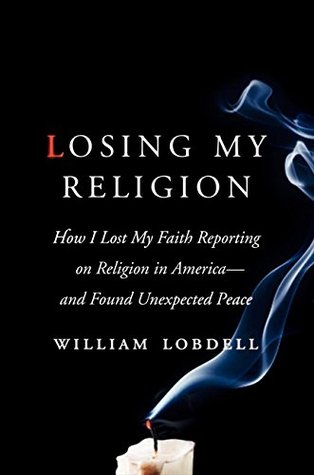
LosingReligion

Fascinating

Lobdell is an experienced writer and that comes through on every page. As one who has struggled through many a book full of good ideas and poor writing, this was a nice surprise.

I did not expect Lobdell’s move from the shallow evangelicalism of his conversion and early Christian experience to the Catholic Church, but it does make sense in hindsight. Nothing seems to drive Protestants to Rome like the rootlessness of contemporary evangelicalism, which so often puts emotion and experience in the driver’s seat, despite the fact that emotion is a terrible driver and experience an even worse navigator. With them in control, there’s no telling where you might end up: Rome or somewhere worse. I will return to the roles of emotion and experience in the last section.

The quality of Lobdell’s storytelling comes through in the middle section of the book when he really starts to dig into the underbelly of the corruption of institutional religion. This made for riveting and stomach-turning reading. The two main targets of his investigative reporting are the Catholic Church and the Prosperity Gospel industrial complex. Now while I have a measure of appreciation for the Catholic Church, despite fundamental and important differences, I have no appreciation at all for the prosperity gospel and its preachers, those misery-sowing peddlers of a false and damning gospel. Ahem. Where was I? Oh right.

Sad

This brings us to the book’s sadness. Lobdell has his heart and soul crushed by the steady willful evil of a cold church bureaucracy and the unfathomable suffering of many innocent, vulnerable people. I felt the anger welling up as I read the stories of these atrocities; I can’t imagine what it would have been like to sit with these victims and hear their stories. I don’t know how anyone can handle that emotionally. So I have a lot of compassion for how hard this would have been.

What is also sad is how theologically unprepared he was to grapple with these realities. It seems, from a distance, that the kind of Christianity Lobdell was discipled into was very acclimated to the comfortable affluent Southern California world in which he moved. This may the norm, but it does leave one totally unprepared to relate to the majority of Christians in the world today, not to mention the majority of Christians throughout the ages, who have and who are suffering in all kinds of ways. Oh, and the Bible, which in many ways is a pretty brutal book.

Instructive

From very early in his journey, Lobdell expressed doubts about the character of God as revealed in Scripture. However, he never seems to doubt the certitude of the moral assumptions that give rise to his doubts and questions. There is a lot of sentimentality there. The justice and judgment of God, which the author found so hard to accept, are the very things that would have anchored him in the face of such unimaginable evil as he encountered. Theologian Miroslav Volf, who hails from the Balkans and has seen more than his share of human evil, is right that without a God of judgment, the cycle of violence goes on and on, because only earthly justice is left. Likewise the sentimentalist is utterly unequipped to face the depth of evil humans are capable of. The imprecatory Psalms are an embarrassment to the sentimentalist, but they are a lifeline to the victim or troubled bystander of injustice and evil.

To return to my previous point, the assumption that emotion and experience are fundamental arbiters of truth is never questioned: ‘If I experience something, then my interpretation of that experience is true.’ Near the end of the book, he even says something about “his truth.” Oprah couldn’t have said it better – and it has all the objective solidity of an overcooked spaghetti noodle.

These are deeply modern (even post-modern) assumptions, shaped by the prevailing philosophy of our time and culture. Catholic philosopher Charles Taylor famously calls ours a Secular Age, in contrast to previous ages. Where once it was well-nigh impossible not to believe in God, given the available explanatory frameworks, now we are 200 years downstream from the enlightenment and it is, culturally speaking, pretty well impossible to believe in God. Unless one is able to zoom out a bit and see these things as the passing fancies that they are, it can be extremely disorienting and even destructive to one’s faith, as in Lobdell’s case.

In the last portion of the book, the author makes some attempts to voice his doubts and see if anyone can give him satisfactory answers. The questions and problems he raises however contain deeply embedded assumptions that again are never questioned. He decides to weigh the truthfulness of Christianity in part by measuring the moral quality of those who identify as Christians. In America. I almost laughed out loud.

This approach might work in Afghanistan or in China, where there are no massive cultural incentives to identify as Christian. But in America, even twenty years ago, Christianity was such a cultural expectation that these studies are basically useless. The shortcomings of these famous Barna studies were known even at the time, although perhaps not widely enough.

Consider what has happened since: the fastest growing religious identification is the “nones,” as in, religious affiliation: none. The ‘mushy middle’ of cultural Christianity, which was made up of mainline denominations and weak evangelicalism, basically hollow and doctrinally and morally indistinguishable from the surrounding culture, is quickly evaporating. What we are left with increasingly is a hard secularism on one side and a committed convictional Christianity on the other. It is even more like this in countries where secularism is more advanced, such as Canada where I live. Not too many people left here still claiming to be Christians if they aren’t personally committed to Christ. More recent and better-designed studies measuring the moral behaviour of believers has yielded different results, but I would still argue that this is a pretty terrible way to go about deciding if something is true.

Regarding the nature of prayer and of God’s providence, Lobdell again makes an assumption which renders the question essentially impossible. He assumes that the pattern of answered prayer and the observable fortunes and sufferings of people’s lives should immediately reveal to any observer the validity of God’s existence by vindicating his claim to love his people. In fact he seems to demand that this be the case. It’s difficult to know where to begin with an assumption like this, other than to say it is utterly foreign to the whole thrust of the New Testament, but utterly consistent with a very unreflective North American way of thinking.

His friend John, a Presbyterian pastor, hits the nail on the head with this comment on page 239:

“The fact is that [God] has not chosen to reveal everything to us. I can whine and complain that He hasn’t, demanding that God make it possible for me to understand everything. But when I do that, I’m getting pretty close to self-worship, lifting myself to the position of God, or perhaps even to a position superior to God, demanding that God function on my ground rules instead of me, humbly in worship, functioning on His.”

And that more or less describes what is going on in this book. In the end, Lobdell opts for a kind of unbelief that happily keeps all the moral and ethical capital of a Christian worldview while rejecting the Source of that morality and ethic. And since it can take a couple of generations for those fumes to dissipate, it’s quite possible he will live on borrowing happily and thinking all is well. His is a very Christian kind of atheism.

I am sure that many unbelievers and questioning believers will take encouragement from this book. It is a very human thing to find comfort in companionship. As a believer, I think it is a clarifying and revealing tale for anyone concerned with the state of Christian discipleship.

Blinded by Celebrity Culture

The culture of celebrity is so pervasive that we have forgotten and lost something very important and obvious.

We tend to think that the very best example of a given talent or discipline will be found in the person who is the most famous for it. But this is a very irresponsible assumption to make.

Someone of greater or equal talent to the celebrity may have decided that they were going to make family and privacy a priority. Other talented people don’t have ‘the look’ and therefore can’t create an image that will sell. Still others simply haven’t been discovered yet, and many never will. They will simply continue to write and perform and sculpt and cook and paint and sing in your communities, your coffee houses, local art galleries, your churches, always being less in our eyes because they have none of the waxy sheen and glitter that we wrongly associate with true greatness. The case in point for this is the true story of the world-class violinist who played in a subway for 45 minutes while hundreds upon hundreds of people walked by without ever noticing.

And I think most of us are guilty of ‘not noticing’ all kinds of wonderful talent and greatness all around us. It’s a darn shame is what it is.

This holds true in the spiritual world as well. The church has bought into the celebrity culture so completely that it has forgotten there was ever an alternative. Our worship bands are good but they aren’t exactly Chris Tomlin, David Crowder, or Michael Gungor. Our preachers may be good but they aren’t (insert favourite preacher here). If only we had someone in our church who was a spiritual giant like so-and-so, who could pray like other-so-and-so. But the fact is we are looking at the waxy sheen instead of the substance, and the truth is that there are fantastic preachers in your town, and probably your church.

The truly great prayer warriors and spiritual giants will never be celebrified, and they abound in the quietest of corners in most churches. The music can be as much of a distraction as a help. The North American worship experience has been profoundly and perhaps irrevocably knocked off balance by the inappropriate elevation of the rockstar worship leader, the conflation of worship service and concert, and the confusion of emotional effusion for spiritual power.

What I’m saying is that the celebrity pastor most worth your time is your pastor, the celebrity worship leader most worth your voice is your worship leader, the spiritual giant most worth approaching for advice and prayer is that sweet older person who sits two rows back and to the left and smiles at you when you walk in.

It’s simply the way God has always done things. Greatness comes in the most ordinary vessels.

Thoughts on Typical Churches from Richard Lovelace, Part 3

Continuing from the last two posts…

“Their religious lives, however, do not satisfy their consciences at the deepest level, and so there is a powerful underlying insecurity in their lives. Consciously they defend themselves as dedicated Christians who are as good as anybody else, but underneath the conscious level there is a deep despair and self-rejection. Above the surface this often manifests itself in a compulsive floating hostility which focuses upon others in critical judgment. Thus a congregation of Christians who are insecure in their relationship to Christ can be a thorn bush of criticism, rejection, estrangement, and party spirit. Unsure in the depth of their hearts what God thinks of them, church members will fanatically affirm their own gifts and take fierce offense when anyone slights them, or else they will fuss endlessly with a self-centered inventory of their own inferiority in an inverted pride.”

Richard Lovelace, in Dynamics of Spiritual Life

Thoughts on Typical Churches from Richard Lovelace, Part 2

“Sometimes with great effort [church members] can be maneuvered into some active role in the church’s program, like a trained seal in a circus act, but their hearts are not fully in it. They may repeat the catchwords of the theology of grace, but many have little deep awareness that they and other Christians ‘accepted in the beloved.’ Since their understanding of justification is marginal or unreal – anchored not to Christ, but to some conversion experience in the past or to an imagined present state of goodness in their lives – they know little of the dynamic of justification. Their understanding of sin focuses upon behavioral externals which they can eliminate from their lives by a little will power and ignores the great submerged continents of pride, covetousness and hostility beneath the surface. Thus their pharisaism defends them both against full involvement in the church’s mission and against full subjection of their inner lives to the authority of Christ.”

Richard Lovelace, in Dynamics of Spiritual Life

Thoughts on Typical Churches from Richard Lovelace, Part 1

I’ll try and post a few paragraphs this week from Lovelace’s chapter “Renewal of the Local Congregation” in Dynamics of Spiritual Life. This is a major book for me, and I’ll be drawing from it a lot. I am planning on writing a thesis paper for my undergraduate theology degree on the fundamental principles that he puts forth in this book.

In this section he is outlining the goal of seeing congregations revitalized by God, but first sets out to paint a picture of the typical congregation. This was written around 1979, but it might as well have been written last year.

In most cases what [pastors] confront is a style of living very unlike the spiritually vibrant mission station described at the end of Acts 2. The “ultimate concern” of most church members is not the worship and service of Christ in evangelistic mission and social compassion, but rather survival and success in their secular vocation. The church is a spoke on the wheel of life connected to the secular hub. It is a departmental subconcern, not the organizing center of all other concerns. Church members who have been conditioned all their lives to devote themselves to building their own kingdom and whose flesh naturally gravitates in that direction anyway find it hard to invest much energy in the kingdom of God. They go to church once or twice a week and punch the clock, so to speak, fulfilling their ‘church obligation’ by sitting passively and listening critically or approvingly to the pastor teaching.

Richard Lovelace, in Dynamics of Spiritual Life

1984… and the Gospel

Ever since we moved into our new apartment here in Cambridge, we’ve been reading a lot more. I think it has to do with how comfortable and at-home we feel here compared to the place we were in for the summer. Knowing we were only there 3 months made it really hard to feel settled. And it was dark with small windows and cold floors – not exactly the kind of place that lends itself to quiet, comfy evenings on the couch with a book.

I just finished reading the political classic 1984 by George Orwell. If you’re not familiar with it, check out the wikipedia article, which aptly describes it as a “dystopian novel about the totalitarian regime of a socialist Party.” As far as politics go, I am a self-labeled cotton-headed ninny-muggins, so I don’t have much to say about Canadian politics or “how an offshore corporate cartel is bankrupting the US economy by design,” nor how a “worldwide regime controlled by an unelected corporate elite is implementing a planetary carbon tax system that will dominate all human activity and establish a system of neo-feudal slavery.”

Anyways, one thing that struck me was the part where the main character, Winston Smith, first has a sexual encounter with Julia. Any such relationship is strictly forbidden in that society. He asks her if she has done this sort of thing before, and she says that she has done it many times. Orwell writes, “His heart leapt. Scores of times she had done it: he wished it had been hundreds – thousands. Anything that hinted at corruption always filled him with a wild hope. Who knew, perhaps the Party was rotten under the surface, its cult of strenuousness and self-denial simply a sham concealing iniquity.” Winston then tells Julia, “I hate purity, I hate goodness! I don’t want any virtue to exist anywhere. I want everyone to be corrupt to the bones.”

An early edition of 1984 by Eric Blair, better known as George Orwell

Now why does he hate purity and goodness? Does he have a devil-like hatred of purity and goodness, where his soul is so distorted and evil that he just hates anything which is right and good? I don’t think so.

All through the book he deeply rejoices in all kinds of things which are truly good and right – the beauty of nature, the song of a bird, a good cup of coffee. No I think the reason he hates purity and goodness is because of the hypocritical veneer of purity and goodness that the “Party” had.

I couldn’t help but see the parallels between this and some Christian environments. When Christian ‘righteousness’ is represented, taught and demanded by a hypocritical leadership, those under that leadership grow sour to such ‘righteousness.’ Having been exposed to a diseased version of righteousness, they then become allergic to anything which smells of it.

Can we be surprised by statements like “I hate purity, I hate goodness!” when the only supposed purity and goodness they have seen has been the impure, bad version of it. Likewise, can we be surprised when scores of people are turned off of Christianity when some of the most prominent and well-known leaders of Christianity turn out to be living lives so crazily out of line with the most basic teachings of Christianity?

From the extreme examples like evangelical super-pastors in sex scandals and Catholic priests involved in systemic child sexual abuse to the more mundane hypocrisy of legalistic church-folk, it all contributes to this effect.

The world of 1984 is a world run by the legalistic elder-brother (of Jesus’ parable in Luke 15) where younger-brother tendencies are illegal and punished by death. The problem is that the younger brothers can see through the fake facade of the elder brothers.

Without the gospel, all the state-enforced morality in the world can never produce an ounce of true goodness.

Without the gospel, the elder brother is lost in his morality, religion, and self-righteousness; and the younger brother is lost in his immorality and rebellion.

The sad part is when the younger brothers reject Christianity because they only know the Christianity of the elder brothers – and who the heck wants that?

Once again, the gospel breaks through every human system and offers the only true hope for humanity.

Thoughts on Hamilton Impact

This past week, our church was running Hamilton Impact – a one-week intensive Evangelism training program. Three churches in Hamilton partnered together to make it happen: West Highland Baptist Church, Hughson St. Baptist Church, and Lightway Church – which is a plant out of Hughson. These events started in Toronto, and are a partnership between a church and Operation Mobilization, which provides teaching on evangelism and various world religions. For example, this week we studied Islam, Hinduism, Sikhism, Buddhism, and Roman Catholicism, and visited a mosque, a Sikh gurdwara, and a Hindu temple. In the evenings the participants go door-to-door in the neighbourhoods around the partner churches and go through a simple survey with people which often leads into spiritual conversations and an opportunity to clearly share the gospel.

I learned a lot this week. First, I learned that door to door evangelism, despite suffering from a major image problem, does work. I was able to clearly share the gospel with quite a number of people that I’ve never met, leave quality literature with them, and have truly meaningful interactions that I would never have had in the normal course of my daily life. We are still compiling statistics, but it was pretty clear that the more affluent and more Canadianized the people were, the less they were open to talking. But thankfully the neighbourhoods around Lightway and Hughson St. are full of an amazing diversity of peoples from literally all over the world. This kind of diversity can be easily found in Toronto, Vancouver, Hamilton, Montreal, and other major gateway cities in Canada. It seems to me that these people are for the most part not on the radar of conventional churches in those cities.

During the week we met people who had Christian neighbours and yet who did not actually know what a Christian Bible was, who Jesus is, or anything else at all about Christianity. And, even more amazingly, they were eager and curious to find out more about this Jesus.

I have read and listened to a lot of pastors and urban church planters in the USA and have actually never heard anyone mention reaching out to Muslims, Hindus, Sikhs, or Buddhists. After this week, I’m blown away by that fact. I don’t know the demographics of American cities, but it’s quite possible that they don’t nearly have the immigrant population that we have in Canada. If that’s the case, then we Canadians need to make sure we don’t take all our cues from our American brothers, but that we seek the Lord and develop strategies that are appropriate and effective for our specific context. More and more, I am convinced that the Canadian context demands that churches in the cities be intentionally multi-cultural, and very discerning to avoid causing unnecessary cultural offense. Christians need to be educated about other cultures and other religions, and taught to extend hospitality and love to new Canadians. Instead, I often see fear-mongering and ignorant email chains about how the Muslims are taking over our government and schools. We need to do better than this. As one participant this week commented: ignorance breeds fear and intimidation, but knowledge brings empowerment.