My Top Ten Books from 2013

Caveat: These books were not necessarily published in 2013. In fact none of them were except for the last one.

Phil’s Top Ten Books of 2013 (in no particular order):

19063The Book Thief by Markus Zusak

My wife got this book at a family gift exchange at the end of 2012, and it was the first book I read in 2013. I’ll say three things about this book, and then you should go read it. First, the narrator is Death himself, and so you can be sure that the writing is incredibly imaginative. Second, the main character is a little girl, orphaned, in Germany, during the second world war. Third, the story is sweeping and beautiful, and I couldn’t wait to finish it. It’s also been made into a movie, which I haven’t seen yet, but certainly will.

matterhornMatterhorn by Karl Marlantes

A novel of the Vietnam War by a marine veteran. Marlantes captures the horror of war along with the power of brotherhood and friendship. Not an easy read, but a moving and rewarding one.
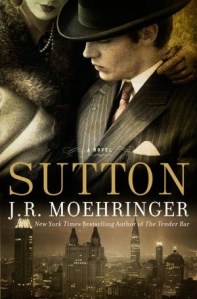
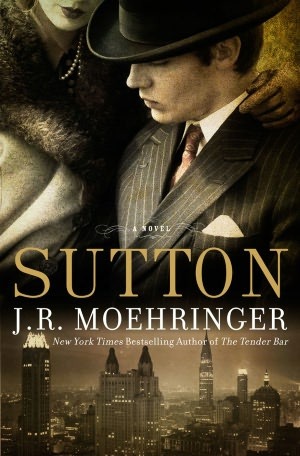
13624683Sutton by J.P. Moehringer

Willie ‘The Actor’ Sutton was America’s most prolific (and endearing) bank robber from the late 1920’s to the 1950’s. Witty, a gentleman, a master of disguise, non-violent, he became a folk hero during a time in America when the banks continued to get richer while the public suffered in economic distress. Not much is known about Willie Sutton, so this book is technically fiction. The author, J.P. Moehringer, has collected the available facts and imagined the rest, and the result is quite an enjoyable story! It’s an interesting twist on the genre of historical fiction. In any case, I like stories of criminals with ideals (The Great Train Robbery is one of my all time favorites), and this fits nicely in that category. Sutton is the man who answered, when asked why he robbed banks, “because that’s where the money is.”

10058Flags of Our Fathers by James Bradley

A book by the son of a World War 2 veteran who happened to be in the iconic picture of the raising of the flag on Iwo Jima. The book traces the lives of all six soldiers who were in the picture, and it makes for fascinating and harrowing reading. You really come to know each one individually and root for them. If you have seen the movie, don’t be dissuaded – the two have very little in common and the book is better!

1845403Exit Music by Ian Rankin

This is the 2007 finale of the Inspector Rebus series set in Edinburgh, Scotland (Rankin resurrected the series in 2012). I read the first book and then the last 4 books of the series and I find them a very enjoyable light-hearted read; witty dialogue, imaginary Scottish accents, believable characters, lovable characters, loathable characters, lots of whisky and classic rock. Not everyone’s cup of tea, I’m sure, but if you like witty humor and mystery fiction, you may find yourself picking up the next one and the next one and looking up maps of Edinburgh on Google.
2924318Home by Marilynne Robinson

The polar opposite of light-hearted. Marilynne Robinson writes the way I wish I could. Really, it’s difficult even to describe her writing with any adequacy. What I admire the most is the seamless way she weaves profound spiritual realities into a grounded and earthy narrative. Book reviews tend to overuse superlatives, so forgive my indulgence here: sublime, perceptive, cutting, haunting, beguiling, utterly brilliant — hold on while I get my thesaurus — oh nevermind. I really enjoy her novels, if you can’t tell yet, so pick up her previous (and related) book Gilead as well.
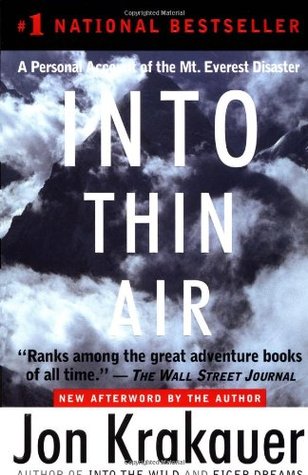
1898Into Thin Air by Jon Krakauer

I think about this book every time my hands or feet get cold outside. It is the incredible story of the 1996 climbing disaster on mount Everest where a number of people lost their lives, told from the perspective of one of the survivors. I found it nearly impossible to put down, and yet difficult to read at the same time – these are real people, real lives, and terrible deaths. I have never been into thin air at above 20000 feet, but I have been to Nepal, have seen Everest and the Himalayas on the horizon, and can just begin to imagine what would drive people to put themselves through unspeakable pain, discomfort, and peril, to simply climb to the top. The classic answer of course comes from George Mallory, the first man known to attempt to climb it: “Because it’s there.”

13697023In Cold Blood by Truman Capote

Reading Sutton got me thinking about the whole idea of mixing non-fiction with fiction. I did a bit of research and discovered that in 1966 a book was written by Truman Capote that is considered to be the first ‘non-fiction novel.’ It is the story of the 1959 murders of the Clutter family in rural Kansas by two criminals who didn’t even know them. It was very well written and certainly interesting, but with little to offer in terms of redemptive value.
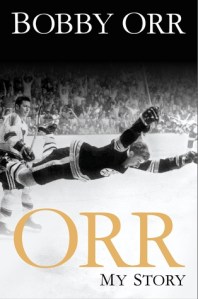
17159989Orr: My Story by Bobby Orr

After decades of silence regarding his unparalleled career, Bobby Orr finally wrote his story down. This book had loads of priceless moments, both funny and moving, but Bobby Orr is gracious and polite to a fault. I would have loved to hear him share what he really thinks a bit more often and bit a less sugarcoated. Nevertheless, it familiarized me with an era of hockey that I never got to watch, and I gained a lot of appreciation for those athletes. Orr had lots of good things to say about youth hockey and the NHL, and frankly if you love hockey you should read this.
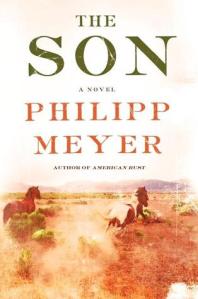
16240761The Son by Philipp Meyer

My wife got this book out of the library for me, and once again she proved that she has great intuition. Meyer was highlighted in 2010 in the New Yorker’s list of top 20 authors under the age of 40. This book is breathtaking in its scope, spanning five troubled generations of a Texan family, from the settling of an untamed land to the building and collapse of a cattle and oil empire, from cold and empty mansions to eating raw Buffalo liver with Comanche Indians. It’s won a whole slew of awards and with good reason; it paints a powerful critique of the American dream, the pursuit of money and power, and human nature in general. As a follower of Jesus I only wish that the bleakness of the picture could have been set beside the brilliance of the One who showed humanity a better way.

Honorable Mentions:
13131149Evangellyfish by Douglas Wilson

A grim satire about the Evangelical world from a gifted writer. A fun and incisive read for anyone in ministry who has a sense of humor.
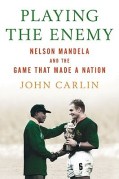
2964456Playing the Enemy by John Carlin

The book behind the movie Invictus, which tells the story of Nelson Mandela and the 1995 Rugby World Cup. It was well written, flowed seamlessly from start to finish, and captured a truly remarkable moment in history.
9781408468241The Last Sherlock Holmes Story by Michael Dibdin
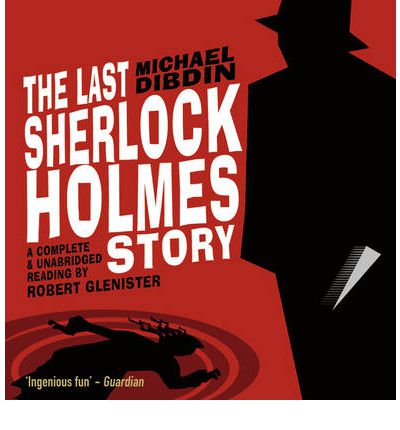
I haven’t read the Sherlock Holmes books yet (I just got them for Christmas: Thanks Dad!) but I picked this one up as an audiobook and really got into it. It’s an imaginative take on Watson and Holmes’ final years, with a twist. I didn’t actually care for the twist all that much, but loved the ride. I’m sure hearing it in ge-nu-ine British accents helped the experience as well.

If you are still reading this lengthy post, you are surely a fellow reader! So thanks for reading, first of all, and please leave a comment sharing your favorite reads this year – I’m always looking for a good book to add to the reading pile.

Remembrance Day and Three Good Books

remembrance-day

It’s Remembrance Day.

Which is both good and bad. Good because in and of itself, Remembrance Day is a good thing. Bad because some people just have a knack for taking a good thing and kind of ruining it.

While there will always be some who use it as a platform to further some political agenda, and others who wear a poppy out of nothing more than peer pressure, one thing is clear: Remembrance Day as experienced by many is often pretty far removed from the original intent of the whole thing.

But before I say another word, I do need to stop and realize that I am free to sit here and wax eloquent about this or that because a lot of people have made incredible sacrifices over the years, men and women to whom we all should be profoundly grateful. And I am.

I’ve always been fascinated by combat and war. Over the years, this fascination has matured from a kind of juvenile interest in guns and military hardware to a sombre and heavy-hearted appreciation for the incredible reality which is war. It is a place where the best and worst of humanity is seen in stark relief; and I don’t mean that one side is good and one side is bad.

The truth is that on the ground, despite the noble or evil actions and intentions of those far-removed leaders, courage and atrocity are not relegated to one side or the other. Moral and ethical ambiguity seems to overwhelm the idealistic black-and-white notions of many who enter these conflicts. And I don’t really know what to do with that.

At the end of the day, Hitler was still a tyrant and Churchill still did the right thing sending in the boys, even if that kind of moral clarity seems to be the exception rather than the rule.

Nevertheless, one of the ways to really cut through the fluff and empty sentimentality that surrounds Remembrance Day is to take the time to read good books about war and combat. Allow me to recommend three books that I’ve read this year which deal with war and conflict in a deeply human and thought-provoking way.

1. Flags of Our Fathers, by James Bradley and Ron Powers

flags-of-our-fathers-31000

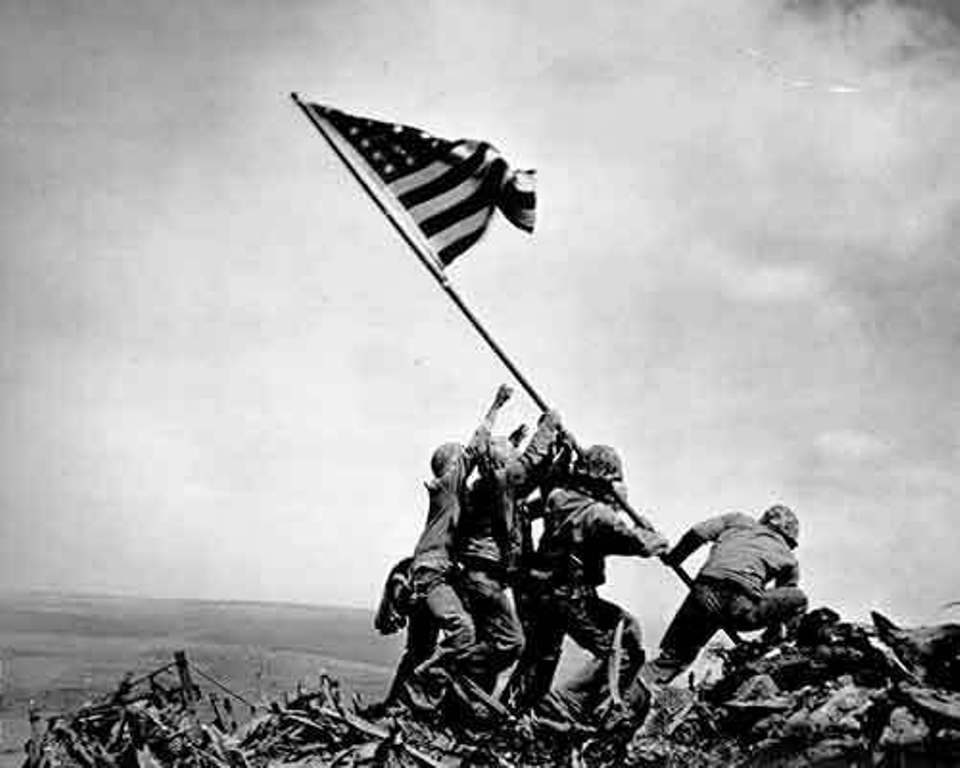
I picked up a used copy of this classic for a dollar in a sleepy little town called Winter Harbour, Maine, while vacationing there this summer. It is the story of the six men who raised the American flag in the iconic picture seen here. It is written by the son of one of these men. It was engrossing, horrifying (literally nauseating at times), and a catalyst causing me to reflect on mortality and the brevity of life, on the nature of courage and bravery, and many other things. I highly recommend it.

2. Matterhorn, by Karl Marlantes

matterhornThis is a novel of the Vietnam war. It is written by Karl Marlantes, who is a Marine veteran. It really is a masterpiece as far as war fiction is concerned. It is about as different from a Tom Clancy-type thriller as you can imagine. It is gritty, real, and deeply human. Widely touted as a modern classic, I couldn’t agree more.


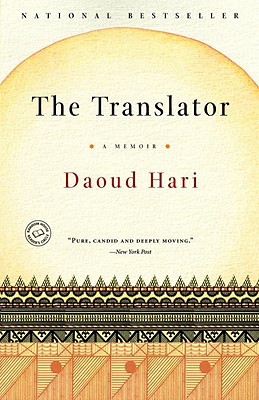
3. The Translator, by Daoud Hari

The-Translator-Hari-Daoud-9780812979176

It’s a bit of a stretch to include this book on Remembrance Day, since as far as I know neither Canada nor the US is actively involved in the Darfur region, but one of the dangers when considering the wars of the past is to forget how many wars are going on right now. This gripping book is the incredible personal story of Daoud Hari, a young man from Darfur who became a translator and guide for various foreigners during the genocide in Darfur. While emotionally devastating at times, this sombre tale is peppered with humour and glimpses of the beauty of the human spirit – that outpouring of common grace.


What about you? What are some books that have changed the way you see war and conflict?

Thoughts on Typical Churches from Richard Lovelace, Part 3

Continuing from the last two posts…

“Their religious lives, however, do not satisfy their consciences at the deepest level, and so there is a powerful underlying insecurity in their lives. Consciously they defend themselves as dedicated Christians who are as good as anybody else, but underneath the conscious level there is a deep despair and self-rejection. Above the surface this often manifests itself in a compulsive floating hostility which focuses upon others in critical judgment. Thus a congregation of Christians who are insecure in their relationship to Christ can be a thorn bush of criticism, rejection, estrangement, and party spirit. Unsure in the depth of their hearts what God thinks of them, church members will fanatically affirm their own gifts and take fierce offense when anyone slights them, or else they will fuss endlessly with a self-centered inventory of their own inferiority in an inverted pride.”

Richard Lovelace, in Dynamics of Spiritual Life

Thoughts on Typical Churches from Richard Lovelace, Part 2

“Sometimes with great effort [church members] can be maneuvered into some active role in the church’s program, like a trained seal in a circus act, but their hearts are not fully in it. They may repeat the catchwords of the theology of grace, but many have little deep awareness that they and other Christians ‘accepted in the beloved.’ Since their understanding of justification is marginal or unreal – anchored not to Christ, but to some conversion experience in the past or to an imagined present state of goodness in their lives – they know little of the dynamic of justification. Their understanding of sin focuses upon behavioral externals which they can eliminate from their lives by a little will power and ignores the great submerged continents of pride, covetousness and hostility beneath the surface. Thus their pharisaism defends them both against full involvement in the church’s mission and against full subjection of their inner lives to the authority of Christ.”

Richard Lovelace, in Dynamics of Spiritual Life

1984… and the Gospel

Ever since we moved into our new apartment here in Cambridge, we’ve been reading a lot more. I think it has to do with how comfortable and at-home we feel here compared to the place we were in for the summer. Knowing we were only there 3 months made it really hard to feel settled. And it was dark with small windows and cold floors – not exactly the kind of place that lends itself to quiet, comfy evenings on the couch with a book.

I just finished reading the political classic 1984 by George Orwell. If you’re not familiar with it, check out the wikipedia article, which aptly describes it as a “dystopian novel about the totalitarian regime of a socialist Party.” As far as politics go, I am a self-labeled cotton-headed ninny-muggins, so I don’t have much to say about Canadian politics or “how an offshore corporate cartel is bankrupting the US economy by design,” nor how a “worldwide regime controlled by an unelected corporate elite is implementing a planetary carbon tax system that will dominate all human activity and establish a system of neo-feudal slavery.”

Anyways, one thing that struck me was the part where the main character, Winston Smith, first has a sexual encounter with Julia. Any such relationship is strictly forbidden in that society. He asks her if she has done this sort of thing before, and she says that she has done it many times. Orwell writes, “His heart leapt. Scores of times she had done it: he wished it had been hundreds – thousands. Anything that hinted at corruption always filled him with a wild hope. Who knew, perhaps the Party was rotten under the surface, its cult of strenuousness and self-denial simply a sham concealing iniquity.” Winston then tells Julia, “I hate purity, I hate goodness! I don’t want any virtue to exist anywhere. I want everyone to be corrupt to the bones.”

An early edition of 1984 by Eric Blair, better known as George Orwell

Now why does he hate purity and goodness? Does he have a devil-like hatred of purity and goodness, where his soul is so distorted and evil that he just hates anything which is right and good? I don’t think so.

All through the book he deeply rejoices in all kinds of things which are truly good and right – the beauty of nature, the song of a bird, a good cup of coffee. No I think the reason he hates purity and goodness is because of the hypocritical veneer of purity and goodness that the “Party” had.

I couldn’t help but see the parallels between this and some Christian environments. When Christian ‘righteousness’ is represented, taught and demanded by a hypocritical leadership, those under that leadership grow sour to such ‘righteousness.’ Having been exposed to a diseased version of righteousness, they then become allergic to anything which smells of it.

Can we be surprised by statements like “I hate purity, I hate goodness!” when the only supposed purity and goodness they have seen has been the impure, bad version of it. Likewise, can we be surprised when scores of people are turned off of Christianity when some of the most prominent and well-known leaders of Christianity turn out to be living lives so crazily out of line with the most basic teachings of Christianity?

From the extreme examples like evangelical super-pastors in sex scandals and Catholic priests involved in systemic child sexual abuse to the more mundane hypocrisy of legalistic church-folk, it all contributes to this effect.

The world of 1984 is a world run by the legalistic elder-brother (of Jesus’ parable in Luke 15) where younger-brother tendencies are illegal and punished by death. The problem is that the younger brothers can see through the fake facade of the elder brothers.

Without the gospel, all the state-enforced morality in the world can never produce an ounce of true goodness.

Without the gospel, the elder brother is lost in his morality, religion, and self-righteousness; and the younger brother is lost in his immorality and rebellion.

The sad part is when the younger brothers reject Christianity because they only know the Christianity of the elder brothers – and who the heck wants that?

Once again, the gospel breaks through every human system and offers the only true hope for humanity.

Watching Out for the Wrong Thing

“The use of Fashions in thought is to distract the attention of men from their real dangers. We direct the fashionable outcry of each generation against those vices of which it is least in danger and fix its approval on the virtue nearest to that vice which we are trying to make endemic. The game is to have them running about with fire extinguishers whenever there is a flood, and all crowding to that side of the boat which is already nearly gunwale under.”
This short paragraph in letter 25 of the Screwtape Letters made me realize that I often watch out for the wrong thing, or guard against the extreme that I am in the least danger of falling into. For example, I am by nature a bit timid and reserved. I don’t like confrontation at all. If I’m honest with myself I’m far more often a coward than a bully, and yet I am usually far more worried about not being ‘too bold’ or ‘too forceful’ than being a coward. The error I’m likely to fall into is lack of boldness and yet I usually guard against excessive boldness. This seems backwards.
Likewise, in my spiritual life I tend to avoid structure, discipline, and rigid plans. I like my freedom. I guess I tell myself I’m guarding against legalism, but let’s be honest, I am far more likely to fall into laziness and complacency than ritualistic legalism. On top of that, one of the manifestations of the Holy Spirit is “self-control” (Gal. 5:23).
I think this is true corporately as much as it is individually. In some churches, worship times seem to be emotion-free.
“Leave your affections at the door please.” Worship is more of a cognitive assent to propositional truths. They say they are guarding against emotionalism, but let’s be honest – their danger is not emotionalism but intellectualism. The opposite is true of other churches of course. It seems that when there are two groups who emphasize opposite ends of a given spectrum, the effect is to polarize both towards extremes as they react against the other, which frankly leaves each one worse off than before.
We all land at different places on a number of continuums like this. I find it helpful to zoom out a little bit and gain some perspective on the whole.

A Dozen Incompatible Philosophies Dancing About Together In Your Head

Uncle Screwtape Trades in Pen & Paper for a ThinkPad

This is why I love C.S. Lewis. He takes what you inherently know to be true and puts it into words. This is just as true today as it has ever been – the reason people believe this rather than that goes far deeper than evidence. Thanks to Michael Krahn for nudging me to read Lewis – I grabbed this off my shelf yesterday and read it at the beach (the wind blew it into the water too… but with minimal damage).

“Your man has been accustomed, ever since he was a boy, to having a dozen incompatible philosophies dancing about together inside his head. He doesn’t think of doctrines as primarily “true” or “false,” but as “academic” or “practical,” “outworn” or “contemporary,” “conventional” or “ruthless.” Jargon, not argument, is your best ally in keeping him from the Church. Don’t waste time trying to make him think that materialism is true! Make him think it is strong or stark or courageous—that it is the philosophy of the future. That’s the sort of thing he cares about.”

C.S. Lewis, The Screwtape Letters

I really see this at work in our day. There are philosophies and ways of thinking that are exciting and new, and the climate and vibe of our culture makes them even more appealing. But the draw is not truthfulness or explanatory power, it is more like some weird alignment with one’s internal compass – it feels right on a deeper level – if that makes any sense.

So my question is: Do you then try to present Christianity fundamentally as true or as more exciting [or whichever desired adjective] than the rest? Or both?

What do you think?

The Need for Mentors and Wanna-Bes

As I look back on my Christian life so far, I see a recurring pattern. Actually I see quite a few patterns, but here is one of them. It goes like this: I will come across a person, either in real life or through books or sermons or stories, who has something about them that I really like and admire. And then I go about trying to acquire it somehow. Sometimes it’s by osmosis – just hanging around them and watching them. Other times it’s by studying and reading whatever it was that they studied that made them that way. For me, it is usually – but not always – preachers and authors.

So for example, my good friend Steve Watts has a love for Jesus and people that is overflowing and contagious. I want that. John Piper has a passion for God’s glory that is pretty intense. I want that too. John Owen had a deep understanding of the flesh and the deceitfulness of sin. I want that too. There are many more, both alive and dead, and recently I’ve added another one to the list that I recommend to you as well: C. John Miller, who also went by Jack Miller.

I’ve been reading The Heart of a Servant Leader: Letters from Jack Miller, and it is stellar. It is simply a collection of many letters that he wrote to all kinds of people through the course of his ministry. There are some central and recurring themes, and the letters are organized and grouped according to those themes.

It is nothing less than a window into the heart of this man for those around him. It is deeply humbling and convicting for me to read the powerful, wise, humble, loving letters that this man wrote to friends, colleagues, and ‘enemies’. He was not always this way, and I think it is the story of his experience in ministry that really fascinates me about him. He served twenty years in ministry in various roles, as a church planter, pastor, and seminary professor, until he hit a wall in 1970 and ended up depressed and burned out.

“He had gradually become frustrated in both jobs. It seemed to him that neither the church members nor the seminary students were changing in the ways that they should, and he did not know how to help them. In desperation he resigned from both positions and then spent the next few weeks too depressed to do anything except cry.”

Pause: Wow. That is heavy.

It goes on:

“Gradually during those weeks it became clear to him that the reason for his anger and disappointment was his own wrong motivation for ministry. He realized that instead of being motivated only by God’s glory, he was hoping for personal glory and the approval of those he was serving. He said that when he repented of his pride, fear of people, and love of their approval, his joy in ministry returned, and he took back his resignations from the church and seminary.”

As a young dude who is pretty ambitious about ministry, this is scary stuff. The question that haunts me is: how do I avoid that? I know that I have a mingling of pure and impure motivations for ministry, I know that I desire personal glory, and I know that I want the approval of those around me. But even as I recognize those things and repent of them, I just sense that my repentance is not deep enough – it isn’t fundamentally a transformative repentance. I don’t know how to repent more deeply, how to really – really change. All I know is that what Jack Miller had after this terrible experience, I want. I wonder if God will grant me to learn it slowly or if it’ll take a crisis event like Jack Miller’s.

“He often returned to the theme of God’s glory” when mentoring leaders, because “he knew that if they did not start in ministry with the right motivation they would eventually end up as he did – full of anger and bitterness.” 

This next sentence blows me away:

“Jack spent the first half of his Christian life attempting to do Christ’s work Jack’s way, and he spent the last half of his Christian life repenting of this tendency and asking the Spirit daily for the faith and humility to do Christ’s work Christ’s way”

C. John (Jack) Miller

I want to learn something of this. I’ve read a few modern leadership books and while they have their place, they don’t teach you this kind of stuff – at least not in a tangible, real way. This guy’s letters are so real and authentic, and his appreciation for the gospel is more real than frankly anything I’ve read. One line that has been working me over is the following, written to a young missionary to Uganda:

You don’t have anything to prove to us or the world. The work is finished at Calvary, and that work alone has unlimited meaning and value. Keep your focus there.

C. John Miller