
Two Types of Book Reviews

Writing a book review is a little bit like brushing my teeth at this point; I do it without thinking. Ever since I discovered the wonder that is goodreads.com and got a bit more serious about tracking my reading and setting reading goals, I’ve gotten into the habit of writing at least something about every book I read. And so whenever I read something particularly interesting or engaging, I tend to write a lengthier and more detailed review.

My approach to writing reviews is definitely more whimsical than a typical academic book review. I like to focus in on a few salient points that struck me particularly and then to engage the book via reflection, sometimes bringing in another conversation partner as well. The classic “summary plus evaluation” equation for book reviews has always been rather unsatisfying to me because I enjoy a writer who involves himself or herself more directly in the review. Context matters here. For some publications, such as academic journals or professional association publications, it makes sense for the reviewer to fade into the background. But frankly, the kind of depersonalized prose this approach produces is so stripped of human vitality that no one would ever be able to tell if it was written by ChatGPT or not.

In contrast to this, I prefer to read (and write) reviews that emphasize the reviewer’s encounter with the book. One label for this is the review essay: a piece of writing where the reviewer uses his or her encounter with the book as a launching point. This means the resulting piece has a lot more personality in it; more of the writer and slightly less of the book. Sometimes such an essay can actually take two books and put them in conversation with each other. When done well, this approach makes for a compelling piece of writing.

Lately I’ve had a couple of book reviews published. First, at Faith Today, I have a review of Harold Ristau’s book, Spiritual Warfare and Deliverance: How to Minister to the Demonically Oppressed and Possessed. Faith Today has a very limited word count for their reviews, so I wouldn’t say this piece manages to feel like the kind of review essay I prefer. Nevertheless, I’m always grateful for the chance to be published in a print magazine, and the book was very interesting. Second, at TGC Canada, I have a review of Brad Littlejohn’s book Called to Liberty: Retrieving Christian Liberty in an Age of License. My editor at TGC, Wyatt Graham, prefers the review essay, so I appreciate the freedom to do those.

In an earlier piece, I reflected on the contents of the opening chapter of Samuel G. Parkison’s book To Gaze upon God: The Beatific Vision in Doctrine, Tradition, and Practice. I have since finished that book, and I gave it 4.667 stars over at goodreads. Here is the brief review I left there:

This book is a great achievement. It succeeds in its mission, which is to retrieve the doctrine of the beatific vision for evangelicals, and in so doing, reintroducing new generations of Protestants to the riches of their own tradition. The introduction and opening chapters do a great job situating the modern reader in terms of where we are in late modernity and how that relates to the metaphysical foundations that undergirded earlier eras of Christian thought. The book self-consciously situates itself within the ‘Great Tradition’ and calls evangelicals back to classical Trinitarian theism from the barren wilds of modernist biblicism.

Having been thus oriented, Parkison takes the reader through a number of major figures from the early church, the middle ages, and the Reformation, and explores how the church’s view of the beatific vision has evolved over the centuries. The author then attempts to synthesize the best of these views into a coherent whole that is digestible for modern readers. His distinctive contribution seems to be a more thoroughly trinitarian formulation of the beatific vision, drawing on and continuing the work of Protestant giants such as John Owen and Jonathan Edwards.

One of the book’s strengths is the affective tone, the marriage of academic and spiritual concerns. In other words, the book is edifying and, when rightly read, is sure to bring the reader to worship. That being said, it is still quite dense, and some of the middle chapters felt like a bit of a slog at times. Perseverance, however, is richly rewarded. I recommend it most heartily.

The Long Way Home – A Review of Ashley Lande’s ‘The Thing That Would Make Everything Okay Forever’

Here is a book that tells a beautiful story in a beautiful way. And yet, there is a lot of darkness to get through before the dawn breaks. The raw honesty of Lande’s story, the power of her effervescent prose, and the drastic nature of her conversion are just some of the elements that make this book difficult to put down and impossible to forget.

For anyone interested in psychedelics, especially those drawn to spiritual illumination via that route, this book is for you. Lande speaks the language, has been down that road, done that, got the t-shirt. And she found something far, far better, in the very last place she thought to look. If I have any complaints about the book, it’s that the conversion comes late in the narrative and then the book ends a bit too abruptly, even if those last two chapters among the most moving things I’ve ever read. Before reaching the back cover, I wanted to learn a bit more about how Christ had transformed different aspects of her life and relationships that had been explored in previous chapters.

There is some debate both inside and outside the church regarding the use of psychedelics. One of the common complaints from psychedelic enthusiasts is that Christians forbid psychedelics out of some blind dogma. But rather than seeing it as a silly religious bias to avoid psychedelics, perhaps it would be better to see two different sources of very ancient spiritual wisdom. One, the Judeo-Christian heritage, teaches us that there is danger in such things, and that practices such as the ingesting of psychoactive substances put us in contact with a world of spirits that is not our assigned place. And yet Christianity fully validates that longing for a connection to the spiritual. The Scriptures make clear that this God-given hunger for the transcendent is meant to be satisfied by God himself, through Christ his Son, as mediated by the Holy Spirit.

The other ancient source of spiritual wisdom comes from those traditions who have for millennia partaken of psychoactive substances to connect with the spirit world and transcend one’s embodied consciousness. To some degree they can deliver on that promise. People can and do make contact with personal spiritual forces, and aside from the thrill of that experience, there is the added buzz that comes from knowing something that so much of society seems oblivious to. These practices make no personal moral demands. There are no ten commandments, no golden rule, no ultimate moral Judge. This makes it particularly compatible with the moral relativism of our age. Lastly, there is no creed or structure of authority like in a church, which resonates with our current cultural suspicion of authority and institutions.

We in the West are now firmly post-Christian. As we cast about for a solution to the spiritual malaise afflicting us, the last place we will tend to look is the place we think we have just been: Christianity. Haven’t we just decided we’re done with those old superstitions? So a journey to the island paradise of paganism, earth religion, eastern philosophy, or psychedelics seems to be just the thing we need for our starved souls in our disenchanted world. But we perhaps forget (or have never learned) that the best of paganism was fulfilled and transcended by Christianity, as G.K. Chesterton chronicled in his book ‘The Everlasting Man’.

For Ashley Lande, and perhaps for many others now journeying through the twists and turns of psychedelia and new age spirituality, the way home spiritually seems to include going round the whole world before arriving back and finding in Christ the Thing That Would Make Everything Okay Forever.

The Science and the Strange

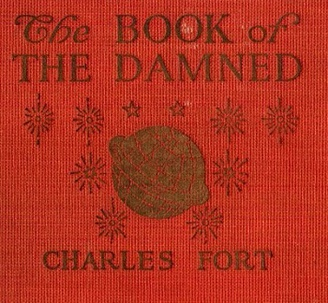
This is a strange book, about strange events, written in a strange prose style. First published in 1919, it is now over a hundred years old. And while it was not exactly an enjoyable read, I found it interesting and worthwhile, and at times the heavy sarcastic wit did draw a smile from my lips. I picked it up after hearing it recommended by a Christian who has been active in discussing and examining the paranormal, Ray Boeche.

The book consists of a lengthy collection anomalous events that have been reported by local newspapers and more specialized publications, starting with things falling out of the sky during storms: black rain, red rain, clumps of goo, blood, frogs, fishes, stones, and giant chunks of ice. From this and other observations, Fort speculates about various possible explanations, such as a floating body of matter somewhere above the surface of the earth but beyond our view. I suppose such ideas were more reasonable in 1919; in 2023 they come off as quaint and silly. And yet, for all our knowledge, many things both historical and contemporary remain anomalous and unexplained. While Fort’s speculations have not held up, his critique of how scientific authorities dismiss anomalous events out of hand feels as fresh and relevant today as ever.

Aside from being valuable as a compendium of baffling historical anecdotes, in my view the book’s real contribution lies in two related aspects.

First, the book shines a light on the all-too-human aspects of the scientific establishment. Namely, the inability of authoritative bodies on a given subject to take seriously data which challenges the fundamental assumptions which their authority and prestige is based on. This has been plain to see numerous times throughout history: Copernicus and Galileo, the theory of tectonic plates, and others. A prevailing explanatory model is established with institutional power. It cannot explain all the data, and alternative models are developed which sometimes do a better job explaining the data. But the orthodoxy of the established model is cemented and what ensues is usually silence, ignoring the upstarts, then defamation and slander, and finally a kind of revolution. It is a suppression and denial of data which would threaten not knowledge but status within a given sphere. And humans are rather attached to their status, usually more so than to truth which threatens that status.

Fort’s work is a jab in the eye to the hubristic claim that the scientific establishment is a purely truth-seeking entity.

The second strength is its common sense data-driven undermining of philosophical materialism. With a studied reticence to make any sweeping metaphysical claims, Fort nonetheless pokes holes into the veneer which materialism has enjoyed among the bien-pensants since the Enlightenment. He presents a carnival of inconvenient and vexing observations from all across the world. While many of these might have prosaic explanations, the cumulative effect of them all, page after page, from such a dizzying array of sources, is difficult to dismiss out of hand. Not that that has ever stopped anyone from doing it.

These ideas may be summarized pithily in Fort’s own words: “Science is a turtle that says that its own shell encloses all things.” Here we are, a hundred years hence, and this blindered certainty continues to characterize many skeptics and atheists. Their cultural authority is waning, however, as the West recedes from peak secularism. The new atheists had their day in the sun, but they have now shuffled off the stage.

The tide is now moving towards re-enchantment. The world is growing thin, and the non-material realities that were studiously ignored are making themselves felt once again.

I wonder what Charles Fort would have said about that.

A Gem Among the Wreckage (of YA Fiction)

What books can we give our teenagers that will help them grow in virtue? So much of the Teen Fiction genre today seems to find its raison d’être in being transgressive and celebrating vice. The result is often a reading experience that drives a wedge between the young person and their moral and spiritual heritage. But there are always a few bright spots, a few gems among the wreckage.

Enter Black Bottle Man, a novel that recently came to my attention. It is a fine example of an exciting story that, while not a explicitly Christian, is nicely compatible with a Christian view of the world. It is the debut novel of Craig Russell, a Canadian from Manitoba.

The story begins in the 1920’s, with an extended family living on three connected farms. Three couples, but only one child: young Rembrandt. The two childless women reach a point of dark desperation and resort to black magic to bring about the children they so desire.  

The magic works, but there’s a very nasty catch, and only a hastily struck deal with the nefarious Black Bottle Man gives the troubled family a glimmer of hope. There are souls at stake and the men of the family, including Rembrandt, must find a champion who will be able to defeat the Black Bottle Man. From this strange beginning we follow the trio as they learn to survive out on the road and as Rembrandt matures into a young man.

The narrative spans the entire life of the protagonist, with chapters jumping back and forth across time so that we see snapshots of the characters’ lives at various stages as the story unfolds. These separate pieces gradually come together for the climatic end, which is framed as a battle between good and evil, the champion against the Black Bottle Man.

The world in which the story takes place is anchored by Christian reference points. The book contains its fair share of the supernatural, but rather than relegate it to the world of fantasy, it is presented in a straightforward manner. The moral compass is calibrated correctly – virtue is good, vice is bad – which is all too rare in teen fiction. And so Black Bottle Man is the kind of book that has something of value to offer the human spirit as it deals with the themes of family, tragedy, loneliness, romance, and grace.

The writing is consistently good. In one memorable scene, Rembrandt finds himself in a small town church where the preacher uses Scripture to cajole and manipulate rather than edify. “Right then and there Rembrandt knew that he’d study that Book like Pa had, until he knew all the funny little corners where the mean, small-minded people like to hide” (p36). That’s insightful.

Scattered throughout the book are clever and thoughtful descriptions. At one point, Rembrandt is eased into the back of a police car: “The back seat is vinyl, patched and repaired from a life spent accepting displaced anger. The car smells of human beings in all their wondrous variety, locked in a perpetual battle with cheap disinfectant” (p91). One chapter opens up like so: “All music contains within itself a kind of divine madness. Few will read a book or watch the same film more than once, but everyone returns to their favourite songs. Of all the arts, music is the king of repeated experience” (p120). These fine touches help lift the book from a prosaic adventure book to something in touch with the imaginative.

Not everything about the book is a complete success. At times the back-and-forth motion from past to present is jarring and hinders the momentum of the story. Also, some aspects of the book are a bit harder for me to believe or understand. But these hiccups do not detract significantly from the overall appeal of the book. Craig Russell has managed to craft a compelling story with a clear moral vision, bring it to life with vivid and memorable descriptions, and fire up the reader’s imagination; all within a world that is infused with spiritual realities. That’s quite an accomplishment.

If every Young Adult book had these ingredients in the mix, we would have much less reason to be concerned about what our teens are reading. 

I received a complimentary copy of this book from the author for the purposes of writing a review.