The following article is one of my early attempts at a ‘humour column’,inspired by the likes of Dave Barry. It was first published here on the blog back in 2013. The two kids that feature in it are now 14 and 12! I hope it brings a laugh, or maybe just a smile, to your Monday.
We decided to go to Target. We had a two year old toddler and a three-week old baby, and we decided to go to Target. And not just to pick up a couple of things. No, we were going to “do a bit of shopping,” and “look around.”
Now before you come to any premature conclusions, let me stress one simple but important fact: it seemed like a good idea at the time – which I think is the single best catch-all excuse mankind has ever devised. To me, it provides a satisfying answer to two of the most perplexing questions that all people eventually ask themselves; namely why we started World War 1, and why Cheez Whiz was invented. Nevertheless, there we were, climbing out of the car, unbuckling a myriad of buckles, snaps, zippers, and locks, and walking towards the glowing red store.
Before this all began, I had imagined a leisurely stroll through the store, coffee in hand, casually picking out some fantastic deals and putting them in the bright red cart that held a sleeping baby in the car seat and a smiling, obedient toddler. In this fantasy, my two-year old, Jackson, is humming Mozart’s 40th symphony and thinking about how content he is with all of his current toys, periodically tapping me on the forearm to let me know that he loves me and that I am a great father; my wife is happily shopping for clothes, those unicorn clothes that all womenfolk chase after, the ones that fit perfectly and always look amazing – she finds two of everything and they’re all half price.
This is roughly what I was picturing:
In and out in 35 minutes, under a hundred dollars, and we’re laughing all the way home before the bleary-eyed herd of 9-to-5’ers kick off a couple hours of bumper-to-bumper traffic.
As you can tell, I have a rather loose grip on reality.
We had been in the store only five minutes and already the warning signs were everywhere. For one, our daughter Addilyn was wideawake. It’s been cold outside so she wears this fuzzy bear suit that leaves only about three square inches of exposed skin – you know, so that she can breathe – and wraps the rest of her little body tight like a hug. From behind, she looks just like a teddy bear, and whenever she is in it she sleeps like a rock. Or like a rock would sleep if rocks were alive and were heavy sleepers. The fact that she was awake did not bode well.
But as an eternal optimist, I held out hope that my fantasy shopping trip would come at least partially true. The breaking point, that moment when all pretense is finally and completely abandoned, happened about thirty-five minutes in, right around the time I had imagined we would be leaving. I was holding my screaming daughter with one hand while I pushed the cart with the other. My son had been helping me push the cart, but then he tripped and fell on his elbow, which set him off crying in a kind of call and response gospel moment with his sister. I wasn’t able to pick him up what with my arms full of screaming baby, so we set off down the interminably long and obnoxiously shiny aisle towards the women’s clothes section, towards our only hope: Mommy.
On that long walk, with shoppers and store clerks giving me a wide berth as if I was holding a couple of lit Molotov cocktails, I realized that it had been a bad idea to come here, and a very bad idea to think we could do anything more than run in and grab the bare essentials we needed to survive another week. Kind of like they do in those apocalyptic movies when the zombie infestation or tidal wave is coming; which, aside from the pushing of old ladies and the fear of imminent death, is my ideal way to shop.
Devastation was everywhere. The coffee we had brought in was lost long ago, set down on some shelf somewhere while we wiped a nose or patted a bum, and instantly forgotten like an important paper from the government about your taxes. The cart was literally full, what with the massive car seat in the main section, laden with all of our coats, mittens and hats, and our few purchases crammed into the nooks and crannies and the top section.
Kailtyn had apparently heard the wailing duo (I hadn’t yet joined in to make it a trio but I was tempted) while trying on clothes in the change room. She came out and administered the love and pity I had been unable to provide for Jackson. Unfortunately, she hadn’t been faring much better, finding no clothes that fit well and feeling worse about herself for the effort. I pleaded for us to surrender and go home.
We needed an exfiltration plan, to cut our losses and live to fight another day. We decided on a course of action. Kaitlyn took Addie to the family washroom to change her diaper while I took Jackson with me to go pay for our stuff. Well over a hundred dollars later, with no clothes to show for it aside from six pairs of baby socks, Jackson and I went to the family washroom to check on the girls.
I heard a familiar shrill scream as I walked towards the washrooms, and realized that Addilyn was making her displeasure known in the loudest possible manner. Then the screaming stopped. I tried the door but it was locked. Kaitlyn opened it with her one free hand and pulled me in while she held Addie up with the other. She was feeding Addie milk, and I’m not talking about the kind that comes from cows. This was a clear departure from our plan; an unexpected delay. I couldn’t cope – I panicked. Kaitlyn was stressed, and in the chaos and confusion, we decided, for some reason – probably because it seemed like a good idea at the time – that I should run to the car to drop off our bags, leaving Jackson with Kait and baby Addie in the cramped, overly bright, and not overly clean bathroom.
I ran to the car, dumped the bags of stuff I wished I had never heard about in the first place, and ran back to the family washroom. As I rounded the corner towards the bathrooms, I heard crying again. But this time it was Jackson’s voice.
I knocked and Kaitlyn opened the door again. This time she looked quite exasperated, like someone forced to stay in a tiny room the size of a Dilbert cubicle with two children under the age of three. She explained to me how Jackson had been walking around touching everything, the way toddlers do, and accidentally set off the motion-activated high-velocity hand-dryer, which sounds not unlike a Boeing 747 during takeoff. The poor kid had been startled half to death and started crying. I entered the fray and distracted Jackson from his recent trauma by getting him to put on his coat, hat, and mittens.
Kaitlyn, realizing that her own coat was still in the cart immediately outside the bathroom door and therefore perilously exposed to theft and, even worse, uninvited alterations, said accusingly, “You left my coat out there?!” I was completely overwhelmed by this point, and my reply was heavy on bite and light on grace. We had a frank exchange of views on the subject at hand, as married couples do from time to time, and in order to spare the reader the uninteresting details of our conflict, and to leave room for some doubt as to who acted more childishly (I will give you a hint: it wasn’t Kaitlyn), I will close this scene and move on to the brief finale.
There was a silence, a heavy silence, which enveloped the car as we started home. In these kinds of situations, it always takes a bit of time for things to cool down and for wisdom and perspective to take their place. Lucky for me I had plenty of time to come around to such a place because we were stuck in the stinking armpit of rush hour traffic for over an hour, but at least the kids were asleep.
What a delightful year of reading it has been. Despite travels for work and other responsibilities, I always found time to read (surpassing my reading goal of 52 books this year). Perhaps too much time! For me reading is like eating or sleeping—a necessity without which I shrivel up and die. I know not everyone feels that way, and that’s good. It would not be good if everyone was like me.
I’ve collected 15 of the best reads from this year (in no particular order), along with some brief thoughts from my Goodreads reviews (where I track all my reading). For longer reviews, I cut it short and put a link to the full review.
Let me take this opportunity to say thank you for reading and subscribing to my little blog.
I wish you and yours a Merry Christmas season and a Happy New Year.
Mere Christian Hermeneutics – Kevin Vanhoozer
This is a game changer, on my short list of life-changing books. I have so much to say about it, but I am trying to gather my thoughts and write something coherent about it elsewhere. For here, I will simply say that I listened to it twice and then bought a paper copy to re-read again. It answered a lot of lingering questions for me and renewed and deepened my love for the Word. Reading it was so very edifying. You get the idea. I loved it.
The Genesis of Gender – Abigail Favale
This is a very fine contribution to the growing body of work by Christian (or Christian-adjacent) women who are confidently standing up to the feminist dogma that has deceived and disappointed generations of women. Included in this list would be Mary Harrington, Louise Perry, and Erika Bachiochi.
The book is both positive and negative in its approach: positively building a vision for gender and femininity in particular from the basis of the book of Genesis; and negative in critiquing at a profound level the reigning views of secular feminist and gender theorists today. …
I’ve had this book on my radar for some years, but until now haven’t found the opportunity to read it. I was happy to find a copy in a library and pick it up. As a novice in the field of political theory, I feared the book would be confusing, boring, or some mix of the two, but it really wasn’t. In fact, it was very well written, with long flowing sentences that were easy to follow, sprinkled with some advanced vocabulary fitting for a distinguished professor at an elite University.
So what is this book? It is a diagnosis and critique. But not just any critique; Deneen offers a radical-to the roots-critique of liberalism as an ideology. For that is exactly what he claims it is. Born out of the myth of the autonomous individual freely choosing to form a state by way of the social contract, it was in fact a revolution in anthropology, he claims. The free market was devised to serve the telos of this new project: the emancipation of the human person, not from vice and passions, but from any unchosen external restraint or limit. …
A Learned Discourse on Justification – Richard Hooker
This is my first reading of Richard Hooker. Very impressive. I resonated deeply with his demeanour and approach to the topic of what divides Protestants from Roman Catholics, and the irenic way he went about clarifying those differences. He by no means blurs the differences or downplays their significance, but he does make a compelling argument about the fact that people can be truly children of God while being simultaneously mistaken on some serious doctrinal errors, not because those errors are no big deal, but because they do not directly deny the foundation of the faith.
Rather, they affirm things that undermine the foundation by necessary logical implication, but, as he points out, and as anyone who has gone back and forth with a muddle-headed person knows, not everyone has the cognitive ability to see logical inconsistencies that are one or two or four steps removed from the starting premises. …
An enjoyable read that will re-enchant your experience of trees and forests. It demonstrates that everything Tolkien wrote about trees in The Lord of the Rings is basically true.
The Harvard Psychedelic Club – Don Lattin
Lattin tells the compelling story of four pioneering figures who shaped not only the 60s counterculture movement but also American society since then. Their lives were, on the whole, chaotic. Their relationships? Enlightened and harmonious, of course, glowing with the unity that psychedelic revelations of universal oneness has enshrined in their souls. Actually, not quite. Their relationships were fractious and troubled; all too human.
The book is well written and researched, with copious insights and quotes coming from Lattin’s own interviews with the subjects of the book. Lattin’s journalistic prose is very easy and pleasant to read. And although he puts his cards on the table in the Afterword—as a baby boomer former psychonaut still quite positive on psychedelics—I always got the sense he was playing it fair with his portrayals of people and events.
In a time when pro-psychedelic writing often has a strong bias driven by a sense of mission to advance the cause, this book was not at all like that. It helped me tremendously to understand the 60s better.
The Collected Writings of Stanley K. Fowler
Dr. Stan Fowler may not be a household name among evangelicals, but he was a faithful voice of biblical wisdom in the Canadian evangelical church and beyond for decades. This handsome set of his shorter writings makes his thought available to a whole new generation.
Some of the pieces that are decades old have an uncanny relevance today. The lack of historical roots in evangelical churches? Check. The resulting wave of interest in more historical, liturgical, and sacramental forms of worship? Check. Baptists debating ecclesiology and membership? Check. Baptists converting to Anglicanism? Check. Evangelicals converting to Eastern Orthodoxy? Check. And all of it happening fully a generation ago in the 80s, 90s, and 2000s. Fowler was on the vanguard of formulating cogent answers to these challenges, answers which remain relevant and helpful to this day.
Dr. Fowler’s work is always thoughtful, irenic, and worthwhile. I really enjoyed this collection of his shorter writings, especially his thought on sacramentalism for Baptists.
Gilead – Marilynne Robinson
Third time through, and I feel I’m starting to understand why I love this book so much and the effect it has upon me. Much of it comes down to a kind of sacramental view of Creation; or a participatory aspect to existence — that we might participate in God’s goodness in some way simply by enjoying what He has made. It teaches me to see, to look and really see what is there.
“Wherever you turn your eyes the world can shine like transfiguration. You don’t have to bring thing to it except a little willingness to see. Only, who could have the courage to see it?”
“There are two occasions when the sacred beauty of Creation becomes dazzlingly apparent, and they occur together. One is when we feel our mortal insufficiency to the world, and the other is when we feel the world’s mortal insufficiency to us.”
This book is a great achievement. It succeeds in its mission, which is to retrieve the doctrine of the beatific vision for evangelicals, and in so doing, reintroducing new generations of Protestants to the riches of their own tradition. The introduction and opening chapters do a great job situating the modern reader in terms of where we are in late modernity and how that relates to the metaphysical foundations that undergirded earlier eras of Christian thought. The book self-consciously situates itself within the ‘Great Tradition’ and calls evangelicals back to classical Trinitarian theism from the barren wilds of modernist biblicism.
Having been thus oriented, Parkison takes the reader through a number of major figures from the early church, the middle ages, and the Reformation, and explores how the church’s view of the beatific vision has evolved over the centuries. The author then attempts to synthesize the best of these views into a coherent whole that is digestible for modern readers. His distinctive contribution seems to be a more thoroughly trinitarian formulation of the beatific vision, drawing on and continuing the work of Protestant giants such as John Owen and Jonathan Edwards.
One of the book’s strengths is the affective tone, the marriage of academic and spiritual concerns. In other words, the book is edifying and, when rightly read, is sure to bring the reader to worship. That being said, it is still quite dense, and some of the middle chapters felt like a bit of a slog at times. Perseverance, however, is richly rewarded. I recommend it most heartily.
A History of the English Speaking Peoples (4 volumes) – Winston Churchill
On the one hand, I want to think it’s an achievement to have completed the four volumes of Churchill’s History of the English Speaking Peoples, but on the other hand, it took no great effort at all, such was the pull of the unfolding narrative in Winston’s characteristic voice.
One of the notable elements of Churchill’s treatment of the history is his detailed interest in the particulars of wars. There is a story told about his childhood, where his father was unconvinced that Winston was well suited for the usual aristocratic occupations. Then he came upon him with his lead soldiers, which numbered over a thousand, all lined up upon the (living room) battlefield, with infantry and cavalry divisions clearly delineated. And so it was decided: Winston would become a soldier. This childlike delight in the organization and movement of troops upon the field never left Churchill.
It is this fascination with the minutiae of troop movements which gave his historical treatment a bit of a lopsided feel. He spilled much ink tracing the marches, maneuvers, and munitions of both sides of the American Civil War, to such a degree that it was a bit comical. One feels that the author was indulging his own interest at the cost of the book’s narrative flow, but this can be forgiven.
The impression I am left with at the conclusion of volume 4 is that this is a momentous achievement of popular history, and with prose of such a quality that it must be considered a triumph of the English language.
From Bauhaus to Our House – Tom Wolfe
Similarly to The Painted Word (about modern art), Wolfe hilariously pokes the pretenses of modernist architecture. And again it is quite informative and insightful. The cataclysmic break with everything past was driven by the same revolutionary spirit that animated the radical politics of the early-mid 20th century.
Sex and the Unreal City – Anthony Esolen
While the book certainly deals with sex in a broad and philosophical way, it’s probably a lot less than a casual reader might expect from that clickbait of a title. What it really is is a loosely-connected series of essays that all revolve around the central idea of the Real, and the degree to which our current hollowed-out culture is in a futile war against it.
Mythmakers – John Hendrix
Dang. I did not expect this graphic novel to so good or so moving (especially the ending). It provides a great introduction to the biographies of Lewis and Tolkien, their fruitful but troubled friendship, and the themes of myth that guided their fictional writing.
Nuclear War – Annie Jacobsen
The style of this book was very creative – using a plausible scenario as a spine from which to educate the reader on countless aspects of nuclear weapons and nuclear war. I thought it was generally very well done; indeed I could hardly stop listening to the book. There were a few twists to the scenario that did stretch credulity, but overall it was all too believable.
The message, of course, is dire, troubling, and urgent. If Jacobsen (and her sources) are correct, then nuclear war is un-winnable, and preventing the use of nuclear weapons is unspeakably important. The scale of destruction from just one of these warheads is truly unimaginable; the consequences of an escalatory exchange of such weapons is apocalyptic.
In these matters, concern and advocacy goes well with a secure trust in the providence of God.
Delighting in the Trinity – Michael Reeves
Simply fantastic. Somehow manages to be both readable and very profound. The church is seriously in need of a revival of trinity-shaped piety among the laity. There has been a heartening renewal of classical trinitarianism among scholars and pastors, but I don’t think it has properly filtered down into the lived spirituality of normal Christians yet. This book ought to be in every church library and be considered a ‘standard’ along with Packer’s Knowing God and Sproul’s The Holiness of God.
Merry Christmas to all! I have two articles that were recently published that I want to let you know about.
The first is a little Christmas essay over at TGC Canada which reflects on the moral power of our Christmas stories, their irreducibly Christian shape, and why their enduring moral power can serve as a signpost, a lighthouse, a pathway back towards Christianity.
The second article is at a new publication for me, Front Porch Republic. This is a lesser-known outlet that features some really thoughtful writing on the themes of place, limits, faith, liberty, and literature. I thought it would be a good fit for an essay I wrote after recently re-reading Marilynne Robinson’s great novel, Gilead. I have some personal history with the novel, since it was my late mother who first gave it to me. I weave some of this into the article, making it more of a personal essay. I enjoyed writing it, and I hope it’s a blessing to you.
Ever since Bible College almost 20 years ago (gasp!), I have wondered why there is so much argument and furor over “theories of the atonement.” I remember seeing an essay in the student paper that questioned penal substitutionary atonement (hereafter PSA) and put forward an argument for Christus Victor. It revealed a clear aversion to PSA and this mystified me. Why, I wondered, would someone be so motivated to deny something which seems to be the plain teaching of the Bible?
Over the years I came to better understand the issues at stake, but I admit I still had trouble making it make sense. I could understand why some progressive Christians refused to believe in a God who poured out wrath and judgment (due to liberal theology’s allergy to descriptions of God that went against the grain of respectable modern moral sensibilities), but then what about those who had no problem with those parts of the Bible but who still seemed to have so much animus against PSA? I recently heard Derek Rishmawy make a comment on an episode of the Mere Fidelity podcast that struck me as an excellent answer to that question.
Here is the point he made: penal substitutionary atonement gets pulled out of shape and distorted when the categories of classical theism are not there. The prevalence of modernist metaphysics throughout the 20th century gave us a strange mix: conservatives held onto supernaturalism (like the virgin birth and the resurrection) but unwittingly lost the doctrinal substructure that served to keep PSA in its proper shape. Rishmawy observed that many conservatives in the 20th century (and into the 21st) were defending what they rightly thought of as a doctrinal core (PSA), but doing it in ways that would be contrary to earlier advocates in the tradition who had certain doctrines in place that protected them against the severe distortions. The most obvious stabilizing doctrine would be a classical view of the Trinity. He added that “substitution is an extraordinarily powerful doctrine that, without the right machinery around it, creates severe shearing forces in preaching that can go wrong.”
This seems quite right to me, like a key piece of the puzzle going right into its place. This insight explains some of the dynamics at play in these discussions and debates. For instance, without a clear understanding of the inseparable operations of the one triune God, then there is no guardrail to keep a preacher from describing the cross as the Father over here pouring his wrath out on the innocent and reticent Son over there, introducing a firm separation between Father and Son, as if they were not together fulfilling the plan of redemption they drew up before the foundation of the world. And without divine impassibility—the idea the God is without passions—then any talk of the wrath or punishment of God conjures images of uncontrolled anger or passionate revenge. But this is not the way to understand the wrath of God.
Here is a possible sequence of steps to summarize this process:
Modern metaphysical assumptions seep into theology —> classical trinitarian theism is revised —> loss of doctrines like divine impassibility and inseparable operations —> PSA language gets pulled out of shape by many of its proponents —> people react against the distortions of PSA by energetically rejecting PSA and pursuing alternative understandings of the atonement.
This would explain the strong overlap between those who reject classical theism and those who reject PSA, of which John Mark Comer would be one obvious example. Without the former, the latter is too easily distorted into absurdity (”cosmic child abuse”). So a twofold dynamic happens: proponents of PSA who haven’t got a firm grasp on classical theism tend to present it in distorted ways since they lack that doctrinal framework, and those who have rejected classical theism have a hard time conceiving of PSA without it quickly devolving into something grotesque, making it easier for them to reject PSA.
The parallel track that runs alongside this, mentioned above, is the rejection of wrath and judgment as fitting for God, a hallmark of liberal theology. Even the great evangelical stalwart John Stott seemed to be affected by the sense that it was not respectable, and perhaps unthinkable, to claim that God would pour out his wrath in judgment for all eternity. Stott’s case was mild — preferring annihilationism to the idea of eternal judgment. But the same impulse has pulled many a Christian to rethink PSA on the grounds that the idea that God’s wrath against sin must be satisfied is beyond the pale.
Even without a thoroughgoing classical trinitarianism, the best exegetes throughout the 20th century always managed to avoid serious problems in their description of the atonement by sticking close to the text of the Bible and letting their preaching and teaching reflect the overall balanced emphasis of the Scriptures. This is a point that D.A. Carson has made repeatedly, and it is worth bearing in mind: it is not enough to find something true that the Bible affirms and then proclaim it from the rooftops. There is a matrix of truths that are all interconnected, and the careful student of the Scriptures pays attention to the relative emphasis and the context of those truths as found in the whole Bible.
Talk of the various theories of the atonement seems to me to start the whole conversation off on the wrong foot. Let us rather seek to understand and rightly represent the multifaceted glory of the atonement. Wonder of wonders—our God has reconciled us to himself through the cross! And how? Let me count the ways, for the Scriptures unfold and tease out multiple threads of wondrous truth about this singular moment in history. One of these, among others, is the idea that in our place condemned he stood, becoming sin for us, bearing the punishment our sins deserved, that in Him we might become the righteousness of God. Our triune God planned and accomplished this for the fame of his name among the nations, and because he loves us. He redeemed us from the curse of sin, becoming a curse for us; he ransomed us, buying us with a price; he defeated the powers of darkness, triumphing over them and disarming them. Yes and amen.
The insight from Rishmawy is helpful because it reminds us that our theology is a complex matrix of interrelated truths. And there are some, it must be said, that are foundational, load-bearing truths. They keep the whole superstructure balanced and strong in ways that are not immediately obvious. And once they are removed or compromised, the whole building may not immediately fall down, but it may sway and wobble and buckle in unhealthy ways. I think this is what we’ve seen with popular-level representations of PSA, with lamentable results in driving people away from any kind of penal substitutionary element in their understanding of the atonement. The answer to overcorrections and pendulum swings, however, is careful and loving attention to the holy Scriptures.
Writing a book review is a little bit like brushing my teeth at this point; I do it without thinking. Ever since I discovered the wonder that is goodreads.com and got a bit more serious about tracking my reading and setting reading goals, I’ve gotten into the habit of writing at least something about every book I read. And so whenever I read something particularly interesting or engaging, I tend to write a lengthier and more detailed review.
My approach to writing reviews is definitely more whimsical than a typical academic book review. I like to focus in on a few salient points that struck me particularly and then to engage the book via reflection, sometimes bringing in another conversation partner as well. The classic “summary plus evaluation” equation for book reviews has always been rather unsatisfying to me because I enjoy a writer who involves himself or herself more directly in the review. Context matters here. For some publications, such as academic journals or professional association publications, it makes sense for the reviewer to fade into the background. But frankly, the kind of depersonalized prose this approach produces is so stripped of human vitality that no one would ever be able to tell if it was written by ChatGPT or not.
In contrast to this, I prefer to read (and write) reviews that emphasize the reviewer’s encounter with the book. One label for this is the review essay: a piece of writing where the reviewer uses his or her encounter with the book as a launching point. This means the resulting piece has a lot more personality in it; more of the writer and slightly less of the book. Sometimes such an essay can actually take two books and put them in conversation with each other. When done well, this approach makes for a compelling piece of writing.
Lately I’ve had a couple of book reviews published. First, at Faith Today, I have a review of Harold Ristau’s book, Spiritual Warfare and Deliverance: How to Minister to the Demonically Oppressed and Possessed. Faith Today has a very limited word count for their reviews, so I wouldn’t say this piece manages to feel like the kind of review essay I prefer. Nevertheless, I’m always grateful for the chance to be published in a print magazine, and the book was very interesting. Second, at TGC Canada, I have a review of Brad Littlejohn’s book Called to Liberty: Retrieving Christian Liberty in an Age of License. My editor at TGC, Wyatt Graham, prefers the review essay, so I appreciate the freedom to do those.
In an earlier piece, I reflected on the contents of the opening chapter of Samuel G. Parkison’s book To Gaze upon God: The Beatific Vision in Doctrine, Tradition, and Practice. I have since finished that book, and I gave it 4.667 stars over at goodreads. Here is the brief review I left there:
This book is a great achievement. It succeeds in its mission, which is to retrieve the doctrine of the beatific vision for evangelicals, and in so doing, reintroducing new generations of Protestants to the riches of their own tradition. The introduction and opening chapters do a great job situating the modern reader in terms of where we are in late modernity and how that relates to the metaphysical foundations that undergirded earlier eras of Christian thought. The book self-consciously situates itself within the ‘Great Tradition’ and calls evangelicals back to classical Trinitarian theism from the barren wilds of modernist biblicism.
Having been thus oriented, Parkison takes the reader through a number of major figures from the early church, the middle ages, and the Reformation, and explores how the church’s view of the beatific vision has evolved over the centuries. The author then attempts to synthesize the best of these views into a coherent whole that is digestible for modern readers. His distinctive contribution seems to be a more thoroughly trinitarian formulation of the beatific vision, drawing on and continuing the work of Protestant giants such as John Owen and Jonathan Edwards.
One of the book’s strengths is the affective tone, the marriage of academic and spiritual concerns. In other words, the book is edifying and, when rightly read, is sure to bring the reader to worship. That being said, it is still quite dense, and some of the middle chapters felt like a bit of a slog at times. Perseverance, however, is richly rewarded. I recommend it most heartily.
This piece has a narrower focus than most of my other writing. It concerns an issue facing my own denomination, the Fellowship of Evangelical Baptist Churches in Canada, or FEB (or the Fellowship) for short. I wasn’t sure at first whether I wanted to weigh in on this intramural debate, but finally decided to do so after some further thought and conversation.
I will give some disclaimers, some context, and finally my analysis.
Disclaimers
I am not a pastor, or currently an elder (I have served as an elder in my local church), and I do not speak for any group officially or unofficially. I do serve on the regional board of FEB Central, the region that represents Ontario churches and English-speaking churches in Quebec such as mine, and I served as co-editor for the 2023 revision of the Fellowship’s history book (quoted below), so I am at least somewhat familiar with the history and institutional structures of the Fellowship. (I do confess that I love the Fellowship, my home denomination, whose churches and leaders has nurtured my faith and the faith of my family.) What follows are simply my own thoughts and reflections, based on publicly available information.
Also, although I realize that there are disputed claims about personal misconduct, with one pastor and church being suspended in the Pacific region, I have no way of adjudicating such matters, and I think it prudent to focus on the substance of the policies and the history. Therefore I will not focus on the specific actions of any one person or church.
I want to state at the outset that my goal is to lay out some context that I think is important for making a decision on this motion, and then provide what I hope is a fair-minded analysis from my perspective. I have good friends on both sides of this motion and I can understand why someone would land on the other side of where I do.
Context
In a few weeks, on November 3-5, pastors and leaders from all across Canada will gather for the annual National Convention of the Fellowship. As I write these words, pastors and elder boards have been hurriedly discussing and debating what to do about an unexpected issue that arose in early September. A letter was sent to Fellowship pastors informing them of an upcoming motion that would be presented at Convention. The letter presented the issue as urgent.
The proposed motion is quite simple: it would elevate a complementarian position paper (a position paper is non-binding in the Fellowship) to the status of policy (a binding document). This motion is the result of a grassroots movement of conservative complementarian churches across the country who are concerned about the growth of egalitarian practice in the Fellowship, especially out West.
For more context from the perspective of the churches advancing the motion, see here. They have helpfully provided extensive documentation of the relevant communications. Aside from this recent activity, the next most important information is historical, so I now turn to providing some historical context.
Allow me to quote excerpts from A Glorious Fellowship of Churches, and specifically chapter ten, where Steven Jones, the president of the Fellowship since 2011, chronicled the events from two decades ago. I have created a PDF of the five pages that make up the section where this topic is addressed. I consider it required reading for having any kind of informed opinion, not on complementarianism, but on the institutional history of complementarianism in the Fellowship. If you haven’t read the book, let me encourage you to grab a copy. Here are excerpts from that relevant section:
Prior to the new millennium, the subject of women in leadership within Fellowship churches was often debated, sometimes heatedly. What leadership roles could women assume, or not assume, within The Fellowship? At a Fellowship National Convention, a Position Statement on the gender issue in pastoral leadership was affirmed by 83% on November 4, 1997.
While the 1997 Position Statement on Gender was the Fellowship’s official statement, many leaders discussed the possibility of elevating the position to bylaw status, making the position a test of fellowship among our churches.
This alone is a very important piece of information. We have been here before. The text goes on:
Some indicated a desire that this issue be brought to the Convention immediately. Those advocating immediate action graciously allowed National Council to postpone the matter so that the new Fellowship Ministry Plan 2000 might remain the focus of the upcoming Convention. At a National Council meeting in 2001, Council members discussed the ramifications of elevating the Fellowship’s Position Statement to bylaw status. The council reaffirmed the position and asked all churches to fully support the Position Statement. At National Convention in 2001, a notice of motion was presented from the floor informing the delegates that a motion would be presented at the 2002 National Convention, amending the bylaws to make the Position Statement a test of fellowship for member churches. In a letter dated April 24, 2002, National Council informed Fellowship churches about “possible bylaw changes relating to pastoral gender issues.” At the Fellowship National Convention of 2002, two motions failed, one from the floor of the Convention[10] and another from National Council.[11]
Footnotes:
[10] Minutes of Fellowship National Convention, November 4-6, 2002. The motion from the floor was moved by Rev. Willie Oosterman, Westboro Baptist Church, Ottawa. The motion proposed a change to the Affirmation of Faith and Bylaws concerning “qualified men as pastors (elders, overseers).” Thirty-eight delegates spoke to the issue. A motion concluded debate. The motion failed: 564 ballots were cast, 376 were needed to pass and there were 332 Yes to 227 No. There were 580 delegates from 252 churches at the 2002 Convention.
[11] Minutes of Fellowship National Convention, November 4-6, 2002. The motion from the National Council was moved by Dr. Alan Johnson, Église Baptist Evangélique de Gatineau, QC. The motion proposed a change to the bylaws affirming “both men and women are gifted for service in the local church,” but “recognize that office of pastor/elder/overseer is limited to men as qualified in Scripture.” A flurry of motions (5) were offered and discussed until one motion directed the delegates to vote immediately. The original motion failed: 531 ballots were cast, 354 needed to pass. There were 237 Yes and 290 No. Dr. Henry Blackaby spoke on the topic of prayer as the Convention speaker for that year.
I included the footnotes text here as I think the details are important.
National Council informed the churches in a letter dated December 2002 that the motions had failed and that “the vote leaves the 1997 Position Statement as our official statement on this issue.” The council met again in November 2002 where the following motion was passed: “National Council will set in motion a process that will result in a Complementarian bylaw amendment being brought to the floor of the 2003 National Convention.”
As you can see, this issue took up a lot of energy in the early 2000’s, with many motions not at all unlike the one being voted on in 2025 being set forth. We continue the story into 2003:
A letter was sent in June 2003 to all Fellowship pastors and church leaders from the Fellowship National Council with the proposed modifications to the bylaws: “In the New Testament the office of pastor/elder/overseer is gender-specific. Therefore, in Fellowship Baptist churches, this office is for qualified men recognized by the local church for oversight of the doctrine and practice of the church.”
The motion was moved by the National Council at the 2003 National Convention and seconded by René Frey. There was a request for clarification of the motion which caused confusion among the delegates. The parliamentarian attempted to clarify the options stressing the vote was on the motion as presented and not an interpretation of the motion. Delegates were instructed to vote. The motion failed[13] and a motion to suspend the rules of order and extend the session fifteen minutes was carried.
Footnotes:
[13] Minutes of The Fellowship National Convention, November 3-5, 2003.
Motion failed: 524 ballots cast, 346 were needed to pass, 339 Yes and 180 No. Motion failed. There were 537 delegates from 232 churches in attendance.
A new motion from the floor instructed National Council to refrain from presenting any further motions concerning gender and church office prior to the 2005 National Convention, providing adequate time for more consultation on the issue. This motion failed and so the Chair instructed delegates that the Fellowship’s 1997 Position Statement would remain the Fellowship’s official position. The Fellowship constituency was notified of the results of National Convention 2003.
Soon after convention, the National Council received word that a group of over 50 pastors were proposing a notice of motion for a bylaw amendment at the Fellowship’s 2004 National Convention. In March 2004 the National Council gathered a couple of dozen Fellowship leaders from across Canada to continue the dialogue. Dr. Doug Harris facilitated this discussion and the minutes reported: “The options generated were compiled and a poll was done for each option to determine how many participants felt it would be a wise, viable option for National Council to consider.”
In a March 2004 National Council meeting, with the dialogue committee’s report in hand, the Council responded and affirmed the group’s notice of motion and communicated this in a letter dated May 11, 2004, sent to Fellowship church leaders.
At the 2004 National Convention, a new motion was presented amending the Fellowship bylaws and the required two-thirds majority was achieved. “In member churches, the pastoral office is reserved for qualified men recognized by the local church for the oversight of the doctrine and practice of the church.”[16]
[16] Minutes of the Fellowship National Convention, November 1-3, 2004, with 404 ballots cast and needing 271 to pass: 299 Yes and 103 No. There were 418 delegates from 196 churches in attendance.
And so, in 2004, a firmly complementarian position was enshrined in the bylaws of the Fellowship. I am quite sure everyone involved felt the issue had finally been dealt with, after many years of discussion, debate, and dueling motions. But then something happened which I had not heard about until I was editing the book. Here is the very next paragraph in the book:
The Fellowship Pacific Region responded to the new national bylaw by passing a motion at their 2005 Pacific Regional Conference with an 85% vote. The motion specified that the Pacific Region would “apply the new National FEBC Bylaw regarding women and pastoral office as follows: 1. The FEBBC/Y Region only recognizes men as Senior Pastors…”
I don’t have a lot of information about how this precise motion by the Pacific region came about, or why they decided to land on this policy of restricting only the “Senior Pastor” position to men. I can see numerous problems with this policy, the first of which is that “Senior Pastor” is not a biblical category (unlike elder, pastor, or bishop — terms which I understand to be used interchangeably in the NT). The second problem is that the language of the National bylaw refers to “the pastoral office,” which (it seems reasonable to assume) was meant to apply to anyone who uses the word pastor in their job title, even if that was not explicitly laid out.
While I understand that Pacific maintains they are complementarian in light of this restriction, it is understandable that complementarians in other regions look askance at this state of affairs. It looks to many like something of a loophole. Not many complementarians recognize this manifestation—where women can serve as elders or pastors as long as they are not the Senior Pastor—as a legitimate expression of complementarianism. There certainly seems to be disagreement over these terms, which makes the discussion of all this all the more confusing and complex.
I lay out all this history because it is very relevant to the current discussion. Let’s get into the specifics of what this history can tell us and teach us about how to assess the upcoming motion.
Analysis
The first thing to make clear is that I have zero issue with the 1997 Position Statement. I am thoroughly complementarian.
But here is the reality: We already have a binding complementarian bylaw on the books. If anything the existing bylaw is more strongly worded than the position paper. Therefore, is it not wishful thinking to assume that a successful vote on this proposed motion would materially change the situation with FEB Pacific?
And this brings me to another important fact: The consequences of a successful motion are unclear. No one has clearly laid out what exactly will happen if the motion passes. Pacific writes in a letter (dated Oct 16), “if this motion passes, Fellowship Pacific could find itself forced out” of the Fellowship. No one seems to be sure what will happen. It seems to me that clarity on the consequences is critically important for everyone to be able to make a wise decision.
Remember that Pacific voted to interpret the 2004 bylaw by restricting only the senior pastor position in 2005 by a 85% vote. That is an overwhelming consensus. And this overwhelming consensus in the Pacific region is also why the motion that some churches in that region brought to their regional conference on March 5 of 2024 was guaranteed to fail. The motion contained extremely broad language: “BE IT THEREFORE RESOLVED, in accordance with 1 Timothy 2:12, Fellowship Pacific will only recognize churches in which their elders, or pastors who preach to or otherwise have authority over men, are Biblically qualified men.”
Given the position of Pacific, this motion was asking a large percentage of the churches represented at the regional conference to vote themselves out of the Fellowship. So it was never going to pass (it failed by 80%). I’m not sure what the point of such a sure-to-fail motion would be; perhaps simply to force the issue.
How does a normal pastor or elder board navigate all this? For most, they received the letter, and then subsequent communications, and they assume that the vote is basically on complementarianism. They are told the issue is urgent and that there is a rising tide of egalitarianism. But with a bit more historical perspective, we can see the situation in a different light. Whatever egalitarianism exists in the Fellowship, it has mostly been there since the early 2000s (sidenote: I think most would agree that having women pastors and elders is an egalitarian practice, but clearly there is disagreement about the meaning of these terms since Pacific considers its practice to be complementarian).
And while many instances of egalitarianism in evangelicalism has been a vector for a broader progressive agenda, honesty demands that we recognize that this is not always the case, and it is not far from bearing false witness to label any church less complementarian than ours as inherently on their way down the slippery slope. Yes, we’ve all seen that story played out a hundred times, but there are exceptions, too. I may wish FEB Pacific was more complementarian than it is, but it would be dishonest to tar them as theological and cultural progressives when it seems like their belief and practice hasn’t changed since the early 2000s.
I personally was quite surprised to find out about the history and the current practice of the Pacific region when I worked on editing the updated Fellowship History book in 2022 and 2023. I had assumed that the Fellowship was more thoroughly complementarian than it is in reality. I think many ordinary pastors are likewise surprised, and a little shocked, to learn this.
In hindsight, it looks to me like the Pacific decision in 2005, and National’s decision not to make a further issue of it, was the establishment of an uneasy truce. I can imagine that, after so much back and forth debate over a number of years, it was felt that it would be better to get back to a more positive emphasis on health and growth. Did some good come out of this uneasy truce? Of course. But it left the heart of the matter unresolved. Ultimately, it was not a sustainable state of affairs. The current hubbub is, I think, the inevitable consequence of not dealing with this more thoroughly. I say this not to fault those who made such decisions at the time.
Concluding Thoughts
If I had to guess, my sense is that the inevitable result, no matter how it plays out, will be a sizable exodus of Pacific churches. I think the Fellowship is, on the whole, firmly complementarian, and uninterested in blurring that line by having women serve as pastors and elders in our churches (although I could be wrong on that). So from my perspective, the question is how do we get to a point of charitable clarity to settle this question once and for all, in such a way that we won’t need to relitigate this next year (or in 20 years) but also without an acrimonious split that does injury to our precious unity and history.
Will the proposed motion accomplish this? Knowing the history, I just can’t see that it would. I can understand why my fellow complementarians are animated by this issue and why, given the short span of time they’ve been afforded to understand, discuss, and decide, they would opt to support this motion to elevate the 1997 Position Paper to a binding Policy. But I remind you: We already have arguably stronger language in the existing bylaws, and it has not been enough to settle this issue. Clearly we need something else. I fear that a successful motion, followed by a chaotic aftermath where the implications are not clear, will lead to a worst state of affairs, angry words, rash decisions, and injury to the body of Christ.
And that brings me to the process that Fellowship National has proposed: 2-3 year process (I would like to see it firmly settled in 2) to hear from churches and come to a place of clarity on what is permissible or not in the Fellowship. Here is what was communicated about this in an Oct 7, 2025 letter:
National Council would encourage MEMBER churches to task National Council to steward a two to three-year process to bring congruence between the bylaws and our newly revised Affirmation of Faith if passed. However, this motion to make the 1997 Position Statement a Policy Statement was brought forward by 29 MEMBER churches. The signatory churches were asked on two separate occasions to consider not bringing their motion forward and allow National Council to steward a two to three-year process. These requests were denied.
National Council remains convinced that before our churches decide on anything becoming a binding document and test of fellowship, a prudent and reasonable approach would be a longer process (two to three years) of dialogue, consultation, reflection, and prayer. A vote would happen after our constituency has adequate time to prayerfully consider the issue.
All things being equal, I think this is preferable. Clearly the language of the resulting policy or bylaw would need to be watertight, but without being so broad (like the regional Pacific motion quote earlier) that it would enshrine the most hard-edged interpretation of complementarianism possible, such as removing women from any kind of visible leadership (singing on a worship team, reading Scripture, praying publicly, teaching Sunday School), which indeed is the position of some. That would not represent the Fellowship either. Clearly, the time of the uneasy truce is over. We must settle this once and for all. My encouragement is: let’s do that in a thoughtful way that will honour all those involved, bring down the temperature, and properly set the foundation for healthy, biblical complementarian practice for future generations of Fellowship churches.
Related to all this is the need to rightly assess the seriousness and urgency of this issue. I do not think it is so urgent that it requires a hasty and panicked response, as if the Fellowship were about to fall into liberalism should the motion fail. This is not a situation that calls for a thunderous Luther crying out “Here I stand!” in a moment of glorious faithfulness in the face of error and compromise. Those moments do come, and thank God for the Luther-like lions who preserve the church’s doctrine and witness in those days. But we have seen other situations in the history of Protestantism, evangelicalism, and certainly Baptist history, where what was needed was just a wise sheepdog (to continue the animal metaphors) to guide the flock, but instead, the voice of the lions dominated and led to lamentable division, dissension, and rancor.
A cursory knowledge of church history teaches us that the church has always experienced a tension between the priorities of purity and unity. How to hold those two in healthy tension is not easy, and good, godly Christians can disagree on which one ought to be prioritized in this or that situation. J.I. Packer and Martyn Llyod-Jones famously disagreed on this question with regard to the Anglican Church, as have countless other Christians throughout history. I’ve made my case, but I can understand why some would choose to vote for this motion. It’s a matter of prudential judgment and the weighing of priorities. If nothing else, I hope this has been helpful as you think through this question.
May God bless the Fellowship of Evangelical Baptist Churches in Canada, for our good and his glory.
I’m trying to balance my focus on the psychedelics movement with writing and content that covers a far broader array of topics (AKA my interests!). But this last week, the stars aligned for there to be a strong focus on the topic of psychedelics, with my first TGC (USA) article being released as well as a podcast conversation with the fine folks at What Would Jesus Tech (WWJT). Here’s a direct link to the YouTube version of the WWJT episode. I think they did a pretty good job with the podcast episode thumbnail image:
I wish I could say the same for the TGC article. The image they chose is a little creepy! Hah, oh well.
Many thanks to the hosts of WWJT for having me on and having such good questions. I really enjoyed our conversation. They are a legit podcast with some really legit and impressive guests. If you are a Christian interested in how technology (in all its manifestations) intersects with the faith, you need to check them out.
The TGC article, called “The Psychedelic Renaissance: A Story of Hype and Hubris,” is an “explainer” kind of essay where I try to inform the reader about this large and complex topic, but with an editorial twist where I render a verdict about the psychedelic movement in general. There is certainly some overlap with the article my late-2023 article at Mere Orthodoxy, but this recent one delves more deeply into the current state of the research and especially into the increasingly visible network of activists and funders who are pulling the strings behind the scenes of the public-facing pro-psychedelics movement. Here is how I conclude the first section of the article, which deals with this:
One thing ought to be clear: It simply isn’t the case that disinterested scientists have stumbled on surprising cures for mental health problems. Rather, advocates already committed to the promise of psychedelic therapies, usually bundled with New Age spiritual beliefs, have patiently pursued a strategy to build a veneer of scientific, medical respectability for their agenda.
This state of affairs makes it difficult for the public (and regulators) to parse the data and evaluate possible legitimate medical applications of these substances. It may be many years before those assessments can be made confidently, but that won’t stop a growing number of people from trying psychedelics for themselves.
One way I’ve started thinking about how Christians ought to respond to the psychedelics movement with with a dual response: one at low-resolution and a second one at higher-resolution. (I go into this idea a bit in response to some really thoughtful questions in the WWJT episode.) Here’s what I mean: the low Christian resolution response to the pro-psychedelics movement in general should be a giant waving red flag. In the article, I try to get this across with the following sentence: “The hype of healing will not ultimately deliver on its promises, and the hubris of spiritual exploration outside of Christ will expose many to unbiblical ideas and even demonic spiritual forces.”
That’s the first and most important thing for the church to get clear on, in my humble opinion. But there is a second, higher resolution response that is also legitimate. It has to do with a more narrow discussion about possible legitimate medical uses of psychedelic compounds for the treatment of specific issues such as PTSD, some forms of addiction, etc. This is separate from all discussion of spiritual or recreational uses, which are out of bounds if one takes the Scriptures as inerrant and authoritative.
I am still thinking through some of the nuances of this more narrow question about possible valid uses of these compounds in certain medical cases. The best treatment of the question I’ve come across so far is a journal article by Thomas Carroll, a Catholic medical doctor. He argues, convincingly in my view, that the specific problem with psychedelics is the mystical experience it generates for the user. This is what makes psychedelics unlike other substances, and why they rightly exist in a class of their own. Further, he argues that since Christians have a category for legitimate mystical experiences that are given by God, and since it has never been the teaching of the church that Christians ought to try and contrive these experiences themselves, that it is therefore illicit for Christians to intentionally take these substances for the purposes of some kind of therapy where the mechanism of healing is bound up with the mystical experience itself.
However, these substances have effects other than just the mystical experience. They make one more suggestible and they interrupt some of our deeply ingrained patterns of thinking; both of these effects have the potential to be powerful aids when coupled with wise counseling. There is indeed a little-known branch of psychedelic therapy known as psycholytic therapy (PLT) and it specifically focuses on using small doses in conjunction with talk therapy to work through problems. This approach has been eclipsed in recent years by the big push for and major coverage of psychedelic-assisted therapy (PAT).
Carroll’s article basically concludes that, since the mystical experience is the very mechanism by which psychedelic-assisted therapy functions, it should be considered illicit for Christians, but that participation in psycholytic therapy should be considered a question of personal conscience. This seems right to me, and it’s where I am landing at the moment.
A friend of mine sees this very similarly but takes a slightly different and more open position: he believes that a Christian could partake of psychedelic-assisted therapy as long as he regarded the mystical experience as a negative side-effect to be endured, a bug rather than a feature. This is very different from the general approach to psychedelic therapy, and although I’m not there myself, I don’t think it’s an unreasonable position for a Christian to take. My concern with it is how it actually plays out in practice. How do pastors counsel their church member to go through with this kind of therapy for their PTSD? How does one handle the possibility that despite going into it with the idea that I won’t place my hope in or even lend credence to this mystical experience, it ends up being so profound and powerful that I can’t help it? To me it seems to leave a door open that I think should remain shut.
That’s all for now. As always, thanks for reading and following.
You have been on my mind for a few days and so I have been praying for you. What prompted it was that I listened to an interview podcast episode with a pastor who struggled with porn for years while in ministry. It was really amazing, but it made me think of you. You were honest and open enough last year to let me into this area of your life. I don’t take that lightly, and I thank you for taking that important step. But unless there have been developments I don’t know about, it doesn’t seem like there has been much traction or forward progress in this area of your life.
Assuming things are more or less the same as they were when you shared this struggle with us, I have a few things I want to share with you.
1. I Am Not Better
I write to you as a fellow sin-struggler. I write to you as one who knows what it is like to be stuck in that cycle of sinning, repenting, self-loathing, promising God to do better, and falling again. I write to you as someone who spent years turning to broken cisterns filled with filthy stagnant water over and over. This is the language in Jeremiah 2:13-14 “Be appalled at this, you heavens, and shudder with great horror,” declares the Lord. “My people have committed two sins: They have forsaken me, the spring of living water, and have dug their own cisterns, broken cisterns that cannot hold water.”
This was my reality and (if you are still continually turning to pornography and sexual sin) it is yours as well. And with this intake of poison over a long period of time come serious effects and consequences. The most dangerous of them all is blindness. You are deceived, and cannot see, your real and true spiritual state. That is probably why your initial reaction to this letter may be negative. Sin and Satan have got a deep, deep hold on your heart by now. So I have been praying that you will have a few moments of clarity as I share some good but difficult truths with you.
2. You Can be Free
One of the worst deceptions you are believing is that you are going to be stuck here forever. If I was to boil down the Bible’s teaching on sin to a single truth, it would be: The gospel exists to defeat sin! Really, sin is nothing compared with the power of the gospel when it starts to work in a heart. Jesus came and died and rose again to deal with sin. Not just the guilt of it, but the power and grip of it in your life. Countless thousands have experienced true and lasting and supernatural freedom from the chains and slavery of habitual sin, and you can too. “For if the Son sets you free, you will be free indeed” (John 8:36).
I believe that you have experienced the gift of forgiveness, but it seems to me that you have yet to really experience the joy, happiness, and delight, of walking in the light of the fellowship with God that your forgiveness is meant to lead to. I stress those three words: joy, happiness, delight. Listening to that interview with that pastor, I was reminded in fresh ways of just how delightful Jesus is to our souls compared to everything else we try and find satisfaction in. And it reminded me of how miserable it is to be a slave to sin.
Aren’t you just sick of it?
This misery is what those verses from Jeremiah are about – we compulsively dig our own filthy broken cisterns which end up just holding muddy rain water that tastes good only in the moment, while just behind us there is “the spring of living water” that we have forsaken and which truly satisfies the deepest longings of the soul. As C.S. Lewis wrote, “It would seem that our Lord finds our desires not too strong, but too weak. We are half-hearted creatures, fooling about with drink and sex and ambition when infinite joy is offered us, like an ignorant child who wants to go on making mud pies in a slum because he cannot imagine what is meant by the offer of a holiday at the sea. We are far too easily pleased.”
3. Spiritual Power
One of the worst effects of giving in habitually to willful sin (making choices by habit or addiction that you know are sinful), is that it saps you of spiritual power. It is like a cup with a hole in the bottom. You never can stay full even when God’s Spirit moves in you and revives you because “the flesh desires what is contrary to the Spirit, and the Spirit what is contrary to the flesh.” Yes – “So I say, walk by the Spirit, and you will not gratify the desires of the flesh” and “Since we live by the Spirit, let us keep in step with the Spirit” (Gal 5:16, 17, 25). How can I be filled with this Spirit when I am continually grieving it? “And do not grieve the Holy Spirit of God, with whom you were sealed for the day of redemption” (Eph 4:30).
It is one thing if I mistakenly trip my friend. I can honestly apologize and be reconciled easily. The tripping was real but it wasn’t a personal rejection or attack. But it is another thing entirely if I slap my friend across the face and call him a pathetic loser. I cannot so easily apologize and be reconciled, since the sin was so personal. It is like that in our relationship with God too – how can I come to Him for the millionth time about the same sin and say I’m sorry? Am I really? I know I’m just going to do it again. My repentance feels shallow and fake, and perhaps it is. Intimacy with God is therefore impossible, and I would rather not face the pain of that distance, so I numb it with distractions.
In this state, I have almost no spiritual power. How can I genuinely share the hope and joy of the gospel when I am not able to enter into it myself? How can I lovingly rebuke my brother for sin when I am secretly indulging it in my own life? How can I look my son in the eye and promise him that virtue, integrity, honesty, and purity are so much better than vice and sin when I am not walking in those virtues myself? So I stay silent, and the voice of my conscience grows quieter and quieter, and in a thousand little ways I therefore fail to minister to those God has placed around me, and my spiritual impact is reduced to almost nothing. What a victory for Satan! Here is a soldier in God’s army that has been rendered almost completely ineffective. Brother, don’t let this be true of you.
4. Looking Ahead
I want you to think ahead with me. You have two paths set before you. You will definitely walk down one of these two paths. The first path is the one you’re currently on, and the second is quite different. You’ll have to forgive me for being very blunt here.
Let’s imagine the first. You get this letter, you give it a reading, but things don’t change. You’re middle-aged now, so in just a few years, you’re officially a dirty old man, still looking at pictures of much much younger naked women. Let’s be honest – it’s a pathetic picture of manhood that you would not wish for your sons. Hopefully the perversions of your lust haven’t taken you down any darker paths, but they very likely have since that is the law of diminishing returns.
I know it’s painful but follow this through with me. In a few short years, you are confronted with the devastating reality that you are lusting after women the same age as your daughter (who is by then a young woman). You are confronted with the devastating hypocrisy of your actions. Namely, you want men not to lust after your daughter, not to degrade her and fantasize sexually about her (the very thought of it enrages you – as it should), but you are doing that exact thing to other men’s daughters, some of whom are probably brothers in Christ who are heartbroken about what their daughters have gotten caught up in. What else? Your marriage will certainly not be any better, and you will not be any more satisfied, despite giving away more of yourself. You will continue reaping the fruit of the seeds you’re currently sowing, only with compound interest – the cost will continue to rise and you will continue to be more miserable.
The second path is, as I said, quite different. Maybe, in a sovereign act of divine mercy, as you read this you experience godly grief over your sin – the heinous filthiness of it in the eyes of God, the shame and betrayal of it in the heart of your marriage where you are called to imitate the self-giving and self-sacrificial love of Christ, the pattern of failure to set an example at home and in the church in resisting sin and repenting of it. Maybe God grants you this conviction and grief and a blessed repentance as you turn away from these broken cisterns and back to the spring of living water that is the Living God who redeemed you, who gladly laid down His life for someone like me, and someone like you.
This repentance would lead to a painful confession to your wife – there is no other way. “In the same way, the husband does not have authority over his own body but yields it to his wife” (1 Cor 7:4). Your body is not yours alone, so you don’t have the authority before God to keep this from the wife He has given you. Not that you must share every gory detail, but she needs to know the truth. This extremely scary and painful step is the very door through which healing will come into your marriage. Jesus holds out free and full forgiveness, but also a cleansing and purifying that you desperately need. He offers you true joy and satisfaction in place of the fleeting, defiling pleasure of sin.
If you do start walking down this new path, you need to know it will be extremely difficult. There are spiritual, emotional, and physiological realities that will push back hard. But you will not be alone. You have brothers here who are more than willing, more than ready to do battle with you, to be there to lean on when you’re weak, and celebrate every little step forward. In ten years, there is literally no telling where you might be in your walk with God, in your marriage, in your family. You could be reaping the fruit of grace and restoration and undeserved flourishing. By God’s grace that is how I feel today, and no words can describe how meaningful it is.
Make no mistake, you will reap what you sow. You already have been. The brokenness in your marriage is not all your fault, by any means, but it is largely your responsibility (don’t miss the difference). Perhaps you have used the brokenness and pain of your unfulfilling marriage as an excuse for your sin, but your Savior did not wait for you to make the first move – He initiated our incredible salvation while we were still enemies, rejecting and crucifying him. This is the pattern for husbands to follow, as Ephesians 5 makes so clear: “Husbands, love your wives, just as Christ loved the church and gave himself up for her to make her holy, cleansing her by the washing with water through the word, and to present her to himself as a radiant church, without stain or wrinkle or any other blemish, but holy and blameless.” This is something you can only do by God’s Spirit.
Brother, let’s sow something better from now on, for God’s glory, for your good, and for your joy.
Start by taking a long walk (or drive) and getting it all out with God. Pour out your heart. Allow yourself to get to that lowest place where you’re fully honest with yourself and Him just how messed up you are and how badly you need help. This is humility – God likes it. And devour some Scripture. Read Proverbs 5-7 (you’ll recognize yourself there!). Read Hosea. Read the Gospel of John and encounter again this Jesus who is so amazing. Read Galatians and get clarity on the gospel and walking in the Spirit.
I’m also including a passage from C.S. Lewis’ book The Great Divorce where he describes an incredible conversation with a man enslaved by lust.
I’ve shared this with our mutual friend and we are both praying for you. We love you.
Phil
Appendix: From The Great Divorce, by C.S. Lewis:
I saw coming towards us a Ghost who carried something on his shoulder. Like all the Ghosts, he was unsubstantial, but they differed from one another as smokes differ. Some had been whitish; this one was dark and oily. What sat on his shoulder was a little red lizard, and it was twitching its tail like a whip and whispering things in his ear. As we caught sight of him he turned his head to the reptile with a snarl of impatience. “Shut up, I tell you!” he said. It wagged its tail and continued to whisper to him. He ceased snarling, and presently began to smile. Then be turned and started to limp westward, away from the mountains.
“Off so soon?” said a voice.
The speaker was more or less human in shape but larger than a man, and so bright that I could hardly look at him. His presence smote on my eyes and on my body too (for there was heat coming from him as well as light) like the morning sun at the beginning of a tyrannous summer day.
“Yes. I’m off,” said the Ghost. “Thanks for all your hospitality. But it’s no good, you see. I told this little chap,” (here he indicated the lizard), “that he’d have to be quiet if he came—which he insisted on doing. Of course his stuff won’t do here: I realise that. But he won’t stop. I shall just have to go home.”
‘Would you like me to make him quiet?” said the flaming Spirit—an angel, as I now understood.
“Of course I would,” said the Ghost.
“Then I will kill him,” said the Angel, taking a step forward.
“Oh-ah-look out! You’re burning me. Keep away,” said the Ghost, retreating.
“Don’t you want him killed?”
“You didn’t say anything about killing him at first. I hardly meant to bother you with anything so drastic as that.”
“It’s the only way,” said the Angel, whose burning hands were now very close to the lizard. “Shall I kill it?”
“Well, that’s a further question. I’m quite open to consider it, but it’s a new point, isn’t it? I mean, for the moment I was only thinking about silencing it because up here—well, it’s so damned embarrassing.”
“May I kill it?”
“Well, there’s time to discuss that later.”
“There is no time. May I kill it?”
“Please, I never meant to be such a nuisance. Please—really—don’t bother. Look! It’s gone to sleep of its own accord. I’m sure it’ll be all right now. Thanks ever so much.”
“May I kill it?”
“Honestly, I don’t think there’s the slightest necessity for that. I’m sure I shall be able to keep it in order now. I think the gradual process would be far better than killing it.”
“The gradual process is of no use at all.”
“Don’t you think so? Well, I’ll think over what you’ve said very carefully. I honestly will. In fact I’d let you kill it now, but as a matter of fact I’m not feeling frightfully well today. It would be silly to do it now. I’d need to be in good health for the operation. Some other day, perhaps.”
“There is no other day. All days are present now.”
“Get back! You’re burning me. How can I tell you to kill it? You’d kill me if you did.”
“It is not so.”
“Why, you’re hurting me now.”
“I never said it wouldn’t hurt you. I said it wouldn’t kill you.”
“Oh, I know. You think I’m a coward. But it isn’t that. Really it isn’t. I say! Let me run back by tonight’s bus and get an opinion from my own doctor. I’ll come again the first moment I can.”
“This moment contains all moments.”
“Why are you torturing me? You are jeering at me. How can I let you tear me to pieces? If you wanted to help me, why didn’t you kill the damned thing without asking me—before I knew? It would be all over by now if you had.”
“I cannot kill it against your will. It is impossible. Have I your permission?”
The Angel’s hands were almost closed on the Lizard, but not quite. Then the Lizard began chattering to the Ghost so loud that even I could hear what it was saying.
“Be careful,” it said. “He can do what he says. He can kill me. One fatal word from you and he will! Then you’ll be without me for ever and ever. It’s not natural. How could you live? You’d be only a sort of ghost, not a real man as you are now. He doesn’t understand. He’s only a cold, bloodless abstract thing. It may be natural for him, but it isn’t for us. Yes, yes. I know there are no real pleasures now, only dreams. But aren’t they better than nothing? And I’ll be so good. I admit I’ve sometimes gone too far in the past, but I promise I won’t do it again. I’ll give you nothing but really nice dreams—all sweet and fresh and almost innocent. You might say, quite innocent . . .”
“Have I your permission?” said the Angel to the Ghost.
“I know it will kill me.”
“It won’t. But supposing it did?”
“You’re right. It would be better to be dead than to live with this creature.”
“Then I may?”
“Damn and blast you! Go on can’t you? Get it over. Do what you like,” bellowed the Ghost: but ended, whimpering, “God help me. God help me.”
Next moment the Ghost gave a scream of agony such as I never heard on Earth. The Burning One closed his crimson grip on the reptile: twisted it, while it bit and writhed, and then flung it, broken backed, on the turf.
“Ow! That’s done for me,” gasped the Ghost, reeling backwards.
For a moment I could make out nothing distinctly. Then I saw, between me and the nearest bush, unmistakably solid but growing every moment solider, the upper arm and the shoulder of a man. Then, brighter still and stronger, the legs and hands. The neck and golden head materialized while I watched, and if my attention had not wavered I should have seen the actual completing of a man—an immense man, naked, not much smaller than the Angel. What distracted me was the fact that at the same moment something seemed to be happening to the Lizard. At first I thought the operation had failed. So far from dying, the creature was still struggling and even growing bigger as it struggled. And as it grew it changed. Its hinder parts grew rounder. The tail, still flickering, became a tail of hair that flickered between huge and glossy buttocks. Suddenly I started back, rubbing my eyes. What stood before me was the greatest stallion I have ever seen, silvery white but with mane and tail of gold. It was smooth and shining, rippled with swells of flesh and muscle, whinnying and stamping with its hoofs. At each stamp the land shook and the trees dindled.
The new-made man turned and clapped the new horse’s neck. It nosed his bright body. Horse and master breathed each into the other’s nostrils. The man turned from it, flung himself at the feet of the Burning One, and embraced them. When he rose I thought his face shone with tears, but it may have been only the liquid love and brightness (one cannot distinguish them in that country) which flowed from him. I had not long to think about it. In joyous haste the young man leaped upon the horse’s back. Turning in his seat he waved a farewell, then nudged the stallion with his heels. They were off before I well knew what was happening. There was riding if you like! I came out as quickly as I could from among the bushes to follow them with my eyes; but already they were only like a shooting star far off on the green plain, and soon among the foothills of the mountains. Then, still like a star, I saw them winding up, scaling what seemed impossible steeps, and quicker every moment, till near the dim brow of the landscape, so high that I must strain my neck to see them, they vanished, bright themselves, into the rose-brightness of that everlasting morning.
Dave Barry, true to form, made fun of himself and almost everything else in his memoir. I’ve enjoyed Barry’s writing on and off over the years as I’ve come across it. This book, like many of his columns, had me bursting out with laughter. For that reason alone it was worth reading.
The more serious sections were handled with adequate solemnity, but Barry’s brand of irreverence, as funny as it is, seems inadequate to face up to the realities of the world. The ability to make everything into a joke cuts both ways, of course. It helps one get through tough times with humour and wit, but it also encourages a habit of mind and heart that ultimately undermines one’s ability to take seriously what in fact is serious.
C.S. Lewis is helpful here, lest I be accused of simply being a fun-hating curmudgeon. In the Screwtape Letters, he helpfully distinguishes between four types of laughter: joy, fun, the joke proper, and flippancy. The first two are good and harmless. Barry’s humour contains a fair amount of rejoicing in sheer fun, and this is all to the good. The joke proper relies “on [a] sudden perception of incongruity,” and this is Barry’s bread and butter. Much of the time, it is simply clever and a good deal of fun, but Lewis warns that this type of humour is especially apt to be used to destroy the healthy human instinct towards shame (Brené Brown will just have to deal with it; I’m going with Lewis on this one). Barry certainly deploys jokes in this way, though not nearly as much as so many of the most popular comedians.
The last type of laughter, flippancy, is described memorably in the following lines: “Only a clever human can make a real Joke about virtue, or indeed about anything else; any of them can be trained to talk as if virtue were funny. Among flippant people the Joke is always assumed to have been made. No one actually makes it; but every serious subject is discussed in a manner which implies that they have already found a ridiculous side to it…. It is a thousand miles away from joy it deadens, instead of sharpening, the intellect; and it excites no affection between those who practice it.”
As much as I enjoyed the book, I did feel this kind of flippancy to be at work in Barry’s writing, and it is the part of it I enjoyed least. Perhaps it is an occupational hazard when one is in the business of comedy. The other thought that came to me was that Barry’s type of humour is particularly situated in the baby boomer generation’s experience of the world. This is not a criticism, only an observation. And it seems to me that it’s unlikely to appear again in any subsequent generation.
I grabbed the (audio)book because I wanted something light and enjoyable to listen to on my commutes that wasn’t a current events podcast riling me up about the latest unbelievable political outrage. It certainly met and exceeded my hopes for such a light and enjoyable read. If that’s what you’re looking for, Dave Barry’s memoir may be just the ticket.
For some reason I was expecting this to be a popular-level book on the topic. Instead, like Unseen Realm, it was a substantive work of scholarship that delved deeply into the academic literature. That’s fine with me, but it is good to know when considering recommending it to others. That being said, the audiobook version I listened to was very well done, with substantive footnotes being included while footnote citations were excluded. This approach came as close as it is possible to get to the experience of reading a physical copy.
I enjoyed the book, much as I enjoyed Unseen Realm. Indeed, there is a lot of overlap between the two books. He chronicles in detail his contention that there were three (instead of one) supernatural rebellions (Gen 3, Gen 6, and Gen 11), each of them by different sorts of beings and for different reasons, with different consequences that play out across the rest of Scripture’s narrative.
Heiser’s strength is also a cause for caution; he pays little heed to interpretive tradition after the NT era. Rather, he privileges Ancient Near Eastern and Second Temple Jewish understandings of these topics since he argues these were the formative influences guiding the thinking of the OT and NT writers. And he undoubtedly has a strong case. It’s undeniable that the NT writers were familiar with this material, like 1 Enoch (referenced in Jude and 2 Peter).
In Heiser’s telling, this 2nd Temple material synthesized the scattered and partial OT teaching on the powers of darkness into a more cohesive narrative. There is explanatory power in this since it’s obvious that when we turn from the OT to the first pages of the NT, a significant shift has occurred in the way these spiritual forces are described. And his framework makes sense of the fragmentary evidence in a way that the typical default framework of Christians does not.
But the concern this work raises is also worth considering. Heiser is perhaps too comfortable departing from the near-consensus of Christian thought throughout the centuries. His reliance on textual variants and extra-biblical sources to frame his narrative mean that we ought to be cautious about thinking we’re on very solid ground. The fact is, despite my desire to understand all this, the topic is shrouded in much mystery. The evidence is scattered and ambiguous–seemingly deliberately.
One strength of the book is what so many have found so helpful about Heiser’s work–he is not beholden to modernist anti-supernaturalism. Instead, he is refreshingly open to a thoroughly supernatural worldview all while being a careful scholar.
He has done much to chart a path forward for Christians to be unembarrassed in our affirmation of the supernatural while being intellectually rigorous. In other words, staying out of the ditch of kooky theories built on the flimsiest conjectures, a ditch with too many denizens already. For that, and for much else, I am thankful for Dr. Heiser’s work.



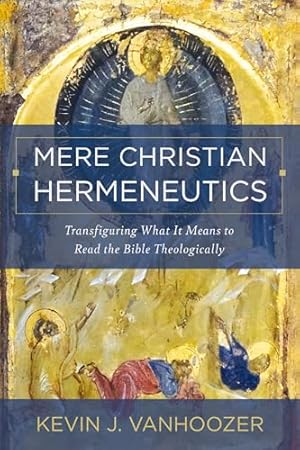
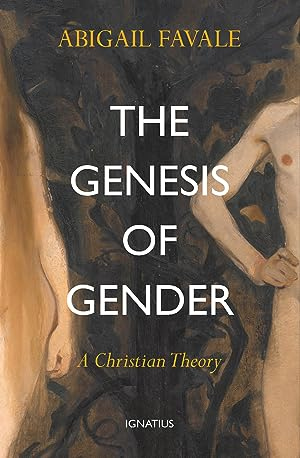
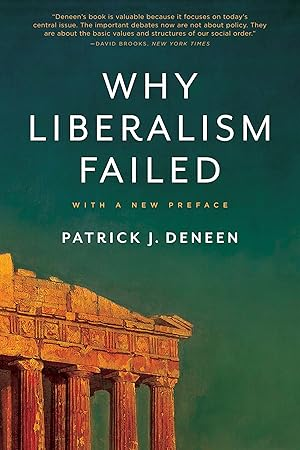
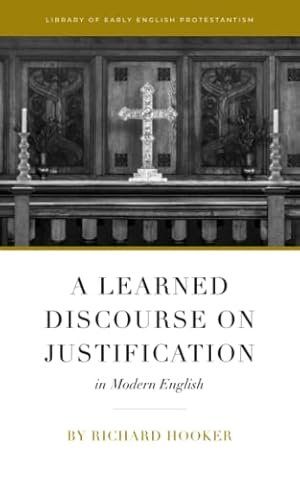














 Phil's Scribblings