
This is a strange book, about strange events, written in a strange prose style. First published in 1919, it is now over a hundred years old. And while it was not exactly an enjoyable read, I found it interesting and worthwhile, and at times the heavy sarcastic wit did draw a smile from my lips. I picked it up after hearing it recommended by a Christian who has been active in discussing and examining the paranormal, Ray Boeche.
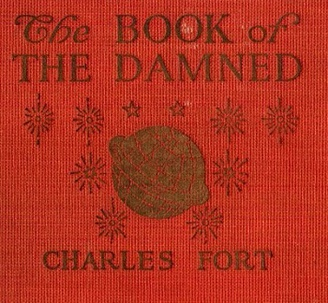
The book consists of a lengthy collection anomalous events that have been reported by local newspapers and more specialized publications, starting with things falling out of the sky during storms: black rain, red rain, clumps of goo, blood, frogs, fishes, stones, and giant chunks of ice. From this and other observations, Fort speculates about various possible explanations, such as a floating body of matter somewhere above the surface of the earth but beyond our view. I suppose such ideas were more reasonable in 1919; in 2023 they come off as quaint and silly. And yet, for all our knowledge, many things both historical and contemporary remain anomalous and unexplained. While Fort’s speculations have not held up, his critique of how scientific authorities dismiss anomalous events out of hand feels as fresh and relevant today as ever.
Aside from being valuable as a compendium of baffling historical anecdotes, in my view the book’s real contribution lies in two related aspects.
First, the book shines a light on the all-too-human aspects of the scientific establishment. Namely, the inability of authoritative bodies on a given subject to take seriously data which challenges the fundamental assumptions which their authority and prestige is based on. This has been plain to see numerous times throughout history: Copernicus and Galileo, the theory of tectonic plates, and others. A prevailing explanatory model is established with institutional power. It cannot explain all the data, and alternative models are developed which sometimes do a better job explaining the data. But the orthodoxy of the established model is cemented and what ensues is usually silence, ignoring the upstarts, then defamation and slander, and finally a kind of revolution. It is a suppression and denial of data which would threaten not knowledge but status within a given sphere. And humans are rather attached to their status, usually more so than to truth which threatens that status.
Fort’s work is a jab in the eye to the hubristic claim that the scientific establishment is a purely truth-seeking entity.
The second strength is its common sense data-driven undermining of philosophical materialism. With a studied reticence to make any sweeping metaphysical claims, Fort nonetheless pokes holes into the veneer which materialism has enjoyed among the bien-pensants since the Enlightenment. He presents a carnival of inconvenient and vexing observations from all across the world. While many of these might have prosaic explanations, the cumulative effect of them all, page after page, from such a dizzying array of sources, is difficult to dismiss out of hand. Not that that has ever stopped anyone from doing it.
These ideas may be summarized pithily in Fort’s own words: “Science is a turtle that says that its own shell encloses all things.” Here we are, a hundred years hence, and this blindered certainty continues to characterize many skeptics and atheists. Their cultural authority is waning, however, as the West recedes from peak secularism. The new atheists had their day in the sun, but they have now shuffled off the stage.
The tide is now moving towards re-enchantment. The world is growing thin, and the non-material realities that were studiously ignored are making themselves felt once again.
I wonder what Charles Fort would have said about that.

 Phil's Scribblings